
Does physiotherapy treat MCL injury?
Short answer
Physiotherapy can help an MCL injury recover by protecting the knee, restoring motion and strength, and retraining stability, with the plan guided by injury severity.
This answers one question. It is not a diagnosis and does not replace an assessment by a licensed doctor.
At a glance
- Main targets
- Knee motion, thigh strength and side-to-side stability
- Activity caution
- Delay pivoting and contact tasks until stability has returned
What MCL rehabilitation involves
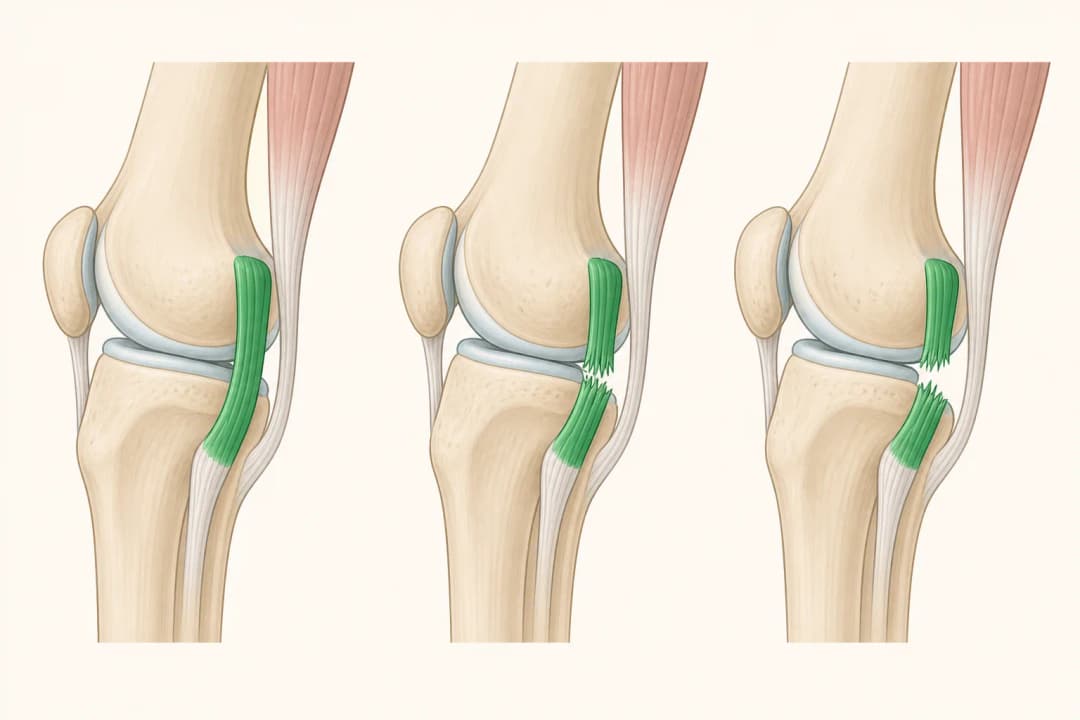
The medial collateral ligament supports the inner side of the knee. An injury can cause inner-knee pain, swelling, tenderness or a feeling that the knee is not steady, particularly during sideways movement. Rehabilitation often begins with comfortable motion, swelling management and exercises for the thigh and hip muscles. Later work can include balance, controlled changes of direction and tasks that resemble your job or sport. A physiotherapist may coordinate with a doctor about a brace or imaging when the knee is unstable, another ligament may be involved, or a fracture is possible.
How to support recovery
Follow the movement and weight-bearing limits provided after assessment. Keep exercises controlled and do not add cutting, pivoting or contact drills until your knee is ready. Use prescribed support as directed and build walking distance in stages. Notice whether swelling, limping or inner-knee pain settles between sessions. If progress stalls, the programme should be reviewed rather than pushed harder; persistent instability can change the rehabilitation approach.
When to seek care promptly
Seek urgent assessment if the knee is visibly deformed, you cannot put weight through it, the foot becomes numb or cold, or pain and swelling are severe after trauma. Arrange prompt review if the knee repeatedly gives way, cannot fully straighten, or becomes increasingly red and hot with fever. These features can point to a more complex injury or infection.
Questions for your doctor
Ask which grade of MCL injury is present, whether other knee structures are affected, how long bracing is needed, and which tests should be painless or stopped. Ask what strength and stability goals should be met before sport.
Find care
General Clinics & Polyclinics in Abu Dhabi
That answer is general. If you want it applied to your own case, these are licensed general clinics & polyclinics listed in Abu Dhabi.
27 Ar Ruwwad St - Shakhbout City - MSH4 - Abu Dhabi - United Arab Emirates
Accepts: Daman, Thiqa, Cigna, MetLife +20 more
Al Ruwais, Al Dhafrah
Accepts: Daman, Thiqa, AXA, Cigna +16 more
Al Bahyah - Al Bahyah Old - Abu Dhabi - United Arab Emirates
Accepts: Daman, Thiqa, Cigna, Allianz Care +18 more
Abu Dhabi
Accepts: Daman, Thiqa, AXA, Cigna +27 more
Ordered by verification status and how complete each clinic's public record is, then alphabetically. This is a directory listing, not a ranking — Zavis does not rate or recommend providers.
A factual listing drawn from the DHA, DOH and MOHAP licence registers. It is not a referral, an endorsement, or advice that any of these providers is right for you.
Questions people ask
Does an MCL injury always need surgery?
Many injuries are managed with protection and rehabilitation, but instability or associated damage needs specialist assessment.
Can I exercise with an MCL injury?
Often yes, with protected movements selected for your stage of recovery and adjusted when swelling or pain increases.
Related
Related reading
Keep reading
Medical disclaimer. This page is general health information, not medical advice, and it cannot diagnose you. Always consult a licensed healthcare provider about your own symptoms and treatment. In an emergency in the UAE, call 998 for an ambulance.