
Does pelvic organ prolapse cause leaking urine?
Short answer
Leaking urine is a common presentation of pelvic organ prolapse, because a change in pelvic support can affect how the bladder and urethra hold and release urine.
This answers one question. It is not a diagnosis and does not replace an assessment by a licensed doctor.
At a glance
- Common link
- Pelvic organ prolapse commonly presents with leaking urine.
- Assessment
- The pattern of leakage and a pelvic examination help guide care.
What this can mean
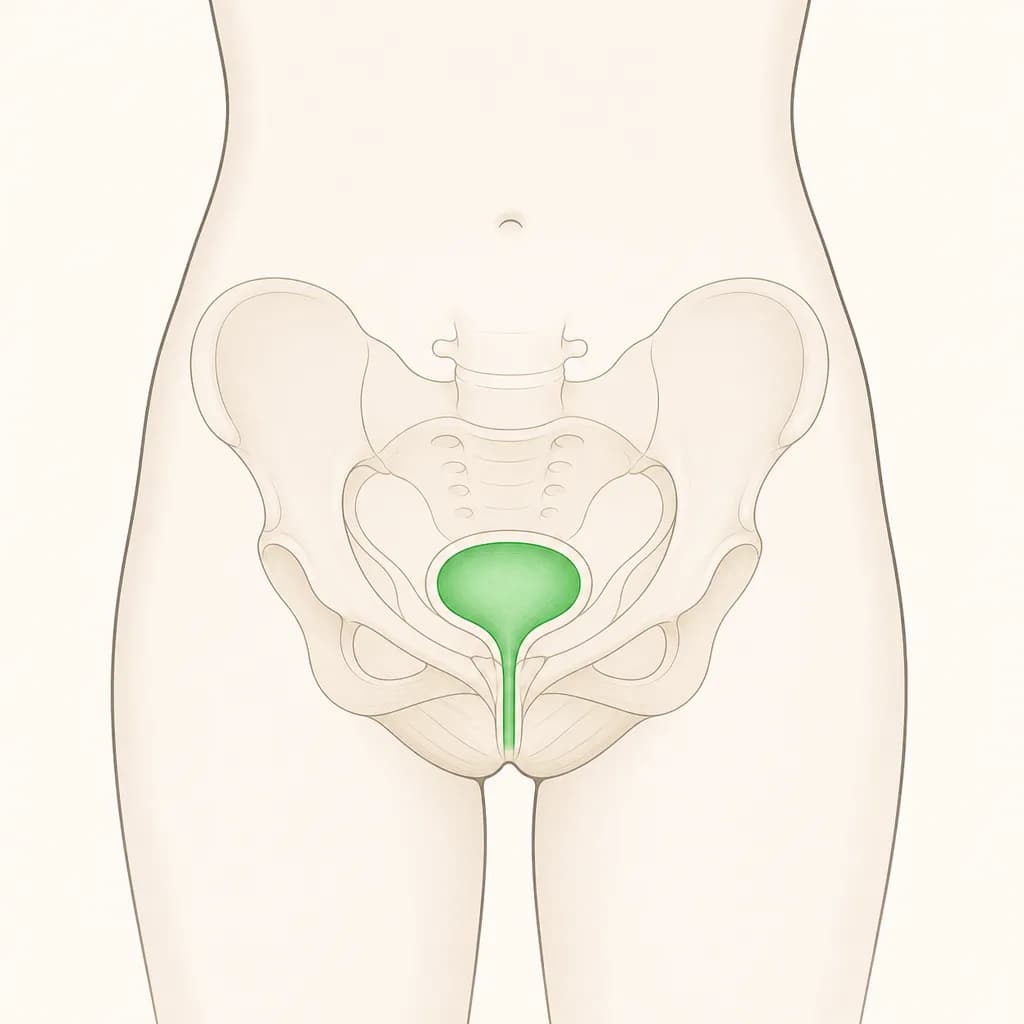
Pelvic organ prolapse happens when tissues supporting pelvic organs become less able to hold them in their usual position. When the front wall of the vagina and bladder support are involved, urine may leak with coughing, sneezing, lifting, exercise, or a sudden urge to urinate. Some people notice difficulty starting the stream, incomplete emptying, or needing to urinate more often. Symptoms can change with standing, activity, or a full bladder.
Leaking urine has several possible explanations, so the symptom alone cannot identify its cause. A clinician may ask when leakage occurs, whether urgency is present, and whether you feel pressure or a bulge. They may examine pelvic support and check how well the bladder empties.
What you can do next
Arrange an assessment if leakage is new, recurring, or interfering with daily activities. Until then, note triggers, urgency, fluid intake, nighttime urination, and whether you feel a vaginal pressure or bulge. Pelvic floor muscle training may help some types of leakage when taught and adjusted by a qualified clinician. Treating constipation, avoiding straining, and discussing persistent cough can also reduce pressure on pelvic support.
Treatment depends on the examination and your goals. Options may include pelvic floor therapy, a vaginal support device, bladder-training strategies, or a procedure when appropriate. A healthcare professional can explain which approach fits your symptoms.
When to seek care promptly
Seek prompt medical care if you cannot pass urine, have severe lower abdominal pain, see blood in your urine, or develop fever with burning urination or flank pain. Contact a clinician soon for rapidly worsening leakage, new weakness or numbness, loss of bowel control, or a bulge that becomes very painful or cannot be gently pushed back. These features may need assessment for problems beyond routine prolapse symptoms.
Questions for your doctor
Ask: Could pelvic organ prolapse be affecting my bladder support? What type of leakage do my triggers suggest? Do I need an examination of pelvic support or bladder emptying? Which pelvic floor exercises are suitable for me? What symptoms should make me seek urgent help?
Find care
General Clinics & Polyclinics in Abu Dhabi
That answer is general. If you want it applied to your own case, these are licensed general clinics & polyclinics listed in Abu Dhabi.
27 Ar Ruwwad St - Shakhbout City - MSH4 - Abu Dhabi - United Arab Emirates
Accepts: Daman, Thiqa, Cigna, MetLife +20 more
Al Ruwais, Al Dhafrah
Accepts: Daman, Thiqa, AXA, Cigna +16 more
Al Bahyah - Al Bahyah Old - Abu Dhabi - United Arab Emirates
Accepts: Daman, Thiqa, Cigna, Allianz Care +18 more
Abu Dhabi
Accepts: Daman, Thiqa, AXA, Cigna +27 more
Ordered by verification status and how complete each clinic's public record is, then alphabetically. This is a directory listing, not a ranking — Zavis does not rate or recommend providers.
A factual listing drawn from the DHA, DOH and MOHAP licence registers. It is not a referral, an endorsement, or advice that any of these providers is right for you.
Questions people ask
Can prolapse cause leakage when I cough or exercise?
Yes. Changes in bladder and urethral support can allow urine to leak when pressure rises during coughing, sneezing, lifting, or exercise.
Does every episode of leaking urine come from prolapse?
No. Leakage can have several causes, so a clinician should assess the timing, triggers, other symptoms, and bladder function.
Related
Related reading
Keep reading
Medical disclaimer. This page is general health information, not medical advice, and it cannot diagnose you. Always consult a licensed healthcare provider about your own symptoms and treatment. In an emergency in the UAE, call 998 for an ambulance.