
Does ICSI treat male factor infertility?
Short answer
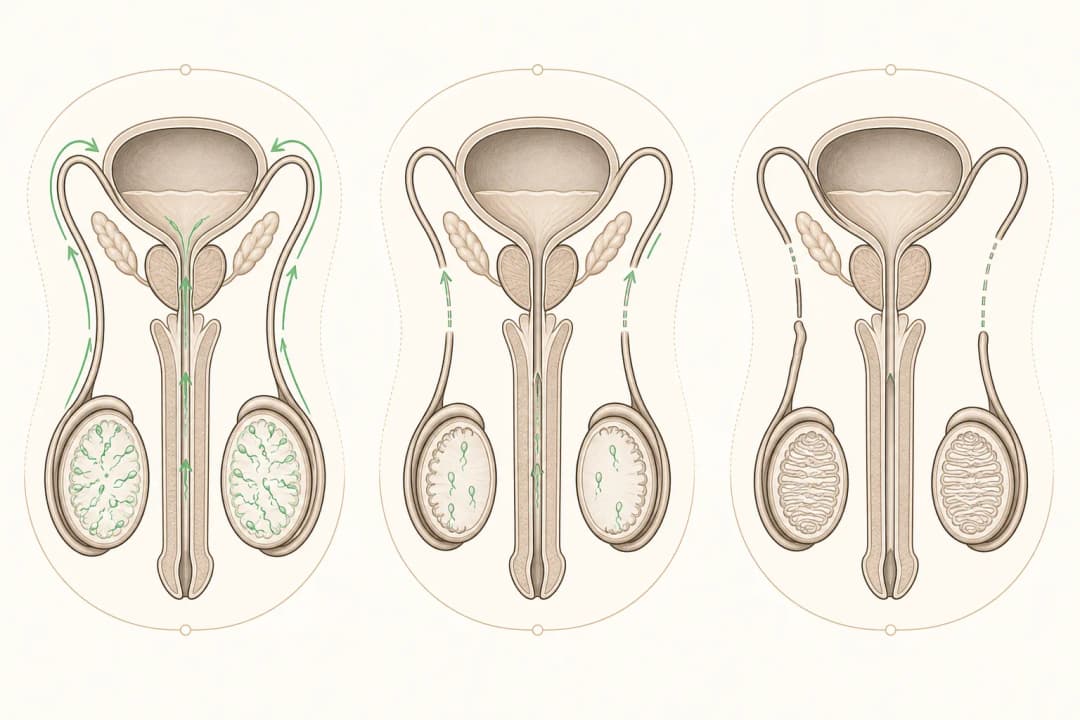
ICSI can treat the fertilisation problem linked to some male factor infertility, but it does not correct every underlying cause.
This answers one question. It is not a diagnosis and does not replace an assessment by a licensed doctor.
At a glance
- Technique
- One sperm is injected into one mature egg.
- Main role
- It helps overcome a fertilisation barrier.
- Assessment
- Both partners usually need fertility evaluation.
What this means
Intracytoplasmic sperm injection, or ICSI, is a form of assisted reproduction. A laboratory specialist injects one selected sperm directly into a mature egg. This can be useful when sperm are very few, move poorly, have an unusual shape, or cannot enter the egg without help. It may also be considered after previous fertilisation difficulties or when sperm have been retrieved directly from the reproductive tract.
ICSI addresses the step of getting sperm and egg to fertilise. It does not itself improve sperm production, hormone balance, sperm DNA, or an obstruction. The fertility team may therefore investigate the cause with semen testing, medical history, examination, and other tests before recommending a plan.
What to do next
Arrange an assessment with a fertility specialist for both partners. Bring details of previous pregnancies, operations, infections, medicines, heat exposure, and fertility treatments. A repeat semen analysis may be useful because results can vary. Depending on the findings, the team may discuss treating an obstruction, retrieving sperm, freezing samples, or using ICSI within an IVF cycle.
Ask how eggs will be collected, how sperm will be obtained, and what happens if an egg does not fertilise. The treatment plan should reflect the cause, the available sperm, egg health, and your preferences.
When to seek care
Seek fertility advice when pregnancy has not occurred after a period of trying, or sooner if there is a history of absent or very low sperm, testicular injury, surgery, chemotherapy, or ejaculation problems. Contact the clinic promptly after a procedure if there is severe pain, heavy bleeding, fever, breathing difficulty, or rapidly increasing swelling.
Questions for your doctor
What male factor has been identified, and can it be treated directly? Why is ICSI being recommended for us? How will sperm be collected and assessed? What alternatives are reasonable? What symptoms after treatment should prompt an urgent call?
Find care
General Clinics & Polyclinics in Abu Dhabi
That answer is general. If you want it applied to your own case, these are licensed general clinics & polyclinics listed in Abu Dhabi.
27 Ar Ruwwad St - Shakhbout City - MSH4 - Abu Dhabi - United Arab Emirates
Accepts: Daman, Thiqa, Cigna, MetLife +20 more
Al Ruwais, Al Dhafrah
Accepts: Daman, Thiqa, AXA, Cigna +16 more
Al Bahyah - Al Bahyah Old - Abu Dhabi - United Arab Emirates
Accepts: Daman, Thiqa, Cigna, Allianz Care +18 more
Abu Dhabi
Accepts: Daman, Thiqa, AXA, Cigna +27 more
Ordered by verification status and how complete each clinic's public record is, then alphabetically. This is a directory listing, not a ranking — Zavis does not rate or recommend providers.
A factual listing drawn from the DHA, DOH and MOHAP licence registers. It is not a referral, an endorsement, or advice that any of these providers is right for you.
Questions people ask
Does ICSI cure male infertility?
No. It can help fertilisation in selected situations, while the underlying sperm or reproductive problem may still need separate care.
Is ICSI always needed for low sperm count?
Not always. The recommendation depends on semen findings, previous treatment, egg factors, and the overall fertility assessment.
Related
Related reading
Keep reading
Medical disclaimer. This page is general health information, not medical advice, and it cannot diagnose you. Always consult a licensed healthcare provider about your own symptoms and treatment. In an emergency in the UAE, call 998 for an ambulance.