
Does chemotherapy treat metastatic cancer?
Short answer
Yes, chemotherapy can treat many metastatic cancers, but whether it helps depends on the cancer type.
This answers one question. It is not a diagnosis and does not replace an assessment by a licensed doctor.
At a glance
- Key detail
- Treatment is selected according to where the cancer originally began
- Possible goals
- Cancer control, tumour shrinkage or symptom relief
- Review
- Benefit and side effects are assessed together
The short answer
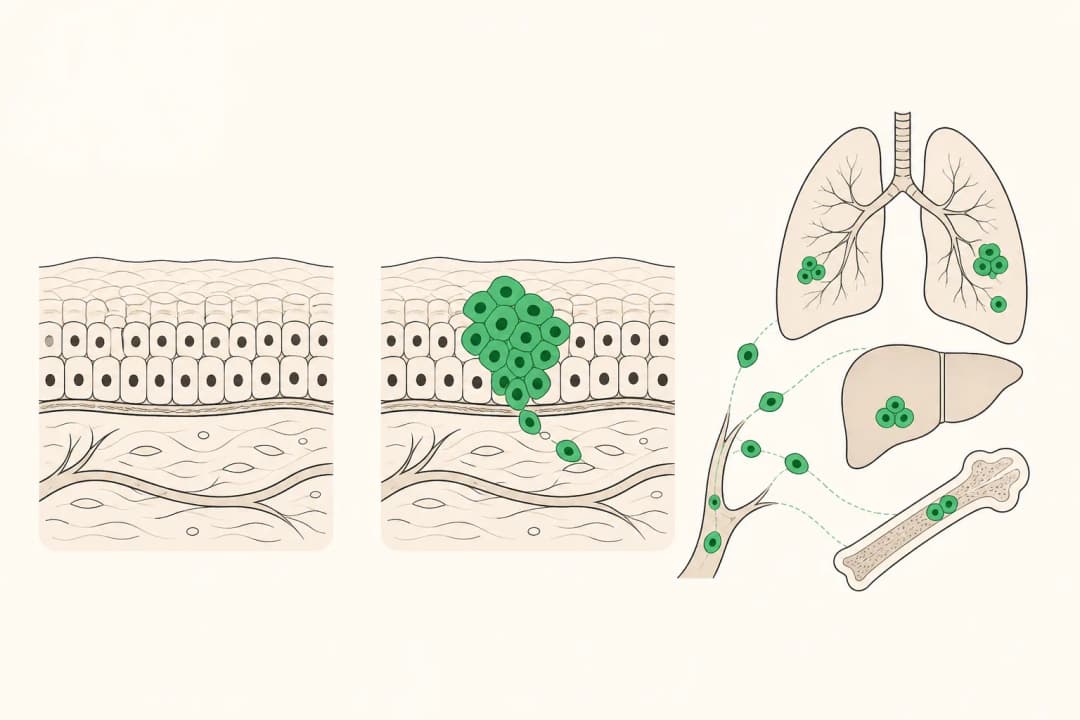
Because it travels through the bloodstream, chemotherapy can reach cancer in more than one part of the body. Depending on the diagnosis, the goal may be to shrink cancer, delay further growth, relieve symptoms or prepare for another treatment.
Why the original cancer type matters
Metastatic cancer keeps the identity of the organ where it began. Cancer that started in the bowel and spread to the liver is treated as bowel cancer, for example, rather than as liver cancer. That origin helps determine which chemotherapy medicines are likely to be useful.
Molecular test results, the locations and pace of spread, earlier treatment and organ function also shape the choice. Some cancers respond better to targeted therapy, hormone therapy or immunotherapy, while others are treated with chemotherapy alone or in combination.
Planning the next steps
Confirm the cancer's site of origin and ask whether tissue or blood testing changes the available medicines. Tell the team about all prescriptions, non-prescription products, allergies and past reactions, as these details can affect dosing and supportive care.
Before each visit, note new symptoms and how they affect sleep, eating, walking and daily tasks. Learn how to contact the treatment unit after hours, and check before starting supplements, vaccines or new medicines while chemotherapy is under way.
Symptoms that need prompt care
During chemotherapy, follow the treating unit's fever instructions and report possible infection promptly. Emergency assessment is appropriate for severe trouble breathing, chest pain, collapse, new confusion, uncontrolled bleeding, seizure or signs of a serious allergic reaction.
Call the oncology team without delay if repeated vomiting or diarrhoea prevents drinking, urine output drops markedly, pain becomes difficult to control, or side effects worsen rapidly. The team may need to assess dehydration, infection, blood counts or organ function.
Useful questions for the appointment
Ask which features of your cancer support chemotherapy, what outcome the team is aiming for, when response will be reviewed, and what alternatives are available. Clarify expected side effects, precautions at home, the plan if treatment does not help, and whom to call for urgent advice.
Questions people ask
Does metastatic cancer always need chemotherapy?
No. Treatment may include targeted therapy, hormone therapy, immunotherapy, radiotherapy, surgery, supportive care or a combination, depending on the original cancer and the person's circumstances.
Is chemotherapy the same for every metastatic cancer?
No. Medicines and schedules differ because cancers from different organs have different biology. Test results, previous treatment and organ function can further refine the plan.
Can treatment change if chemotherapy stops helping?
Often there are other options to consider, although availability depends on the cancer type and prior care. The team may change medicines, use another treatment approach or focus more strongly on symptom control.
Related
Related reading
Keep reading
Cancer care in the UAE
Hospitals & Medical Centers in Abu Dhabi
Most UAE cancer care is delivered inside hospital services rather than by standalone oncology clinics, so these are licensed hospitals & medical centers listed in Abu Dhabi. Confirm the specific cancer service exists before you travel, and know that asking for a second opinion is routine.
Ahalia Hospital Musaffah Building - Musaffah - Musaffah Industrial - Abu Dhabi - United Arab Emirates
Accepts: Daman, Thiqa, AXA, Cigna +26 more
Al Ruwais Industrial City - Abu Dhabi - United Arab Emirates
Accepts: Daman, Thiqa, AXA, Cigna +30 more
Abu Dhabi, Abu Dhabi
Accepts: Daman, Thiqa, AXA, Cigna +30 more
Second opinions are routine in cancer care and asking for one does not affect your treatment. How to arrange a second opinion in the UAE.
Ordered by verification status and how complete each clinic's public record is, then alphabetically. This is a directory listing, not a ranking — Zavis does not rate or recommend providers.
A factual listing drawn from the DHA, DOH and MOHAP licence registers. It is not a referral, an endorsement, or advice that any of these providers is right for you.
Medical disclaimer. This page is general health information, not medical advice, and it cannot diagnose you. Always consult a licensed healthcare provider about your own symptoms and treatment. In an emergency in the UAE, call 998 for an ambulance.