
Does a gynaecologic oncology perform risk-reducing removal of the ovaries and tubes?
Short answer
Yes. A gynaecologic oncologist can perform risk-reducing removal of both ovaries and fallopian tubes after individual counselling and assessment.
This answers one question. It is not a diagnosis and does not replace an assessment by a licensed doctor.
At a glance
- Specialist
- Gynaecologic oncologist
- Tissue removed
- Both ovaries and fallopian tubes
- Purpose
- Lower future cancer risk in an appropriately assessed person
What risk-reducing surgery means
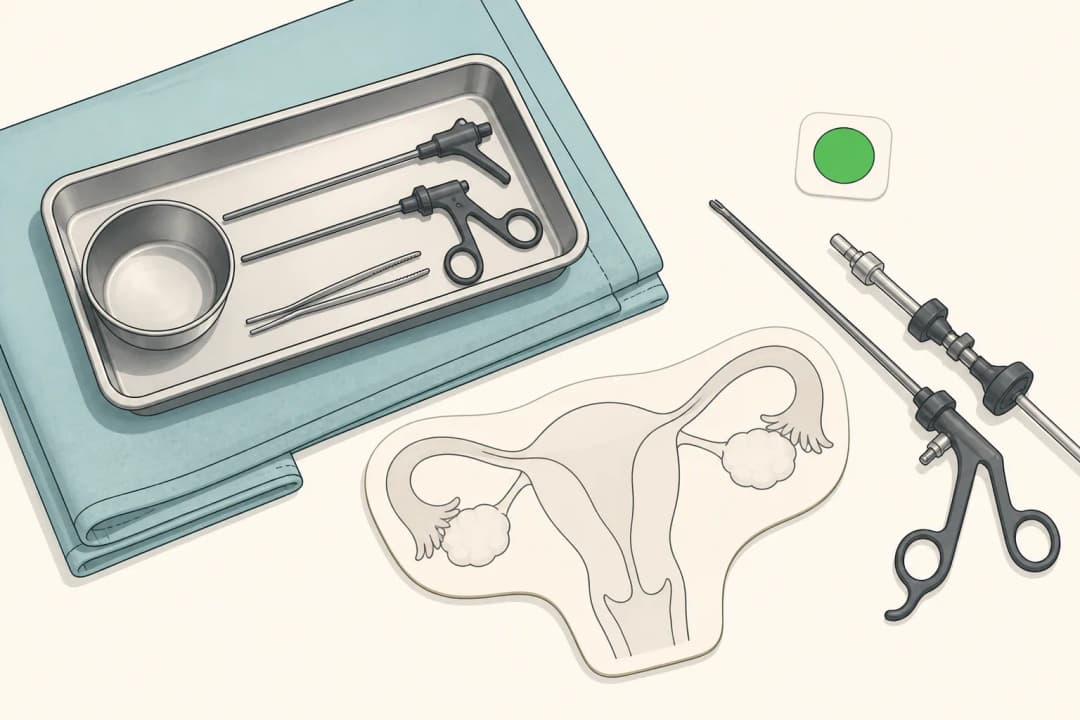
This operation, called risk-reducing salpingo-oophorectomy, removes both fallopian tubes and ovaries to lower future cancer risk in people with a recognised inherited or family-related risk. It does not mean cancer is present, and it cannot remove every possibility of a related cancer. The uterus is not part of this procedure unless there is another reason and that has been agreed separately.
Making an informed plan
Bring any genetic test report and family history details to the consultation. Discuss the timing in relation to childbearing plans, because pregnancy using your own eggs is no longer possible afterward. If you have not already reached menopause, ask about immediate surgical menopause, possible symptoms, bone and heart health, sexual wellbeing, and whether hormone treatment is suitable for your circumstances. Follow the surgical team's instructions for medicines, fasting and recovery support.
Symptoms that need assessment
During recovery, notify the care team promptly about fever, worsening pelvic or abdominal pain, repeated vomiting, difficulty urinating, increasing wound redness, pus, offensive vaginal discharge, or bleeding beyond the amount described at discharge. New one-sided leg pain or swelling requires urgent assessment. Call emergency services for sudden breathlessness, chest pain, collapse or heavy bleeding.
Questions before deciding
Ask how your personal and family history informs the recommendation and why the proposed timing suits you. Clarify whether the uterus will remain, how removed tissue is examined, what follow-up continues after surgery, and which menopause treatments or non-hormonal options could be considered. You can also ask whether genetic counselling or fertility advice would help before making a decision.
Questions people ask
Does this operation mean I currently have cancer?
No. Risk-reducing surgery may be offered because inherited or family history information indicates increased future risk; it is not itself a diagnosis of cancer.
Will removing the ovaries cause menopause?
If the ovaries are removed before natural menopause, surgical menopause begins after the operation. Your specialist can discuss symptom management and whether hormone treatment is appropriate for you.
Related
Related reading
Keep reading
Cancer care in the UAE
Hospitals & Medical Centers in Abu Dhabi
Most UAE cancer care is delivered inside hospital services rather than by standalone oncology clinics, so these are licensed hospitals & medical centers listed in Abu Dhabi. Confirm the specific cancer service exists before you travel, and know that asking for a second opinion is routine.
Ahalia Hospital Musaffah Building - Musaffah - Musaffah Industrial - Abu Dhabi - United Arab Emirates
Accepts: Daman, Thiqa, AXA, Cigna +26 more
Al Ruwais Industrial City - Abu Dhabi - United Arab Emirates
Accepts: Daman, Thiqa, AXA, Cigna +30 more
Abu Dhabi, Abu Dhabi
Accepts: Daman, Thiqa, AXA, Cigna +30 more
Second opinions are routine in cancer care and asking for one does not affect your treatment. How to arrange a second opinion in the UAE.
Ordered by verification status and how complete each clinic's public record is, then alphabetically. This is a directory listing, not a ranking — Zavis does not rate or recommend providers.
A factual listing drawn from the DHA, DOH and MOHAP licence registers. It is not a referral, an endorsement, or advice that any of these providers is right for you.
Medical disclaimer. This page is general health information, not medical advice, and it cannot diagnose you. Always consult a licensed healthcare provider about your own symptoms and treatment. In an emergency in the UAE, call 998 for an ambulance.