
What should you know about cystine kidney stones?
Short answer
Cystine kidney stones form when an inherited problem makes cystine collect in urine, so early assessment and long-term prevention can help reduce blockage and recurrence.
This answers one question. It is not a diagnosis and does not replace an assessment by a licensed doctor.
At a glance
- Underlying tendency
- Inherited cystine handling problem
- Main goal
- Keep urine dilute and prevent blockage
- Useful imaging
- Abdominal ultrasound may be considered
What cystine stones mean
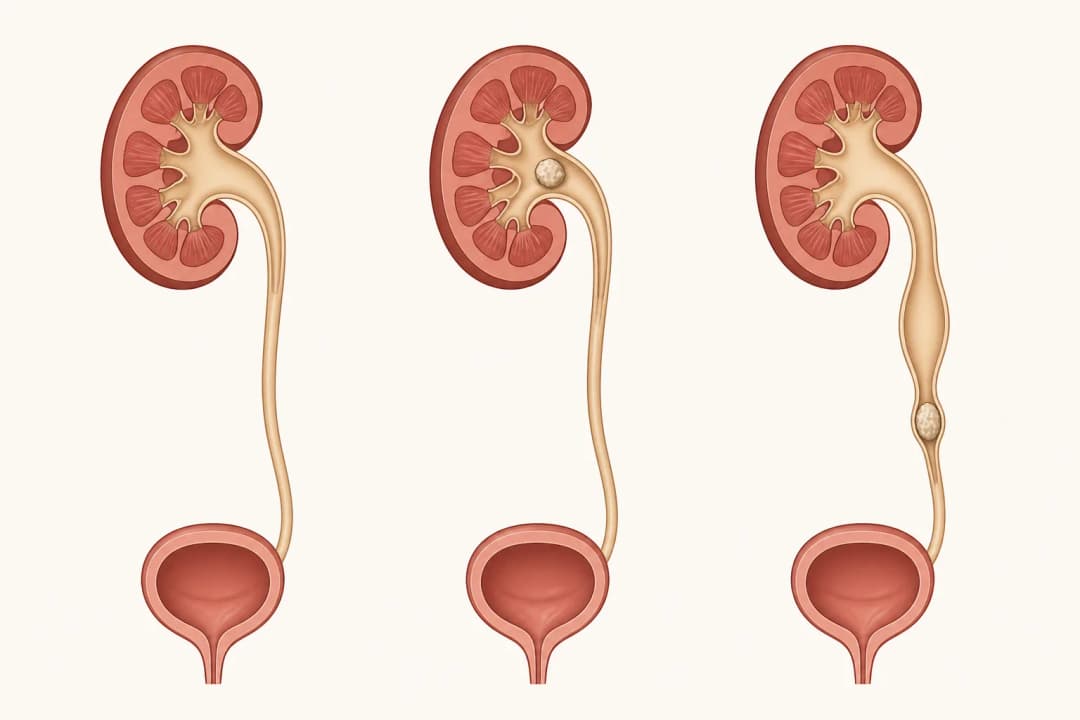
Cystine is a building block handled by the kidneys. In cystinuria, the kidneys allow too much cystine into urine; concentrated urine can then form crystals and stones. These stones may occur repeatedly and can affect both kidneys. A stone can cause severe flank pain, abdominal pain, nausea, blood in the urine, or painful urination. Difficulty passing urine may indicate obstruction.
The stone type matters because prevention is tailored to urine chemistry, fluid intake, diet, and prescribed medicines. A passed stone or laboratory analysis can help confirm what is present.
What to do
Arrange a GP Consultation for new or recurring stone symptoms. Assessment may include urine and blood tests, imaging such as an Abdominal Ultrasound, and review of family history. Follow the fluid plan your clinician gives you; regular intake helps keep urine less concentrated, while dehydration can encourage crystal formation. Do not start supplements or alkalinising medicines without advice, because the right choice depends on your health and test results. If a stone passes, collect it if you can for analysis.
When to seek urgent care
Seek urgent help for severe or persistent flank pain, fever or chills with urinary symptoms, repeated vomiting, inability to pass urine, or feeling faint or seriously unwell. A blocked urinary system with infection needs prompt treatment. Contact a clinician soon when pain, blood in urine, or painful urination continues even without fever.
Questions for your doctor
Ask whether cystinuria is possible, how the stone will be confirmed, and which urine tests are needed. Discuss a daily fluid target, dietary adjustments, medicine monitoring, family assessment, and a plan for future attacks.
Find care
General Clinics & Polyclinics in Abu Dhabi
That answer is general. If you want it applied to your own case, these are licensed general clinics & polyclinics listed in Abu Dhabi.
27 Ar Ruwwad St - Shakhbout City - MSH4 - Abu Dhabi - United Arab Emirates
Accepts: Daman, Thiqa, Cigna, MetLife +20 more
Al Ruwais, Al Dhafrah
Accepts: Daman, Thiqa, AXA, Cigna +16 more
Al Bahyah - Al Bahyah Old - Abu Dhabi - United Arab Emirates
Accepts: Daman, Thiqa, Cigna, Allianz Care +18 more
Abu Dhabi
Accepts: Daman, Thiqa, AXA, Cigna +27 more
Ordered by verification status and how complete each clinic's public record is, then alphabetically. This is a directory listing, not a ranking — Zavis does not rate or recommend providers.
A factual listing drawn from the DHA, DOH and MOHAP licence registers. It is not a referral, an endorsement, or advice that any of these providers is right for you.
Questions people ask
Are cystine kidney stones inherited?
They are linked to an inherited kidney transport problem called cystinuria, which can cause stones to recur.
What symptoms need urgent assessment?
Severe pain, fever with urinary symptoms, repeated vomiting, or inability to pass urine need urgent medical assessment.
Related
Related reading
Keep reading
Medical disclaimer. This page is general health information, not medical advice, and it cannot diagnose you. Always consult a licensed healthcare provider about your own symptoms and treatment. In an emergency in the UAE, call 998 for an ambulance.