
Crohn's and kidney stones: what should you know?
Short answer
Crohn's disease can be associated with kidney stones, especially when diarrhoea or reduced fluid intake causes dehydration.
This answers one question. It is not a diagnosis and does not replace an assessment by a licensed doctor.
At a glance
- Possible link
- Fluid loss and altered absorption can encourage crystal formation.
- Typical stone symptoms
- Flank pain, urinary pain, nausea or difficulty passing urine.
- Urgent warning
- Fever with urinary symptoms or little urine needs urgent assessment.
How the connection works
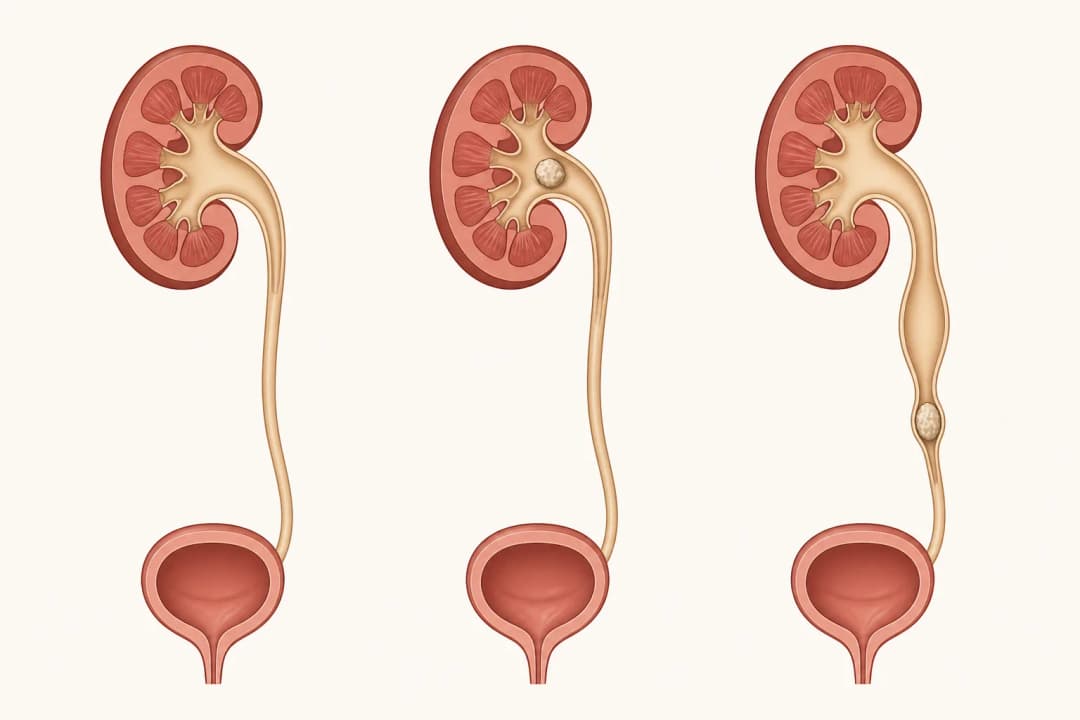
The bowel and kidneys handle fluid and salts together. Ongoing diarrhoea can reduce fluid available to urine, while changes in digestion and absorption may alter substances that help form crystals. A stone can cause waves of severe flank or abdominal pain, nausea, blood in the urine, painful urination or difficulty passing urine. These symptoms can overlap with a Crohn's flare, so they need careful assessment.
A stone is not the only explanation for urinary pain. Infection, dehydration and other urinary conditions can feel similar. A clinician may ask about stool losses, fluid intake, previous stones, medicines and family history.
Reducing problems and arranging care
Follow your Crohn's treatment plan and replace fluids regularly, unless a clinician has given you a fluid restriction. During diarrhoea, ask a pharmacist or doctor about suitable oral rehydration. Do not deliberately force large volumes if you are vomiting or have kidney or heart problems; seek personalised advice.
A GP consultation can assess pain and urine symptoms. An abdominal ultrasound may help look for a stone or blockage, although other tests may sometimes be needed. Keep a note of urine changes, pain location, fever, vomiting and how much you can drink.
When urgent assessment is needed
Seek urgent care for severe or persistent flank pain, fever or chills with urinary symptoms, repeated vomiting, faintness, inability to drink, very little or no urine, or pain with a single functioning kidney or known kidney disease. A blocked urinary system with infection can become serious and should not be managed at home.
Questions for your appointment
Could my symptoms be a stone, dehydration, infection or Crohn's activity? Do I need urine tests, blood tests or an abdominal ultrasound? How much fluid is appropriate for me? Could any medicine or bowel surgery affect my stone risk? What symptoms mean I should return urgently?
Find care
General Clinics & Polyclinics in Abu Dhabi
That answer is general. If you want it applied to your own case, these are licensed general clinics & polyclinics listed in Abu Dhabi.
27 Ar Ruwwad St - Shakhbout City - MSH4 - Abu Dhabi - United Arab Emirates
Accepts: Daman, Thiqa, Cigna, MetLife +20 more
Al Ruwais, Al Dhafrah
Accepts: Daman, Thiqa, AXA, Cigna +16 more
Al Bahyah - Al Bahyah Old - Abu Dhabi - United Arab Emirates
Accepts: Daman, Thiqa, Cigna, Allianz Care +18 more
Abu Dhabi
Accepts: Daman, Thiqa, AXA, Cigna +27 more
Ordered by verification status and how complete each clinic's public record is, then alphabetically. This is a directory listing, not a ranking — Zavis does not rate or recommend providers.
A factual listing drawn from the DHA, DOH and MOHAP licence registers. It is not a referral, an endorsement, or advice that any of these providers is right for you.
Questions people ask
Does Crohn's disease directly cause every kidney stone?
No. Stones have several possible causes, and a clinician may need urine, blood or imaging tests to identify the likely reason.
Can I increase fluids during a Crohn's flare?
Regular fluid replacement may help, but people with kidney or heart conditions may need individual limits and should ask a clinician.
Related
Related reading
Keep reading
Medical disclaimer. This page is general health information, not medical advice, and it cannot diagnose you. Always consult a licensed healthcare provider about your own symptoms and treatment. In an emergency in the UAE, call 998 for an ambulance.