
What should you know about cradle cap teenager?
Short answer
A cradle-cap-like rash in a teenager is not typical infant cradle cap, so persistent scale, itch or redness deserves a clinician’s diagnosis.
This answers one question. It is not a diagnosis and does not replace an assessment by a licensed doctor.
At a glance
- Age clue
- A new scalp rash in a teenager needs a broader diagnosis
- Watch for
- Hair breakage, patchy hair loss or pus
- Avoid
- Scratching and new fragranced products
What may be behind the flakes
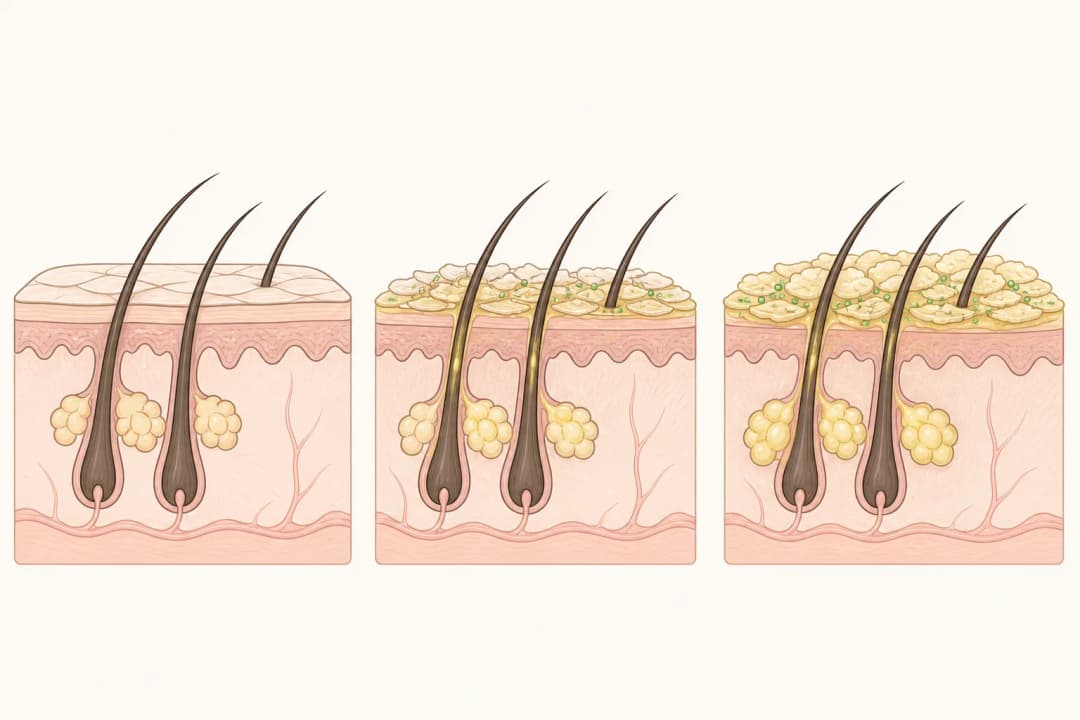
Cradle cap is the childhood form of seborrheic dermatitis, a condition that can also cause flaky or greasy scale in older children and teenagers. However, scalp scale in this age group can also come from dandruff, eczema, psoriasis, contact irritation or a fungal infection. Clues such as intense itch, sharply defined plaques, hair breakage, patches of hair loss or scale on the face help a clinician narrow the possibilities.
Safe next steps
Use a gentle shampoo and rinse thoroughly. Avoid scratching, picking crusts, tight hairstyles and fragranced scalp products until the cause is clearer. Keep a note of when the rash began, where it appears and whether a new shampoo, dye, helmet or styling product preceded it. A clinician may recommend an emollient for dry scale or topical antifungal treatment when the examination supports that choice.
When assessment matters
Arrange medical advice for a rash that persists, rapidly spreads, becomes painful or produces discharge. Prompt assessment is particularly useful for broken hairs, patchy hair loss, swollen areas, pus, fever or marked tenderness, because these findings can point away from simple seborrheic scaling. Do not share medicated products with siblings without checking the label or asking a clinician.
What to ask
Ask whether the rash is seborrheic dermatitis or another scalp condition, whether the hair follicles look affected, and which shampoo or medicine fits the diagnosis. Mention itching, hair changes and every product applied to the scalp.
Find care
General Clinics & Polyclinics in Abu Dhabi
That answer is general. If you want it applied to your own case, these are licensed general clinics & polyclinics listed in Abu Dhabi.
27 Ar Ruwwad St - Shakhbout City - MSH4 - Abu Dhabi - United Arab Emirates
Accepts: Daman, Thiqa, Cigna, MetLife +20 more
Al Ruwais, Al Dhafrah
Accepts: Daman, Thiqa, AXA, Cigna +16 more
Al Bahyah - Al Bahyah Old - Abu Dhabi - United Arab Emirates
Accepts: Daman, Thiqa, Cigna, Allianz Care +18 more
Abu Dhabi
Accepts: Daman, Thiqa, AXA, Cigna +27 more
Ordered by verification status and how complete each clinic's public record is, then alphabetically. This is a directory listing, not a ranking — Zavis does not rate or recommend providers.
A factual listing drawn from the DHA, DOH and MOHAP licence registers. It is not a referral, an endorsement, or advice that any of these providers is right for you.
Questions people ask
Can teenagers get seborrheic dermatitis?
Yes. A teenager can develop seborrheic dermatitis, but a clinician may need to distinguish it from psoriasis, eczema or fungal infection.
Is every flaky scalp cradle cap?
No. Flaking has several possible causes, and its pattern, itch and effect on hair help guide assessment.
Related
Related reading
Keep reading
Medical disclaimer. This page is general health information, not medical advice, and it cannot diagnose you. Always consult a licensed healthcare provider about your own symptoms and treatment. In an emergency in the UAE, call 998 for an ambulance.