
What should you know about cradle cap prescription?
Short answer
A cradle cap prescription is considered when gentle care is not enough or the scalp is notably inflamed, and it should be used only as directed for the infant.
This answers one question. It is not a diagnosis and does not replace an assessment by a licensed doctor.
At a glance
- Who decides
- A clinician selects treatment after examining the scalp.
- Safe use
- Follow the prescribed amount, site, and duration.
When a prescription may be discussed
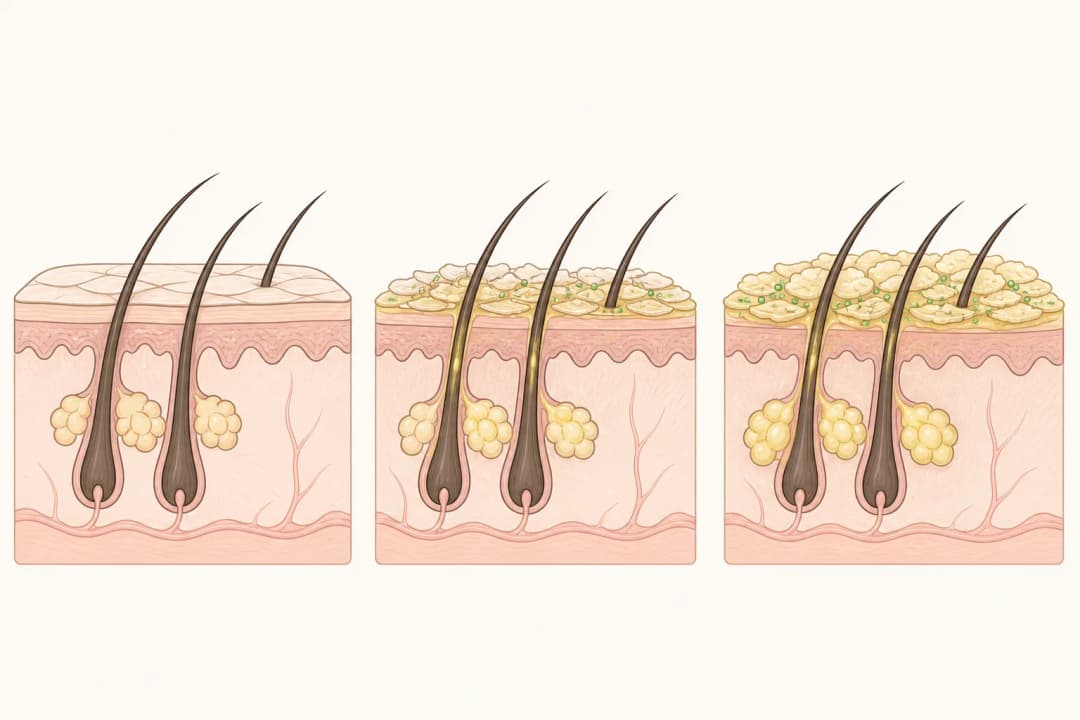
Cradle cap is a form of infantile seborrheic dermatitis. It often appears as greasy or dry scale on the scalp, sometimes with mild redness. A clinician may review the scalp when the scale is thick, symptoms extend beyond the scalp, or home care has not helped. The choice of treatment depends on the baby's age, the appearance of the skin, and whether there are signs of infection or another rash. A prescription is not automatically needed for every case.
Using treatment carefully
Follow the prescriber's instructions for where to apply the medicine, how much to use, and how long to continue. Keep products away from the eyes and mouth, and wash your hands before and after application. Do not substitute adult scalp products or use a sibling's medicine. Gentle washing and softening may remain part of care; an emollient can help loosen scale when recommended. For background on that approach, see Emollient Therapy. If the skin becomes more irritated, stop and contact the prescriber for advice rather than adding another product.
Signs that need review
Contact the clinician if the rash spreads quickly, becomes raw, swollen, hot, painful, or produces fluid or pus. Prompt medical assessment is needed if the baby has fever, reduced feeding, unusual sleepiness, or appears seriously unwell. If the prescription does not seem to help or causes a new reaction, report the change and bring the product packaging to the appointment.
Questions to ask
Ask what the medicine is treating, where it can be applied, and what improvement should look like. Check whether an emollient or Topical Antifungal Treatment is suitable, and ask what to do if scale returns after the prescribed course.
Find care
General Clinics & Polyclinics in Abu Dhabi
That answer is general. If you want it applied to your own case, these are licensed general clinics & polyclinics listed in Abu Dhabi.
27 Ar Ruwwad St - Shakhbout City - MSH4 - Abu Dhabi - United Arab Emirates
Accepts: Daman, Thiqa, Cigna, MetLife +20 more
Al Ruwais, Al Dhafrah
Accepts: Daman, Thiqa, AXA, Cigna +16 more
Al Bahyah - Al Bahyah Old - Abu Dhabi - United Arab Emirates
Accepts: Daman, Thiqa, Cigna, Allianz Care +18 more
Abu Dhabi
Accepts: Daman, Thiqa, AXA, Cigna +27 more
Ordered by verification status and how complete each clinic's public record is, then alphabetically. This is a directory listing, not a ranking — Zavis does not rate or recommend providers.
A factual listing drawn from the DHA, DOH and MOHAP licence registers. It is not a referral, an endorsement, or advice that any of these providers is right for you.
Questions people ask
Does cradle cap always need prescription medicine?
No. Many cases improve with gentle washing and careful scale softening; a clinician decides whether stronger treatment is warranted.
Can I use an older prescription on my baby?
No. Medicines and instructions may not suit the current rash or your baby's age, so obtain current clinical advice.
Related
Related reading
Keep reading
Medical disclaimer. This page is general health information, not medical advice, and it cannot diagnose you. Always consult a licensed healthcare provider about your own symptoms and treatment. In an emergency in the UAE, call 998 for an ambulance.