
Complications of Polyhydramnios
Short answer
Complications of polyhydramnios can include breathlessness, early labour, cord or placental problems, abnormal fetal position, and heavier bleeding after birth.
This answers one question. It is not a diagnosis and does not replace an assessment by a licensed doctor.
At a glance
- Possible effects
- Pressure symptoms, early labour, cord prolapse, or fetal malposition
- During follow-up
- Fluid, growth, fetal wellbeing, and possible causes are assessed
How excess fluid can affect pregnancy
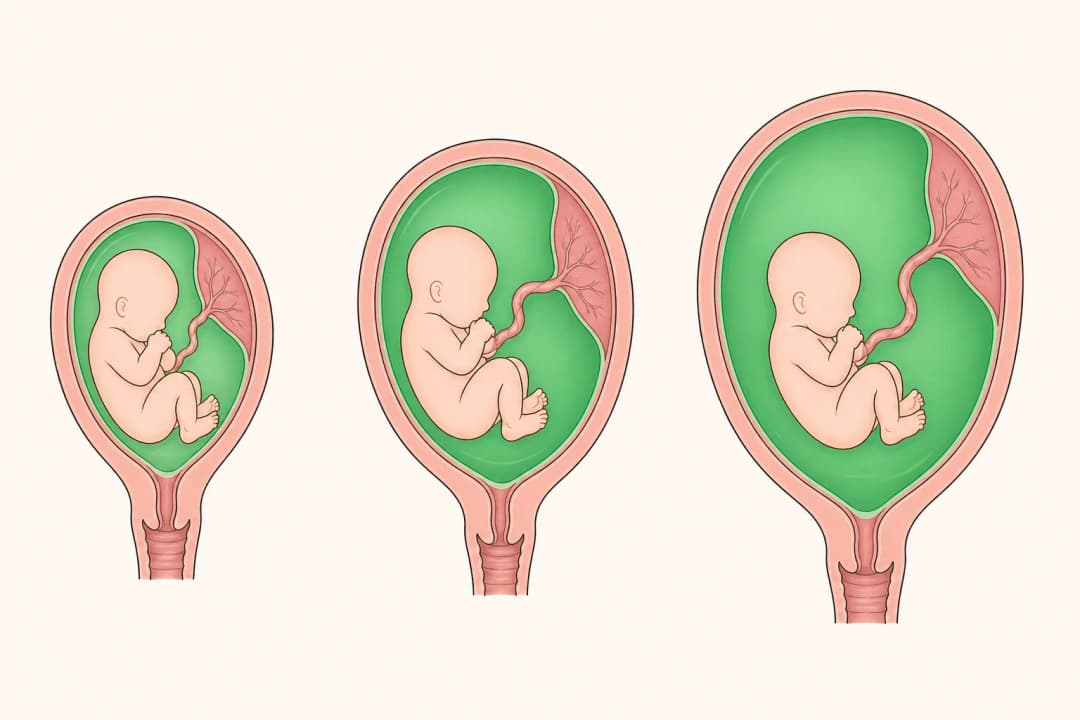
Extra amniotic fluid can stretch the womb and cause abdominal pressure, reflux, swelling, or breathlessness. It can increase the chance that labour starts early, the baby lies in a position that makes birth difficult, or the umbilical cord slips down when the waters break. The placenta may also separate early. After birth, an overstretched womb may contract less effectively, increasing bleeding risk.
Polyhydramnios can be linked with diabetes, infection, multiple pregnancy, or a fetal condition, although no clear cause is found in some pregnancies. Ultrasound helps assess fluid, growth, movement, and fetal anatomy.
Monitoring and preparation
Attend planned appointments and report a rapid increase in abdominal size, worsening breathlessness, contractions, or reduced fetal movement. Your team may arrange repeat ultrasound checks, glucose testing, and monitoring of fetal growth and wellbeing. A [Growth Scan](/treatments/pregnancy-and-birth-care/growth-scan/) may help guide follow-up. Discuss where to go when labour starts and how the team will manage the waters breaking.
When to seek urgent care
Seek urgent maternity care for regular contractions, vaginal bleeding, suspected waters breaking, severe breathlessness, sudden abdominal pain, or reduced fetal movement. If something cord-like appears at the vagina after your waters break, call emergency services, lie on your side, and avoid pushing it back.
Questions for your doctor
Ask what may be causing the excess fluid, how often scans are needed, whether fetal growth is changing, which labour symptoms need immediate review, and whether your birth plan needs a hospital with neonatal and surgical support.
Find care
General Clinics & Polyclinics in Abu Dhabi
That answer is general. If you want it applied to your own case, these are licensed general clinics & polyclinics listed in Abu Dhabi.
27 Ar Ruwwad St - Shakhbout City - MSH4 - Abu Dhabi - United Arab Emirates
Accepts: Daman, Thiqa, Cigna, MetLife +20 more
Al Ruwais, Al Dhafrah
Accepts: Daman, Thiqa, AXA, Cigna +16 more
Al Bahyah - Al Bahyah Old - Abu Dhabi - United Arab Emirates
Accepts: Daman, Thiqa, Cigna, Allianz Care +18 more
Abu Dhabi
Accepts: Daman, Thiqa, AXA, Cigna +27 more
Ordered by verification status and how complete each clinic's public record is, then alphabetically. This is a directory listing, not a ranking — Zavis does not rate or recommend providers.
A factual listing drawn from the DHA, DOH and MOHAP licence registers. It is not a referral, an endorsement, or advice that any of these providers is right for you.
Questions people ask
Can polyhydramnios make breathing difficult?
Yes. Extra fluid can stretch the womb upward and create pressure that causes breathlessness, especially later in pregnancy.
Why is reduced fetal movement urgent with polyhydramnios?
A change in movement can signal that the baby needs assessment, so contact maternity services promptly rather than waiting for a routine scan.
Related
Related reading
Keep reading
Medical disclaimer. This page is general health information, not medical advice, and it cannot diagnose you. Always consult a licensed healthcare provider about your own symptoms and treatment. In an emergency in the UAE, call 998 for an ambulance.