
Cold Hands and Feet and Kidney Disease: What to Know
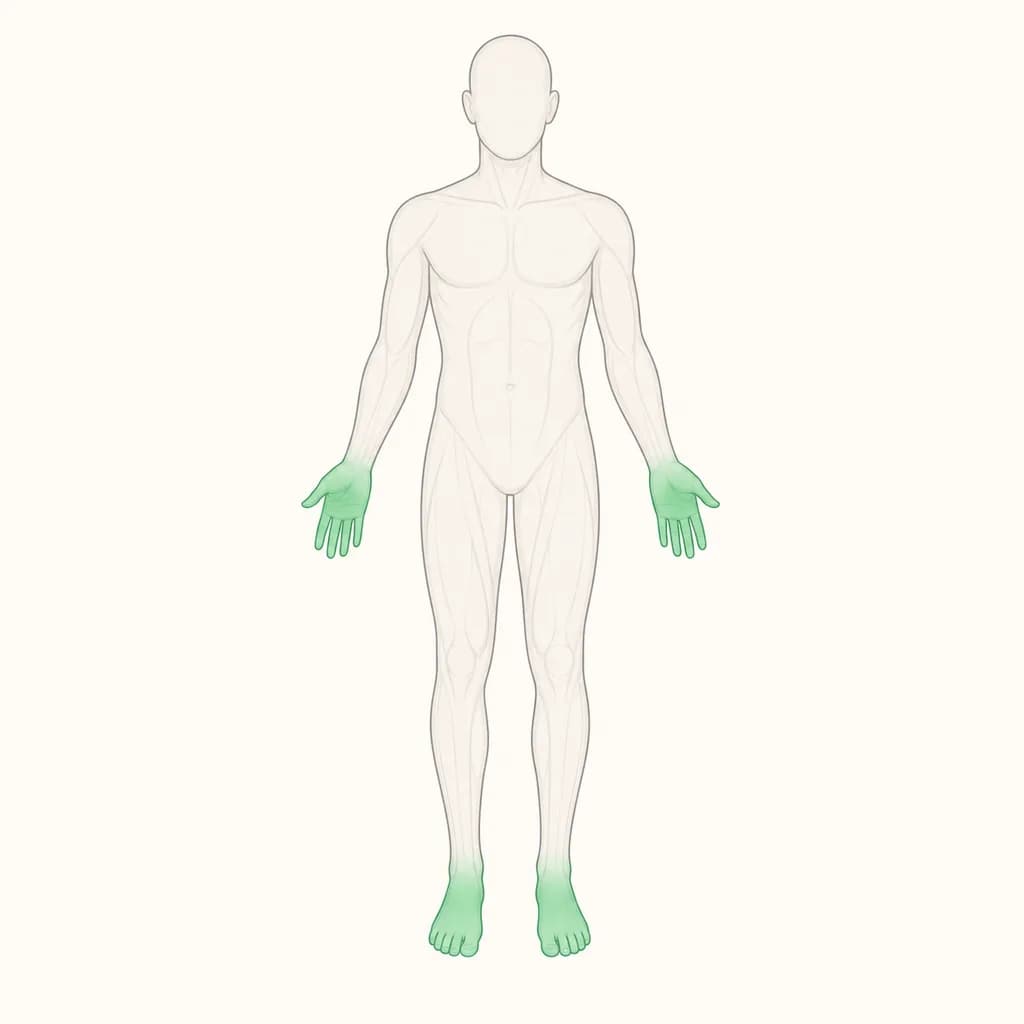
Short answer
Cold hands and feet do not by themselves diagnose kidney disease; persistent or new symptoms deserve a clinical assessment for circulation, anaemia, thyroid problems, medicines, and other causes.
This answers one question. It is not a diagnosis and does not replace an assessment by a licensed doctor.
At a glance
- Symptom alone
- Does not establish kidney disease
- Useful detail
- Colour change, pain, numbness, and whether both sides are affected
- Avoid
- Unsupervised supplements or direct high heat on numb skin
What the symptom can mean
The body can narrow small blood vessels in the skin when you are cold, stressed, dehydrated, or unwell. Reduced blood flow to the extremities can also occur with circulation conditions. Anaemia may make you feel cold or tired, while hypothyroidism can slow body processes and increase sensitivity to cold. Kidney problems can affect fluid balance and blood health, but cold fingers or toes alone are not enough to identify them.
Notice whether both sides are affected, whether the colour changes, and whether warmth returns after moving indoors. Record swelling, breathlessness, changes in urination, unusual fatigue, or a history of kidney problems for the clinician.
What you can do now
Warm your hands and feet gradually with clothing, socks, gloves, and gentle movement. Avoid direct high heat on numb skin. Drink normally unless a clinician has given you a fluid restriction, and do not start iron or other supplements without checking the cause first. A clinician may review your medicines, examine pulses and skin, and arrange blood or urine tests when your history suggests they are useful.
When to seek care
Arrange a medical appointment if the symptom keeps returning, is present in a warm environment, or comes with fatigue, dizziness, swelling, reduced urination, or a known kidney condition. Seek urgent help for one limb that suddenly becomes cold, pale, blue, very painful, numb, or weak, or for cold extremities with chest pain, severe breathlessness, confusion, or fainting.
Questions for your doctor
Ask what pattern on examination would suggest a circulation problem, whether your kidney history changes the assessment, and which blood or urine checks are appropriate. You can also ask whether anaemia, hypothyroidism, or a medicine could explain the symptom and how to warm the area safely.
Find care
General Clinics & Polyclinics in Abu Dhabi
That answer is general. If you want it applied to your own case, these are licensed general clinics & polyclinics listed in Abu Dhabi.
27 Ar Ruwwad St - Shakhbout City - MSH4 - Abu Dhabi - United Arab Emirates
Accepts: Daman, Thiqa, Cigna, MetLife +20 more
Al Ruwais, Al Dhafrah
Accepts: Daman, Thiqa, AXA, Cigna +16 more
Al Bahyah - Al Bahyah Old - Abu Dhabi - United Arab Emirates
Accepts: Daman, Thiqa, Cigna, Allianz Care +18 more
Abu Dhabi
Accepts: Daman, Thiqa, AXA, Cigna +27 more
Ordered by verification status and how complete each clinic's public record is, then alphabetically. This is a directory listing, not a ranking — Zavis does not rate or recommend providers.
A factual listing drawn from the DHA, DOH and MOHAP licence registers. It is not a referral, an endorsement, or advice that any of these providers is right for you.
Questions people ask
Can cold hands and feet prove I have kidney disease?
No. They can occur for many reasons, so a clinician needs your history and examination before deciding whether kidney tests are relevant.
What should I record before an appointment?
Note when the symptom started, triggers, colour changes, pain, numbness, swelling, urination changes, and any medicines or supplements.
Related
Related reading
Keep reading
Medical disclaimer. This page is general health information, not medical advice, and it cannot diagnose you. Always consult a licensed healthcare provider about your own symptoms and treatment. In an emergency in the UAE, call 998 for an ambulance.