
Coexisting molar pregnancy
Short answer
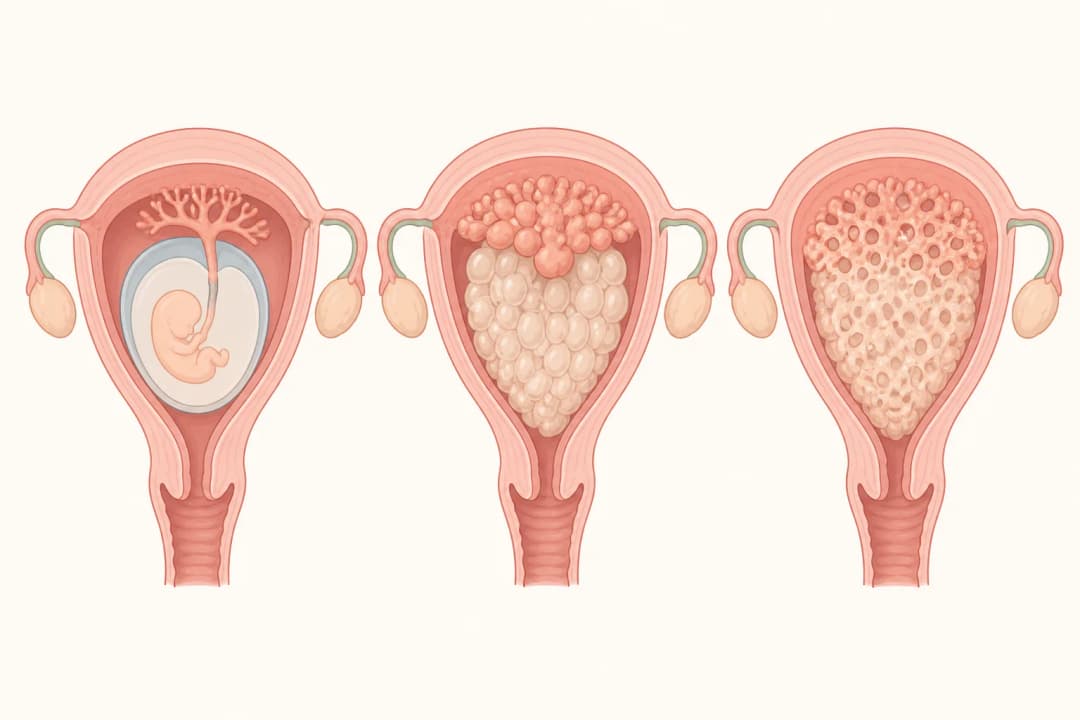
A coexisting molar pregnancy is a rare, high-risk pregnancy requiring specialist monitoring of the pregnant person, fetus and abnormal placental tissue.
This answers one question. It is not a diagnosis and does not replace an assessment by a licensed doctor.
At a glance
- Type of care
- Management requires a specialist pregnancy and trophoblastic disease team.
- Monitoring focus
- Checks cover maternal health, fetal development, placental findings and hCG.
- After pregnancy
- Continued hCG testing identifies molar tissue that remains active.
The short answer
It often refers to a twin pregnancy in which one conception develops as a hydatidiform mole while the other may develop as a fetus with its own placenta. The diagnosis and the choice to continue or end the pregnancy require individual assessment by maternal-fetal medicine and gestational trophoblastic disease specialists.
What the diagnosis means
Molar tissue grows abnormally and produces the pregnancy hormone hCG. Ultrasound may show a developing fetus alongside an abnormal placental mass, but additional imaging and genetic or pathology assessment may be needed to distinguish this from other placental conditions.
Risks to the pregnant person include vaginal bleeding, severe nausea and vomiting, high blood pressure arising unusually early, overactive thyroid effects and abnormal molar tissue that persists after the pregnancy. The fetus may face growth problems, pregnancy loss or early delivery. These possibilities make close observation essential, but they do not determine an individual outcome.
Specialist monitoring and decisions
Attend all scheduled ultrasound, blood pressure and blood-test appointments, and use the team's direct contact route if symptoms change. Clinicians may monitor fetal growth, the size and behaviour of molar tissue, hCG patterns, thyroid function, blood count, liver and kidney function, and signs of pregnancy complications.
Discuss both maternal safety and fetal outlook when considering pregnancy management. Ask where urgent assessment and delivery would occur. After the pregnancy ends, serial hCG monitoring is crucial because a plateau or rise can indicate persistent gestational trophoblastic disease; effective contraception may be advised during surveillance so a new pregnancy does not obscure interpretation of hCG.
Warning signs needing immediate care
Seek urgent maternity assessment for vaginal bleeding, severe abdominal pain, fainting, breathlessness, repeated vomiting with inability to keep fluids down, severe headache, visual disturbance, sudden swelling, chest pain or seizures. These symptoms can signal blood loss, blood-pressure complications or other serious problems and should not wait for the next routine visit.
Questions for the specialist team
Ask how certain the diagnosis is, whether the fetus and molar tissue have separate placentas, and which findings would change the plan. Clarify how often monitoring is needed, what symptoms require immediate travel to hospital, how delivery or evacuation will be managed, when pathology results are expected, and how hCG follow-up will work afterward.
Questions people ask
Can a fetus develop alongside a molar pregnancy?
Yes, this can occur when a developing fetus coexists with separate molar tissue. Detailed assessment is needed because several placental conditions can look similar.
Does a coexisting mole always require chemotherapy?
No. Chemotherapy is not automatic; it may be needed if gestational trophoblastic disease persists or behaves malignantly after specialist evaluation.
Why is hCG checked after the pregnancy?
Falling hCG helps show that molar tissue is resolving. A level that stops falling or rises prompts the specialist team to investigate persistent disease.
Related
Related reading
Keep reading
Cancer care in the UAE
Hospitals & Medical Centers in Abu Dhabi
Most UAE cancer care is delivered inside hospital services rather than by standalone oncology clinics, so these are licensed hospitals & medical centers listed in Abu Dhabi. Confirm the specific cancer service exists before you travel, and know that asking for a second opinion is routine.
Ahalia Hospital Musaffah Building - Musaffah - Musaffah Industrial - Abu Dhabi - United Arab Emirates
Accepts: Daman, Thiqa, AXA, Cigna +26 more
Al Ruwais Industrial City - Abu Dhabi - United Arab Emirates
Accepts: Daman, Thiqa, AXA, Cigna +30 more
Abu Dhabi, Abu Dhabi
Accepts: Daman, Thiqa, AXA, Cigna +30 more
Second opinions are routine in cancer care and asking for one does not affect your treatment. How to arrange a second opinion in the UAE.
Ordered by verification status and how complete each clinic's public record is, then alphabetically. This is a directory listing, not a ranking — Zavis does not rate or recommend providers.
A factual listing drawn from the DHA, DOH and MOHAP licence registers. It is not a referral, an endorsement, or advice that any of these providers is right for you.
Medical disclaimer. This page is general health information, not medical advice, and it cannot diagnose you. Always consult a licensed healthcare provider about your own symptoms and treatment. In an emergency in the UAE, call 998 for an ambulance.