
What should you know about clinical signs of rhabdomyolysis?
Short answer
Rhabdomyolysis may present with severe muscle pain, weakness or swelling and dark urine, particularly after intense exertion, heat exposure, injury, illness or certain medicines.
This answers one question. It is not a diagnosis and does not replace an assessment by a licensed doctor.
At a glance
- Core problem
- Damaged muscle releases substances that can affect the kidneys and body chemistry.
- Possible signs
- Severe muscle pain, weakness, swelling and dark urine.
- Confirmation
- Medical assessment with blood and urine testing.
The short answer
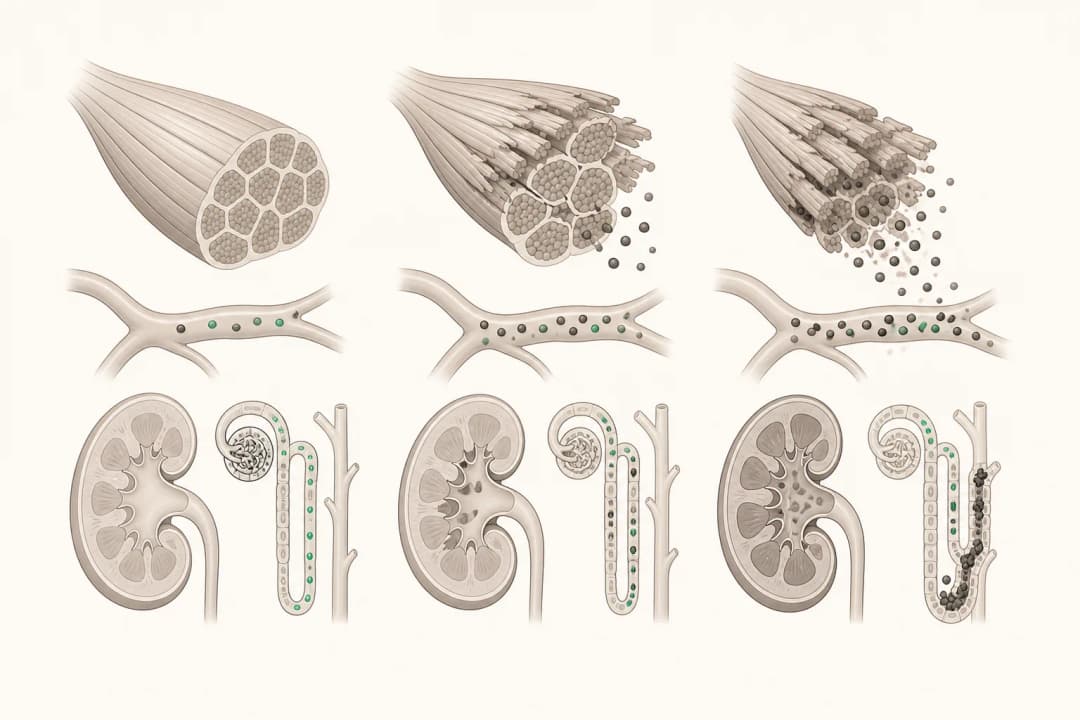
The symptoms are not identical in everyone, and dark urine may be absent. Rhabdomyolysis means damaged muscle cells are releasing their contents into the bloodstream; this can disrupt body chemistry and injure the kidneys, so suspected cases need prompt medical assessment.
Recognising a concerning pattern
The pain is often more intense than expected for the activity and may be accompanied by pronounced tenderness, tight swelling or difficulty moving the affected muscles. Weakness can make ordinary tasks unusually hard. Urine may look tea-coloured, cola-coloured or reddish-brown because muscle pigment is being cleared through the kidneys.
Heavy exertion is one possible trigger, especially with heat, dehydration or an abrupt increase in training. Crushing injuries, seizures, prolonged immobility, infections, metabolic problems and some medicines or substances can also damage muscle. Symptoms alone cannot confirm the condition; clinicians use blood and urine tests and assess kidney function and body salts.
What to do if you suspect it
Stop strenuous activity and seek urgent medical advice rather than trying to exercise through severe symptoms. Tell the clinician about recent exercise, heat exposure, injury, illness, seizures, prescribed medicines, supplements and recreational substances. Do not discontinue an essential prescribed medicine without clinical advice unless an emergency professional directs you to do so.
Treatment depends on the cause and test results. Medical teams may give fluids, monitor urine output and repeat blood tests while correcting electrolyte disturbances. Hospital observation may be required when there is kidney injury, significant swelling or abnormal body chemistry.
When urgent care is needed
Seek urgent medical assessment for dark urine with muscle pain or weakness, severe or rapidly worsening muscle swelling, markedly reduced urination, confusion, fainting, persistent vomiting or symptoms after a crush injury. Call emergency services for collapse, breathing difficulty, a seizure or severe heat illness. Do not wait for all of the commonly described signs to appear before seeking help.
Questions after assessment
Ask what likely triggered the muscle injury, whether kidney function and electrolyte levels are stable, and which medicines or supplements need review. Before returning to work, sport or training, discuss what symptoms should stop activity, how exertion should be increased, and whether follow-up blood or urine testing is needed.
Find care
General Clinics & Polyclinics in Abu Dhabi
That answer is general. If you want it applied to your own case, these are licensed general clinics & polyclinics listed in Abu Dhabi.
27 Ar Ruwwad St - Shakhbout City - MSH4 - Abu Dhabi - United Arab Emirates
Accepts: Daman, Thiqa, Cigna, MetLife +20 more
Al Ruwais, Al Dhafrah
Accepts: Daman, Thiqa, AXA, Cigna +16 more
Al Bahyah - Al Bahyah Old - Abu Dhabi - United Arab Emirates
Accepts: Daman, Thiqa, Cigna, Allianz Care +18 more
Abu Dhabi
Accepts: Daman, Thiqa, AXA, Cigna +27 more
Ordered by verification status and how complete each clinic's public record is, then alphabetically. This is a directory listing, not a ranking — Zavis does not rate or recommend providers.
A factual listing drawn from the DHA, DOH and MOHAP licence registers. It is not a referral, an endorsement, or advice that any of these providers is right for you.
Questions people ask
Can rhabdomyolysis occur without dark urine?
Yes. Dark urine is a possible sign, but its absence does not exclude rhabdomyolysis when severe muscle pain, swelling or weakness is present.
How is rhabdomyolysis different from ordinary post-exercise soreness?
Ordinary soreness is often manageable and improves with recovery. Pain that is unexpectedly severe, major swelling, pronounced weakness, dark urine or reduced urination needs urgent assessment.
Can medicines contribute to rhabdomyolysis?
Some medicines and drug interactions can contribute to muscle injury. A clinician should review everything you take, including prescriptions, over-the-counter products and supplements.
Keep reading
Medical disclaimer. This page is general health information, not medical advice, and it cannot diagnose you. Always consult a licensed healthcare provider about your own symptoms and treatment. In an emergency in the UAE, call 998 for an ambulance.