
The CK test for suspected rhabdomyolysis
Short answer
A CK blood test helps detect and monitor muscle damage, but clinicians diagnose rhabdomyolysis by combining the result with symptoms and other tests.
This answers one question. It is not a diagnosis and does not replace an assessment by a licensed doctor.
At a glance
- Sample
- CK is measured with a blood test
- Timing
- A repeat sample may reveal the direction of change
- Companion checks
- Kidney function, body salts, urine and symptoms provide essential context
What the CK test tells you
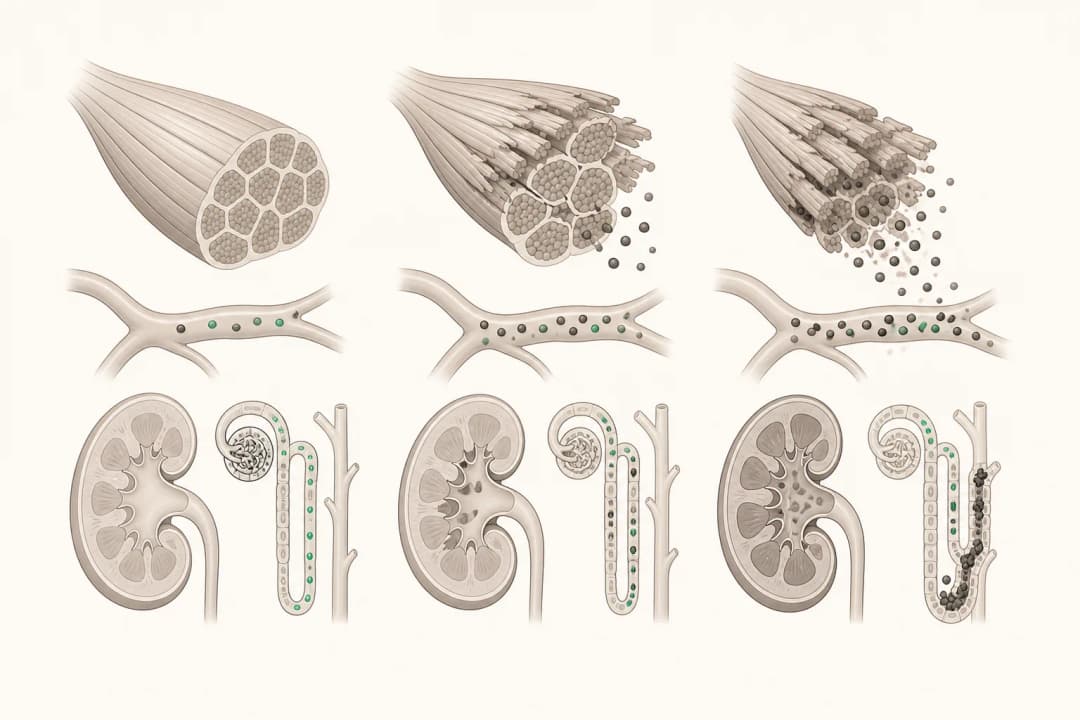
The test measures creatine kinase, an enzyme that enters the bloodstream when muscle cells are injured. It is useful for showing that muscle damage has occurred and for following how that damage changes over time.
Why one measurement is not the whole picture
CK can remain low early after an injury and rise later, so a repeat sample may be requested when suspicion remains. A falling result can suggest that active muscle injury is settling, but recovery decisions also depend on symptoms, urine output and organ function.
Recent intense exercise, muscle trauma, seizures, injections into muscle and certain medicines can influence CK. Laboratories may use different reference ranges, making the reported range on your own result more useful than an isolated number found elsewhere.
Before the test and after the result
Tell the clinician about recent workouts, falls, prolonged immobility, heat exposure, illness, supplements and all medicines. Unless instructed otherwise, do not deliberately exercise before a repeat CK test and do not discontinue prescribed treatment on your own.
Other checks may include kidney function, potassium and related body salts, a urine test and an electrocardiogram when salt disturbances are a concern. Follow the specific hydration plan you receive because some heart or kidney conditions require tailored fluid intake.
Symptoms that should not wait for a routine test
Go for urgent assessment if severe muscle pain, pronounced weakness, tense swelling, dark brown urine or much less urine develops, particularly after overheating, extreme exertion, a seizure or a crush injury. Fainting, confusion, chest symptoms or breathing difficulty also require emergency care.
Questions that clarify the testing plan
You could ask when the suspected injury occurred relative to the blood draw, whether another CK sample is needed, how the kidney and potassium results look, what the likely trigger is, and what findings would change the treatment or return-to-exercise plan.
Find care
General Clinics & Polyclinics in Abu Dhabi
That answer is general. If you want it applied to your own case, these are licensed general clinics & polyclinics listed in Abu Dhabi.
27 Ar Ruwwad St - Shakhbout City - MSH4 - Abu Dhabi - United Arab Emirates
Accepts: Daman, Thiqa, Cigna, MetLife +20 more
Al Ruwais, Al Dhafrah
Accepts: Daman, Thiqa, AXA, Cigna +16 more
Al Bahyah - Al Bahyah Old - Abu Dhabi - United Arab Emirates
Accepts: Daman, Thiqa, Cigna, Allianz Care +18 more
Abu Dhabi
Accepts: Daman, Thiqa, AXA, Cigna +27 more
Ordered by verification status and how complete each clinic's public record is, then alphabetically. This is a directory listing, not a ranking — Zavis does not rate or recommend providers.
A factual listing drawn from the DHA, DOH and MOHAP licence registers. It is not a referral, an endorsement, or advice that any of these providers is right for you.
Questions people ask
Can a normal early CK test exclude rhabdomyolysis?
Not always. CK may take time to rise after muscle injury, so a clinician may repeat the test if the timing and symptoms still raise concern.
Do I need to fast for a CK blood test?
Fasting is not generally required for CK alone, but follow the laboratory's instructions because other tests ordered at the same time may have different preparation requirements.
Why is potassium checked as well?
Damaged muscle can release potassium. A substantial disturbance may affect heart rhythm and needs prompt clinical management.
Keep reading
Medical disclaimer. This page is general health information, not medical advice, and it cannot diagnose you. Always consult a licensed healthcare provider about your own symptoms and treatment. In an emergency in the UAE, call 998 for an ambulance.