
Understanding the Chance of a Molar Pregnancy
Short answer
A molar pregnancy is uncommon and usually happens by chance, although a previous molar pregnancy and age at either end of the reproductive years can increase the likelihood.
This answers one question. It is not a diagnosis and does not replace an assessment by a licensed doctor.
At a glance
- Cause
- It results from an error during fertilisation and is not caused by something either parent did.
- Confirmation
- Ultrasound and hCG tests guide assessment; examination of removed tissue can confirm the diagnosis.
- Follow-up
- Scheduled hCG monitoring checks that molar tissue is no longer active.
How likely is a molar pregnancy?
Your symptoms cannot calculate your personal chance. A clinician uses your pregnancy history, an ultrasound scan, pregnancy-hormone testing, and sometimes examination of pregnancy tissue to establish what has happened.
What a molar pregnancy involves
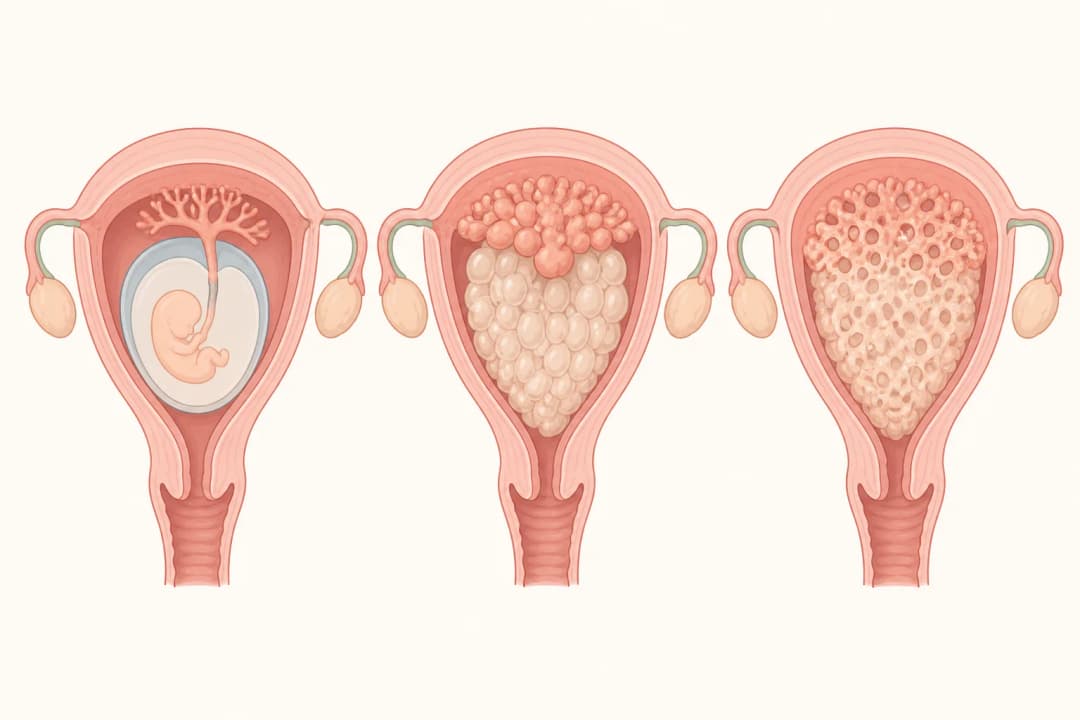
A molar pregnancy develops when an error during fertilisation causes abnormal placental-type tissue to grow. In a complete mole there is no developing embryo; in a partial mole, early fetal tissue may form but cannot develop into a viable pregnancy.
Molar pregnancy is part of gestational trophoblastic disease. The diagnosis does not automatically mean cancer, but abnormal cells can remain after the pregnancy is removed, which is why follow-up is essential.
How diagnosis and follow-up are handled
Contact your maternity or early-pregnancy service if you have bleeding, unusually severe nausea or vomiting, or a uterus that seems larger than expected for the pregnancy stage. Molar pregnancy can present with these features, but they can also occur for other reasons.
Treatment generally removes the abnormal pregnancy tissue, which can then be examined to confirm the diagnosis. Afterwards, blood or urine tests track the pregnancy hormone hCG until your specialist confirms that monitoring is complete. Avoid trying to conceive during this period because a new pregnancy raises hCG and makes the results difficult to interpret.
If hCG does not fall as expected or begins rising, the specialist team checks for persistent gestational trophoblastic disease. Further treatment may include chemotherapy, chosen according to the clinical findings.
When pregnancy symptoms need urgent care
Seek urgent assessment for any vaginal bleeding or dark discharge during pregnancy, particularly when it accompanies abdominal pain, repeated vomiting, dizziness, or weakness. Bleeding in pregnancy has several possible causes and needs evaluation rather than self-diagnosis.
Call emergency services for heavy bleeding, fainting, severe abdominal pain, shoulder-tip pain, breathing difficulty, confusion, or feeling acutely unwell. These warning signs can reflect significant blood loss or another pregnancy emergency.
Planning the next conversation
Ask what confirmed the diagnosis, which type of mole was found, how your hCG results are changing, and how you will receive future test reminders. Your specialist can also explain contraception during monitoring, when another pregnancy can be considered, and where to find emotional support after pregnancy loss.
Questions people ask
What should you know about chance of molar pregnancy?
It is uncommon and usually occurs by chance. A previous molar pregnancy and age at the younger or older ends of the reproductive years can raise likelihood, but individual assessment belongs with a pregnancy specialist.
Does bleeding in pregnancy mean I have a molar pregnancy?
No. Molar pregnancy can present with vaginal bleeding, but bleeding has many possible causes. Arrange prompt clinical assessment so the cause and urgency can be determined.
Why are hCG tests needed after treatment?
The pattern shows whether pregnancy-related tissue is still active. Results that stop falling or begin rising prompt specialist evaluation and, when needed, further treatment.
Related
Related reading
Keep reading
Cancer care in the UAE
Hospitals & Medical Centers in Abu Dhabi
Most UAE cancer care is delivered inside hospital services rather than by standalone oncology clinics, so these are licensed hospitals & medical centers listed in Abu Dhabi. Confirm the specific cancer service exists before you travel, and know that asking for a second opinion is routine.
Ahalia Hospital Musaffah Building - Musaffah - Musaffah Industrial - Abu Dhabi - United Arab Emirates
Accepts: Daman, Thiqa, AXA, Cigna +26 more
Al Ruwais Industrial City - Abu Dhabi - United Arab Emirates
Accepts: Daman, Thiqa, AXA, Cigna +30 more
Abu Dhabi, Abu Dhabi
Accepts: Daman, Thiqa, AXA, Cigna +30 more
Second opinions are routine in cancer care and asking for one does not affect your treatment. How to arrange a second opinion in the UAE.
Ordered by verification status and how complete each clinic's public record is, then alphabetically. This is a directory listing, not a ranking — Zavis does not rate or recommend providers.
A factual listing drawn from the DHA, DOH and MOHAP licence registers. It is not a referral, an endorsement, or advice that any of these providers is right for you.
Medical disclaimer. This page is general health information, not medical advice, and it cannot diagnose you. Always consult a licensed healthcare provider about your own symptoms and treatment. In an emergency in the UAE, call 998 for an ambulance.