
Cervical stitch for pregnancy
Short answer
A cervical stitch may support a cervix at risk of opening too early, but suitability depends on your history and current pregnancy findings.
This answers one question. It is not a diagnosis and does not replace an assessment by a licensed doctor.
At a glance
- Other name
- Cervical cerclage
- Common route
- Placed through the vagina with anaesthesia
- Follow-up
- Antenatal monitoring continues after insertion
The short answer
Also called cervical cerclage, it is considered after reviewing factors such as earlier late miscarriage or preterm birth, previous cervical treatment and ultrasound evidence of a shortening cervix.
How cervical cerclage works
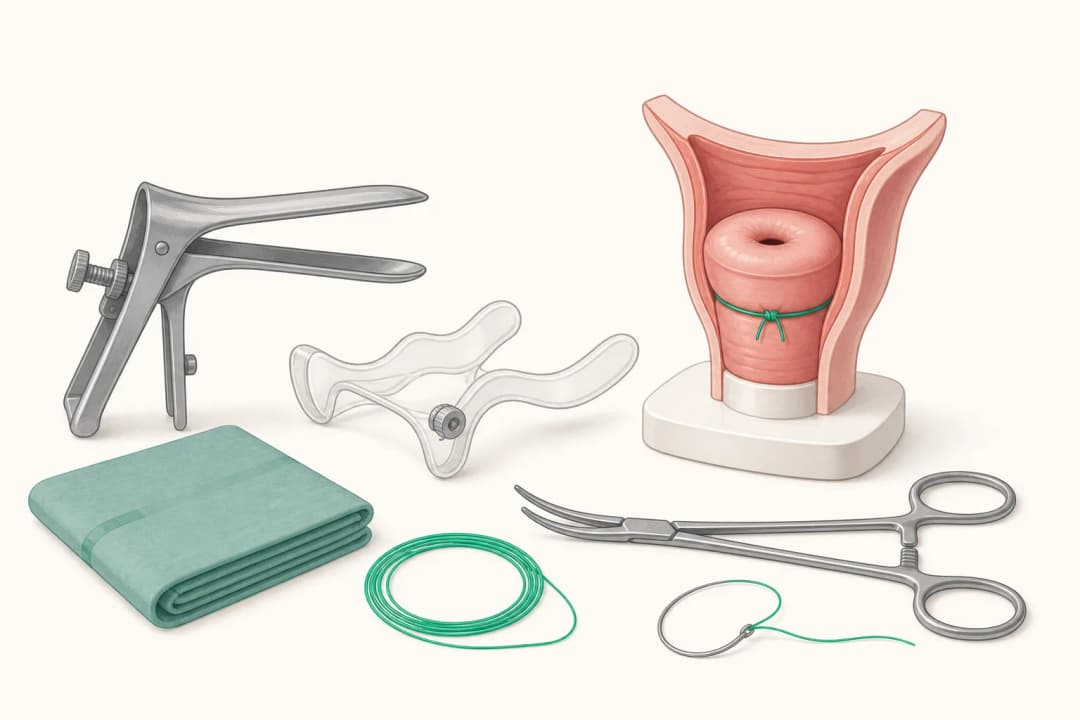
A clinician places a suture around the cervix, most often through the vagina, and tightens it to provide support. The procedure is performed with anaesthesia. A planned stitch is different from an emergency stitch considered after the cervix has already started opening; the circumstances, potential benefit and risks are therefore different. Cerclage may not be suitable when there are contractions, significant bleeding, infection or ruptured membranes.
Preparing and caring for yourself afterward
Before the procedure, confirm when to stop eating or drinking and which regular medicines to take. Arrange transport home and follow the hospital’s advice on recovery. Light spotting or mild cramping can occur after insertion, but the team should tell you what is expected in your case. Keep all antenatal appointments because the stitch does not replace pregnancy monitoring. Make sure you know the plan for removal and what to do if labour starts first.
Symptoms that need prompt assessment
Call your maternity unit without delay for contractions or repeated abdominal cramps, leaking fluid, continued or heavy vaginal bleeding, fever, worsening pain, or smelly or green discharge. These symptoms may indicate labour, ruptured membranes, infection or another problem that needs examination. Labour with a vaginal stitch still present requires urgent assessment so the cervix is not injured.
Useful points to clarify
Ask which part of your history or scan supports cerclage, what the alternatives are, and how each option fits your priorities. Discuss the type of stitch and anaesthetic, procedure-specific risks, pain relief, restrictions during recovery, follow-up arrangements and removal. Ask for a direct maternity contact for symptoms outside clinic hours.
Find care
General Clinics & Polyclinics in Abu Dhabi
That answer is general. If you want it applied to your own case, these are licensed general clinics & polyclinics listed in Abu Dhabi.
27 Ar Ruwwad St - Shakhbout City - MSH4 - Abu Dhabi - United Arab Emirates
Accepts: Daman, Thiqa, Cigna, MetLife +20 more
Al Ruwais, Al Dhafrah
Accepts: Daman, Thiqa, AXA, Cigna +16 more
Al Bahyah - Al Bahyah Old - Abu Dhabi - United Arab Emirates
Accepts: Daman, Thiqa, Cigna, Allianz Care +18 more
Abu Dhabi
Accepts: Daman, Thiqa, AXA, Cigna +27 more
Ordered by verification status and how complete each clinic's public record is, then alphabetically. This is a directory listing, not a ranking — Zavis does not rate or recommend providers.
A factual listing drawn from the DHA, DOH and MOHAP licence registers. It is not a referral, an endorsement, or advice that any of these providers is right for you.
Questions people ask
Will I be awake when a cervical stitch is inserted?
That depends on the anaesthetic plan. A spinal anaesthetic numbs the lower body while you remain awake, whereas a general anaesthetic means you are asleep.
Is bed rest required after cerclage?
Routine prolonged bed rest is not generally part of cerclage care. Follow the activity guidance from your maternity team because recovery advice can reflect your individual circumstances.
Does a cervical stitch stay in during labour?
A vaginal stitch is generally removed before labour. If contractions begin or the waters break while it remains in place, contact the maternity unit immediately.
Related
Related reading
Keep reading
Medical disclaimer. This page is general health information, not medical advice, and it cannot diagnose you. Always consult a licensed healthcare provider about your own symptoms and treatment. In an emergency in the UAE, call 998 for an ambulance.