
What should you know about ceramic bearing suppliers?
Short answer
Medical ceramic bearing components should come through regulated implant supply channels and be selected by the surgical team for compatibility with the planned joint replacement system.
This answers one question. It is not a diagnosis and does not replace an assessment by a licensed doctor.
At a glance
- Who selects it
- The orthopaedic team selects a compatible implant system for the individual patient.
- Patient safeguard
- Keep the implant identification supplied by the hospital after surgery.
What supplier choice means for patients
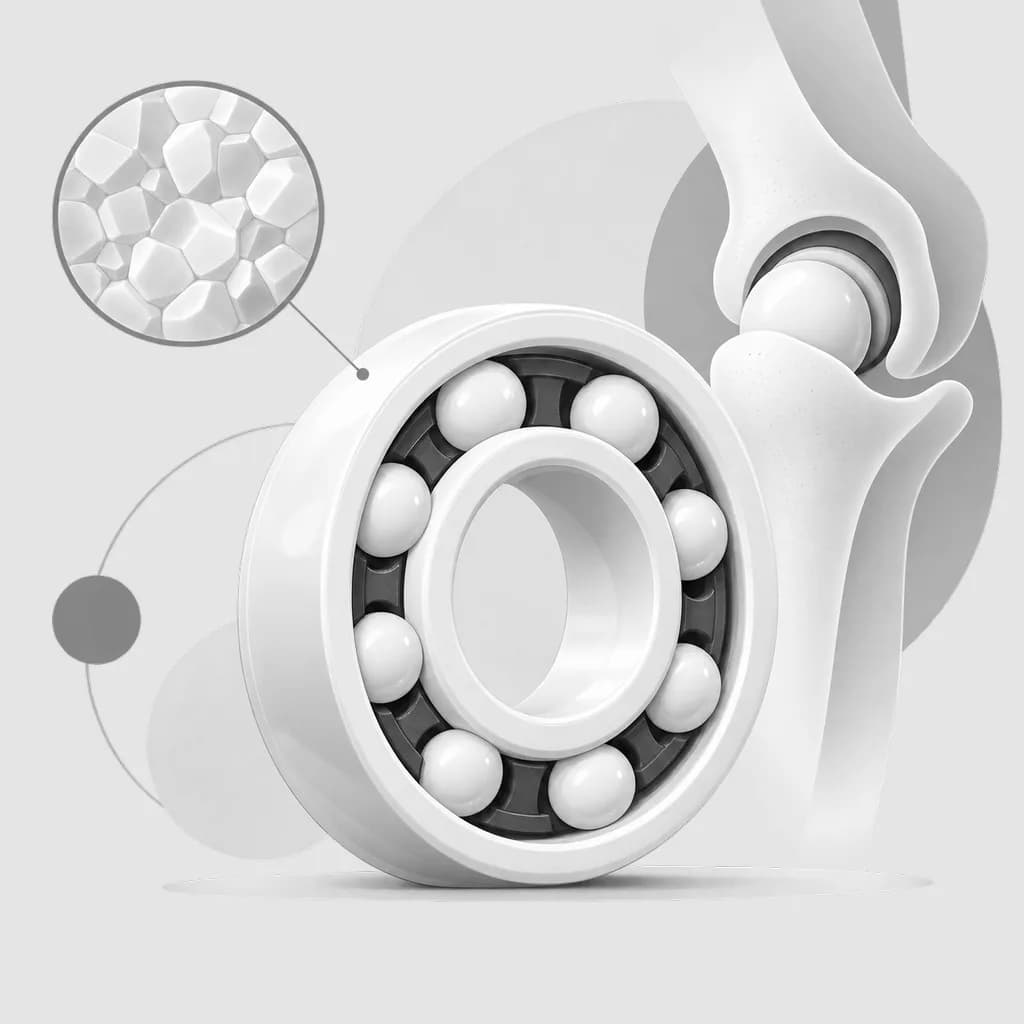
A ceramic bearing in hip replacement is part of a matched implant construct, not a generic ceramic bearing bought directly by a patient. The bearing surfaces may include a ceramic head and a compatible liner. Dimensions, locking mechanisms, tapers and material pairings must fit the specific implant system.
A supplier may manufacture components, distribute an established implant system or serve an unrelated industrial market. A familiar company name or a ceramic label alone does not establish that a product is suitable for implantation.
What to check before surgery
Discuss the proposed bearing combination with your orthopaedic surgeon. Ask for the implant manufacturer, model or system, bearing materials and the reason that combination suits your anatomy, activity needs and clinical situation. The hospital should obtain sealed components through its clinical procurement route and keep implant identification in your medical record.
Do not purchase an implant component online or ask for a part to be substituted because it appears similar. Even small differences at a connection can affect fit, loading and wear.
When to seek care after joint replacement
Contact your surgical team promptly for new or worsening hip pain, clicking or grinding accompanied by pain, swelling, wound drainage, fever, or difficulty bearing weight. Seek urgent assessment after a fall if the leg looks shortened or rotated, the joint appears out of place, or you cannot stand safely.
Questions for your surgeon
Useful questions include: Which bearing surfaces are planned? Are all components designed to work together? Will I receive an implant record? What symptoms after surgery should lead me to call the clinic or go to urgent care?
Find care
General Clinics & Polyclinics in Abu Dhabi
That answer is general. If you want it applied to your own case, these are licensed general clinics & polyclinics listed in Abu Dhabi.
27 Ar Ruwwad St - Shakhbout City - MSH4 - Abu Dhabi - United Arab Emirates
Accepts: Daman, Thiqa, Cigna, MetLife +20 more
Al Ruwais, Al Dhafrah
Accepts: Daman, Thiqa, AXA, Cigna +16 more
Al Bahyah - Al Bahyah Old - Abu Dhabi - United Arab Emirates
Accepts: Daman, Thiqa, Cigna, Allianz Care +18 more
Abu Dhabi
Accepts: Daman, Thiqa, AXA, Cigna +27 more
Ordered by verification status and how complete each clinic's public record is, then alphabetically. This is a directory listing, not a ranking — Zavis does not rate or recommend providers.
A factual listing drawn from the DHA, DOH and MOHAP licence registers. It is not a referral, an endorsement, or advice that any of these providers is right for you.
Questions people ask
Can I choose a ceramic bearing supplier myself?
You can discuss material preferences, but the surgeon and hospital must choose components that are clinically appropriate, approved for use together and available through the proper medical supply route.
Does ceramic mean the entire hip implant is ceramic?
No. Ceramic usually describes one or both articulating bearing surfaces; other parts of the implant may be made from different medical-grade materials.
Related
Related reading
Keep reading
Medical disclaimer. This page is general health information, not medical advice, and it cannot diagnose you. Always consult a licensed healthcare provider about your own symptoms and treatment. In an emergency in the UAE, call 998 for an ambulance.