
Causes of polyhydramnios in the third trimester
Short answer
Polyhydramnios in the third trimester may reflect increased fetal urine production, reduced swallowing, or no identifiable cause.
This answers one question. It is not a diagnosis and does not replace an assessment by a licensed doctor.
At a glance
- Main mechanism
- Fluid production exceeds fluid removal
- Assessment
- Ultrasound plus checks guided by pregnancy history
- Urgent trigger
- Reduced movement, bleeding, contractions or leaking fluid
Direct answer
Possible contributors include diabetes during pregnancy, a multiple pregnancy, fetal anaemia, infection, or a condition that affects how the baby swallows or processes fluid. Finding extra fluid does not by itself identify the cause, and many cases remain unexplained.
What the finding means
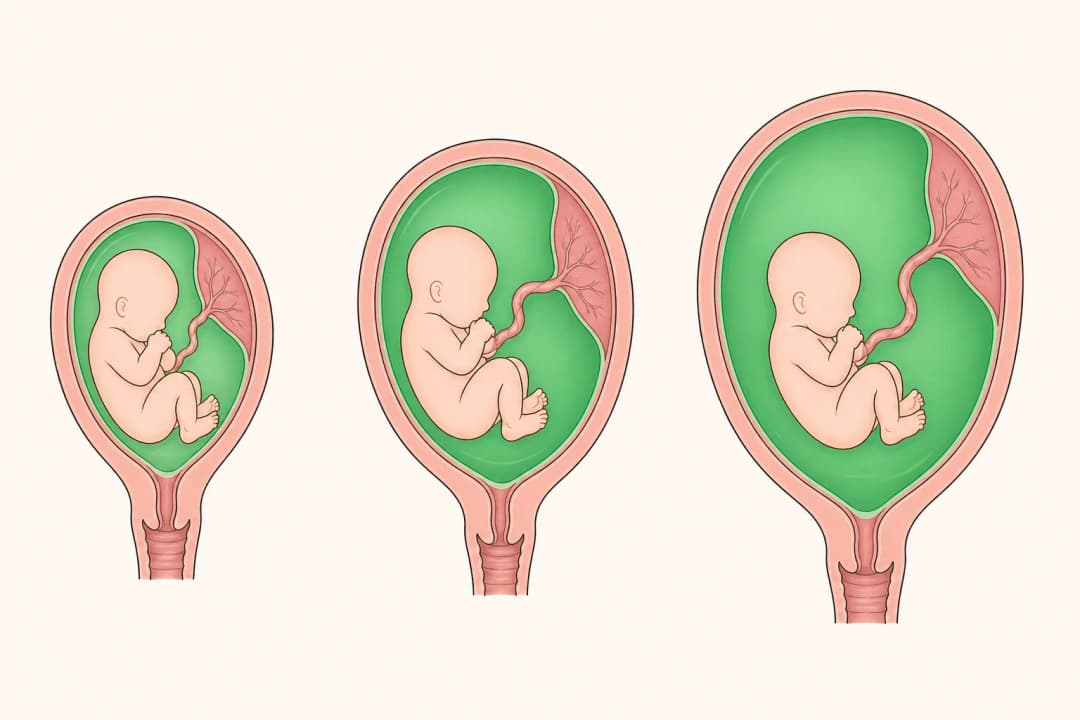
Amniotic fluid is continually produced and removed. Later in pregnancy, much of it comes from the baby's urine and is recycled when the baby swallows. Polyhydramnios develops when production exceeds removal.
An ultrasound can estimate fluid volume, review growth, look at the baby's anatomy and check whether there is more than one baby. Your maternity team may also review glucose testing and consider other tests according to the scan and your health history.
What to do next
Keep the follow-up appointments offered by your maternity team. Monitoring may include repeat ultrasound assessment, checks of fetal movement and wellbeing, and discussion of where and how to give birth if the fluid remains high.
Notice your baby's usual movement pattern rather than relying on a fixed daily count. Contact maternity triage promptly if movements become reduced or clearly different. Do not try to reduce fluid by restricting drinks unless a clinician has given you a separate medical reason to do so.
When to seek urgent care
Call your maternity unit urgently for a sudden gush or ongoing trickle of fluid, vaginal bleeding, regular painful tightenings, marked breathlessness, severe abdominal discomfort, or reduced fetal movement. If the waters break, avoid inserting anything into the vagina and follow the unit's instructions, because excess fluid can alter how the baby or umbilical cord sits.
Call emergency services for severe breathing difficulty, collapse, heavy bleeding, or if you can feel or see the umbilical cord or any part of the baby at the vagina.
Questions for your maternity team
Ask how much extra fluid was seen, whether growth and anatomy appeared reassuring, whether glucose or infection testing is appropriate, and when another scan is planned. You can also ask how the finding affects monitoring, labour planning and what to do if your waters break at home.
Find care
General Clinics & Polyclinics in Abu Dhabi
That answer is general. If you want it applied to your own case, these are licensed general clinics & polyclinics listed in Abu Dhabi.
27 Ar Ruwwad St - Shakhbout City - MSH4 - Abu Dhabi - United Arab Emirates
Accepts: Daman, Thiqa, Cigna, MetLife +20 more
Al Ruwais, Al Dhafrah
Accepts: Daman, Thiqa, AXA, Cigna +16 more
Al Bahyah - Al Bahyah Old - Abu Dhabi - United Arab Emirates
Accepts: Daman, Thiqa, Cigna, Allianz Care +18 more
Abu Dhabi
Accepts: Daman, Thiqa, AXA, Cigna +27 more
Ordered by verification status and how complete each clinic's public record is, then alphabetically. This is a directory listing, not a ranking — Zavis does not rate or recommend providers.
A factual listing drawn from the DHA, DOH and MOHAP licence registers. It is not a referral, an endorsement, or advice that any of these providers is right for you.
Questions people ask
Can polyhydramnios occur without a clear cause?
Yes. Sometimes scans and clinical checks do not reveal a specific explanation, but follow-up still helps the team watch fluid, growth and fetal wellbeing.
Does polyhydramnios mean labour will start early?
It can stretch the uterus and may increase the possibility of contractions or the waters breaking earlier, but it does not predict exactly when labour will begin.
Should I drink less water?
No. Ordinary fluid intake is not the usual cause, and restricting drinks without clinical advice could leave you dehydrated.
Keep reading
Medical disclaimer. This page is general health information, not medical advice, and it cannot diagnose you. Always consult a licensed healthcare provider about your own symptoms and treatment. In an emergency in the UAE, call 998 for an ambulance.