
What should you know about causes of polyhydramnios in pregnancy?
Short answer
In pregnancy, polyhydramnios can arise when the baby produces extra urine, swallows less fluid, or another condition changes fluid balance.
This answers one question. It is not a diagnosis and does not replace an assessment by a licensed doctor.
At a glance
- Finding
- The diagnosis is based on ultrasound estimation of amniotic fluid.
- Experience
- Some people have no symptoms; others notice pressure, reflux, or breathlessness.
- Safety action
- Changes in fetal movement or possible waters breaking need immediate maternity advice.
The short answer
Maternal diabetes or raised blood glucose, fetal digestive or neurological conditions, fetal anaemia, certain infections, and an imbalance of blood flow between babies in a shared-placenta twin pregnancy are possible causes. Sometimes the pregnancy otherwise appears healthy and no explanation is identified.
What the finding means for your pregnancy
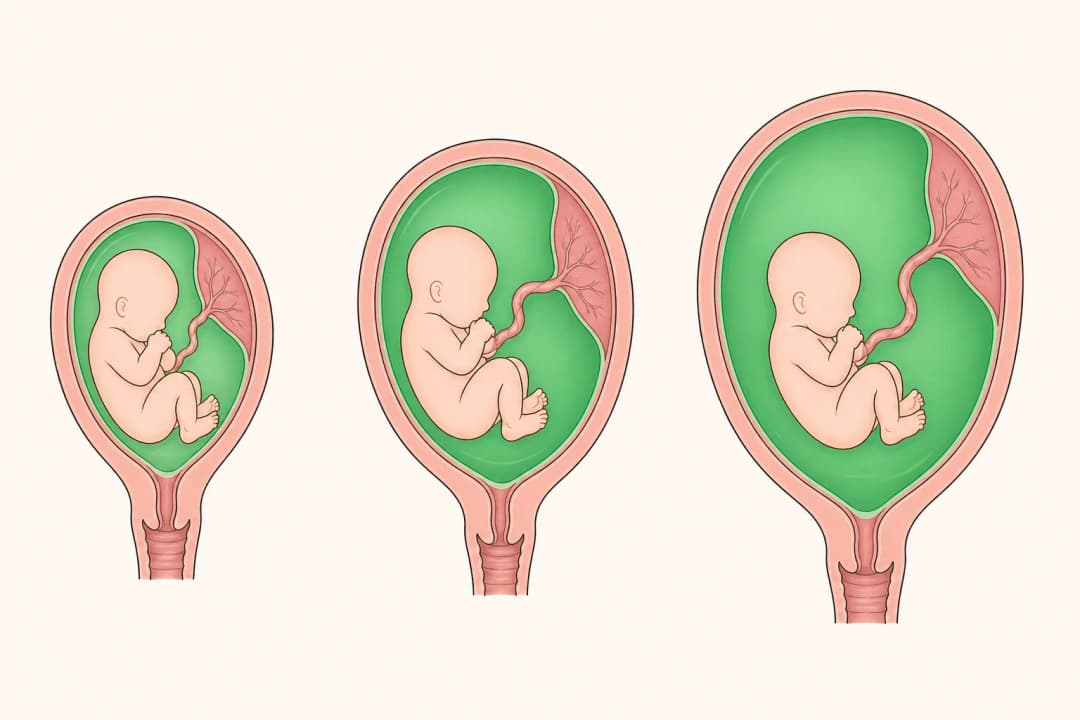
Amniotic fluid cushions the baby and allows movement. Too much fluid stretches the womb more than expected and may cause abdominal pressure, reflux, swelling, or breathlessness. It can also make the baby’s position less stable.
Polyhydramnios describes an ultrasound finding, not a single disease. Its significance depends on how much fluid is present, how quickly it appeared, the pregnancy stage, whether one baby or more is present, and what the scan shows about growth and anatomy.
Preparing for monitoring and care
Keep all antenatal and scan appointments, and learn how to contact your maternity triage unit. Your team may check blood glucose, review fetal anatomy and movement, assess placental and fetal blood flow, and repeat fluid measurements. Further blood tests depend on your history and scan findings.
A growth scan helps the team compare fetal size and fluid with earlier findings. Depending on symptoms and severity, care may range from observation to treatment of a contributing condition or specialist procedures. Do not restrict drinks unless your maternity clinician gives a separate medical reason.
When to contact maternity triage
Call immediately if fetal movements are reduced or altered, your waters may have broken, bleeding occurs, contractions become regular or painful, or the abdomen becomes suddenly larger and tense. Marked breathlessness, severe pain, collapse, or heavy bleeding requires emergency help.
After the waters break, avoid walking around while seeking advice if you feel or see something in the vagina. Call emergency services, because rarely the umbilical cord can slip below the baby and needs immediate assessment.
Planning the conversation
Ask whether the excess fluid is mild, moderate, or severe; whether it developed gradually; and which cause is being considered. Discuss how often movement, growth, and fluid will be checked, whether fetal position affects delivery planning, and what to do if labour or waters breaking begins at home.
Find care
General Clinics & Polyclinics in Abu Dhabi
That answer is general. If you want it applied to your own case, these are licensed general clinics & polyclinics listed in Abu Dhabi.
27 Ar Ruwwad St - Shakhbout City - MSH4 - Abu Dhabi - United Arab Emirates
Accepts: Daman, Thiqa, Cigna, MetLife +20 more
Al Ruwais, Al Dhafrah
Accepts: Daman, Thiqa, AXA, Cigna +16 more
Al Bahyah - Al Bahyah Old - Abu Dhabi - United Arab Emirates
Accepts: Daman, Thiqa, Cigna, Allianz Care +18 more
Abu Dhabi
Accepts: Daman, Thiqa, AXA, Cigna +27 more
Ordered by verification status and how complete each clinic's public record is, then alphabetically. This is a directory listing, not a ranking — Zavis does not rate or recommend providers.
A factual listing drawn from the DHA, DOH and MOHAP licence registers. It is not a referral, an endorsement, or advice that any of these providers is right for you.
Questions people ask
Did drinking too much water cause polyhydramnios?
Ordinary fluid intake is not considered a cause. Amniotic fluid is regulated through maternal, placental, and fetal processes, so do not restrict drinking without medical advice.
Why are repeat scans needed?
Repeat scans show whether fluid is stable or changing and allow the team to reassess fetal growth, position, movement, and other features relevant to care.
Can the baby change position more easily?
Extra fluid can give the baby more room to move, so the position may be less stable. Your team may recheck presentation when planning birth or when labour starts.
Keep reading
Medical disclaimer. This page is general health information, not medical advice, and it cannot diagnose you. Always consult a licensed healthcare provider about your own symptoms and treatment. In an emergency in the UAE, call 998 for an ambulance.