
Causes of polyhydramnios
Short answer
Polyhydramnios means there is more amniotic fluid than expected, often without an identifiable cause, and ultrasound findings guide further assessment and monitoring.
This answers one question. It is not a diagnosis and does not replace an assessment by a licensed doctor.
At a glance
- Definition
- Polyhydramnios is an ultrasound finding of more amniotic fluid than expected.
- Cause
- No cause may be found; diabetes, multiple pregnancy, infection and altered fetal swallowing are possible explanations.
- Follow-up
- Repeat scans and checks for an underlying condition may be advised.
The short answer
Possible causes include diabetes arising during pregnancy, a multiple pregnancy, certain infections, or a fetal condition that affects swallowing or fluid balance. In pregnancies with shared placental circulation, an imbalance of blood flow between babies can also increase fluid around one baby.
How amniotic fluid builds up
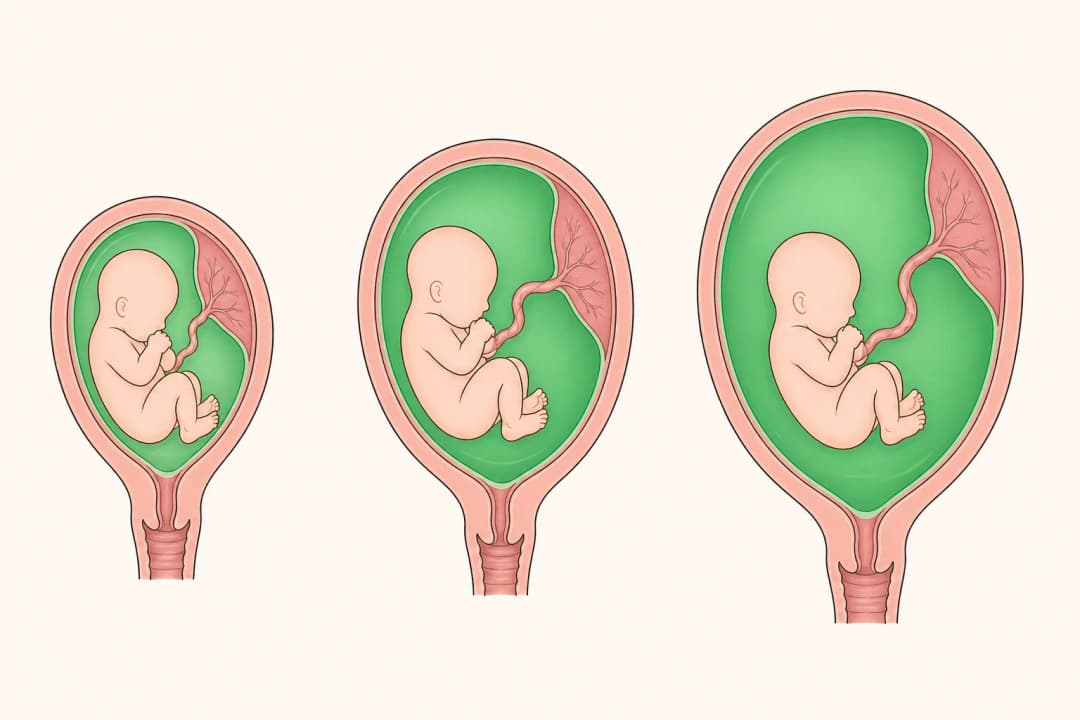
Later in pregnancy, the baby contributes to amniotic fluid by passing urine and removes fluid by swallowing it. Polyhydramnios can develop when urine production rises, swallowing is reduced, or fluid circulation is altered. The finding may be mild and discovered during a routine scan, or the fluid can increase more quickly and stretch the uterus.
A larger uterus may contribute to abdominal tightness, indigestion, breathlessness or swelling, although these symptoms also occur in pregnancies without excess fluid. The scan measurement and the wider pregnancy assessment, rather than symptoms alone, establish whether polyhydramnios is present.
What assessment and monitoring involve
Your maternity team may repeat ultrasound measurements, review the baby’s anatomy and growth, and check for diabetes during pregnancy. Blood tests may be considered when symptoms, medical history or scan findings suggest infection or another underlying condition. Follow the monitoring schedule even when you feel well, because fluid levels and the baby’s position can change.
Management depends on the amount of fluid, symptoms, gestational stage and any identified cause. Care may focus on treating an underlying condition and observing the pregnancy more closely. When severe fluid pressure causes significant symptoms, a specialist may discuss removing some fluid with a needle, together with the procedure’s benefits and risks.
When to contact maternity services
Contact your maternity unit urgently if your abdomen becomes larger suddenly, you develop new or worsening abdominal pain, your waters break, contractions begin, breathing becomes difficult, or your baby’s usual movements reduce or change. If fluid comes from the vagina, use a pad rather than a tampon and note its colour while arranging immediate assessment.
Useful questions for your maternity team
Ask how much extra fluid was seen, whether the finding has changed, and whether the baby’s anatomy and growth appear as expected. Discuss which checks for diabetes or infection are appropriate, how often monitoring is planned, whom to call if symptoms change, and whether the finding affects recommendations for labour or place of birth.
Find care
General Clinics & Polyclinics in Abu Dhabi
That answer is general. If you want it applied to your own case, these are licensed general clinics & polyclinics listed in Abu Dhabi.
27 Ar Ruwwad St - Shakhbout City - MSH4 - Abu Dhabi - United Arab Emirates
Accepts: Daman, Thiqa, Cigna, MetLife +20 more
Al Ruwais, Al Dhafrah
Accepts: Daman, Thiqa, AXA, Cigna +16 more
Al Bahyah - Al Bahyah Old - Abu Dhabi - United Arab Emirates
Accepts: Daman, Thiqa, Cigna, Allianz Care +18 more
Abu Dhabi
Accepts: Daman, Thiqa, AXA, Cigna +27 more
Ordered by verification status and how complete each clinic's public record is, then alphabetically. This is a directory listing, not a ranking — Zavis does not rate or recommend providers.
A factual listing drawn from the DHA, DOH and MOHAP licence registers. It is not a referral, an endorsement, or advice that any of these providers is right for you.
Questions people ask
Can polyhydramnios occur when the baby appears healthy?
Yes. Sometimes scans and other checks do not identify an underlying problem. The maternity team can still monitor fluid, growth, movement and the baby’s position as pregnancy continues.
Does polyhydramnios always need treatment?
No. Management is tailored to fluid level, symptoms and the cause. Some pregnancies need observation and repeat scans, while an identified condition may need treatment or severe symptoms may require specialist intervention.
Why is diabetes checked after this finding?
Raised maternal blood glucose can lead the baby to pass more urine, which can increase amniotic fluid. Testing helps determine whether glucose management should become part of pregnancy care.
Keep reading
Medical disclaimer. This page is general health information, not medical advice, and it cannot diagnose you. Always consult a licensed healthcare provider about your own symptoms and treatment. In an emergency in the UAE, call 998 for an ambulance.