
Causes of IUGR in pregnancy
Short answer
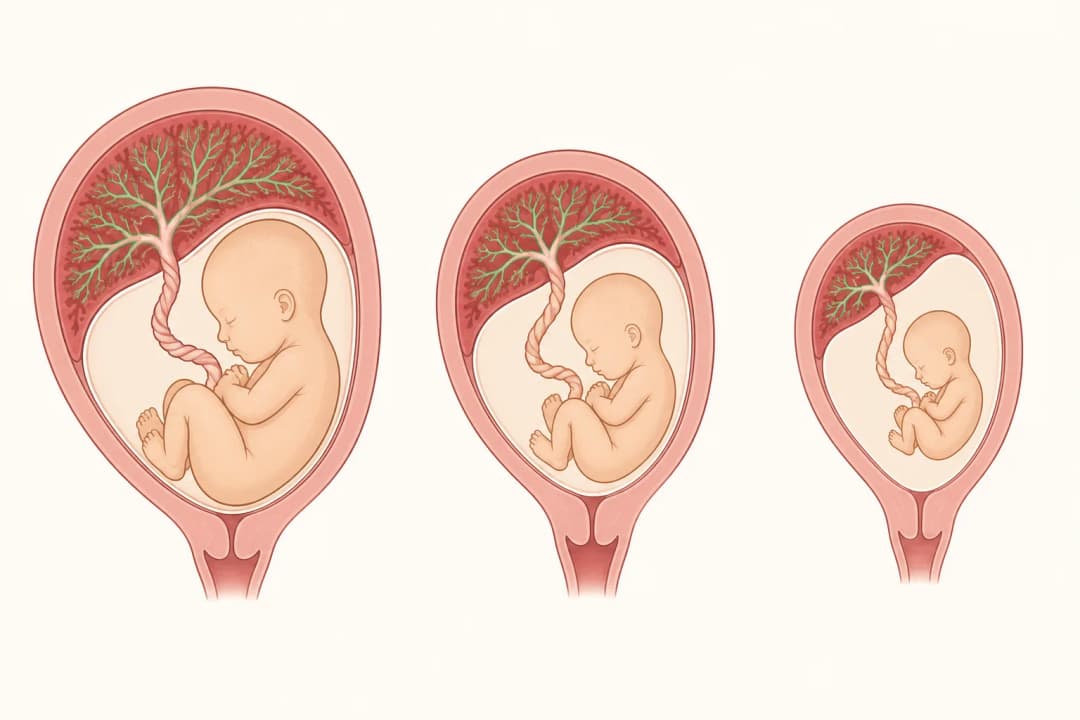
Fetal growth restriction occurs when a fetus does not reach its growth potential, most often because placental function is impaired.
This answers one question. It is not a diagnosis and does not replace an assessment by a licensed doctor.
At a glance
- Meaning
- IUGR is an older term for fetal growth restriction.
- Common pathway
- Impaired placental function can limit oxygen and nutrient transfer.
- Care principle
- Monitoring balances continued growth against the safety of earlier birth.
Understanding the cause
Other possible contributors include maternal illness, infection, fetal chromosome or structural conditions, and exposure to nicotine or certain substances. Some fetuses are healthy and naturally small; ultrasound trends and placental assessment help distinguish small size from restricted growth.
Maternal, placental and fetal factors
Placental dysfunction can reduce the delivery of oxygen and nutrients. Conditions involving maternal blood vessels, such as high blood pressure or pre-eclampsia, may occur alongside this problem. Kidney disease, autoimmune disorders, severe anaemia and poor nutritional intake can also affect the environment supporting growth.
Fetal genetic or anatomical differences and some infections may alter growth directly. The timing and pattern matter: early, proportionate smallness with additional scan findings raises different questions from slowing abdominal growth later in pregnancy. In some cases, evaluation does not identify one definite cause.
How the pregnancy is monitored
Keep all maternity appointments and follow the personalised schedule for growth scans. Ultrasound can track fetal measurements, amniotic fluid and blood flow through the placenta and fetus. Later in pregnancy, fetal heart monitoring may add information about current wellbeing.
Your team may check blood pressure, urine and blood tests, review medicines and discuss stopping nicotine or other substances. Treatment focuses on maternal conditions and careful surveillance; bed rest or extra food cannot correct placental dysfunction. If remaining pregnant becomes less safe, the team may discuss induction of labour or caesarean birth according to the clinical circumstances.
When to contact maternity services now
Call your maternity unit immediately if fetal movements reduce or change from the pattern familiar to you. Do not wait until the next day or try to make the fetus move before calling. Follow local movement guidance because expected patterns vary with the stage of pregnancy.
Urgent assessment is also needed for vaginal bleeding, leaking fluid, regular painful contractions before expected labour, severe abdominal pain, a severe headache, visual changes, sudden facial or hand swelling, chest pain, shortness of breath, or a seizure. These warning signs drive urgency regardless of the estimated fetal size.
Plan the next decisions
Ask whether the fetus is small or showing true growth restriction, what the blood-flow and fluid measurements indicate, how often surveillance is needed, and whether a maternal or fetal cause has been identified. Discuss which result would alter the birth plan, where birth should occur and what signs should trigger an immediate call.
Find care
General Clinics & Polyclinics in Abu Dhabi
That answer is general. If you want it applied to your own case, these are licensed general clinics & polyclinics listed in Abu Dhabi.
27 Ar Ruwwad St - Shakhbout City - MSH4 - Abu Dhabi - United Arab Emirates
Accepts: Daman, Thiqa, Cigna, MetLife +20 more
Al Ruwais, Al Dhafrah
Accepts: Daman, Thiqa, AXA, Cigna +16 more
Al Bahyah - Al Bahyah Old - Abu Dhabi - United Arab Emirates
Accepts: Daman, Thiqa, Cigna, Allianz Care +18 more
Abu Dhabi
Accepts: Daman, Thiqa, AXA, Cigna +27 more
Ordered by verification status and how complete each clinic's public record is, then alphabetically. This is a directory listing, not a ranking — Zavis does not rate or recommend providers.
A factual listing drawn from the DHA, DOH and MOHAP licence registers. It is not a referral, an endorsement, or advice that any of these providers is right for you.
Questions people ask
Is every small fetus growth restricted?
No. Some fetuses are constitutionally small and continue along their own growth pattern without signs of placental compromise. Clinicians interpret serial measurements with fluid and blood-flow findings.
Can fetal growth restriction be reversed?
There is no treatment that directly restores impaired placental function. Managing maternal illness, avoiding harmful exposures and monitoring fetal wellbeing help guide the safest timing of birth.
Will growth restriction always lead to early birth?
Not always. Timing depends on growth, blood flow, fetal wellbeing, gestational stage and maternal health. The plan may change as surveillance provides new information.
Related
Related reading
Keep reading
Medical disclaimer. This page is general health information, not medical advice, and it cannot diagnose you. Always consult a licensed healthcare provider about your own symptoms and treatment. In an emergency in the UAE, call 998 for an ambulance.