
What causes a molar pregnancy?
Short answer
A molar pregnancy is caused by an abnormal combination of genetic material at fertilisation, leading placental tissue to grow in an unusual way.
This answers one question. It is not a diagnosis and does not replace an assessment by a licensed doctor.
At a glance
- Underlying cause
- An abnormal distribution of chromosomes during fertilisation.
- Not your fault
- Everyday behaviour does not cause a molar pregnancy.
- Follow-up marker
- Pregnancy hormone hCG is checked after the tissue is removed.
The short answer
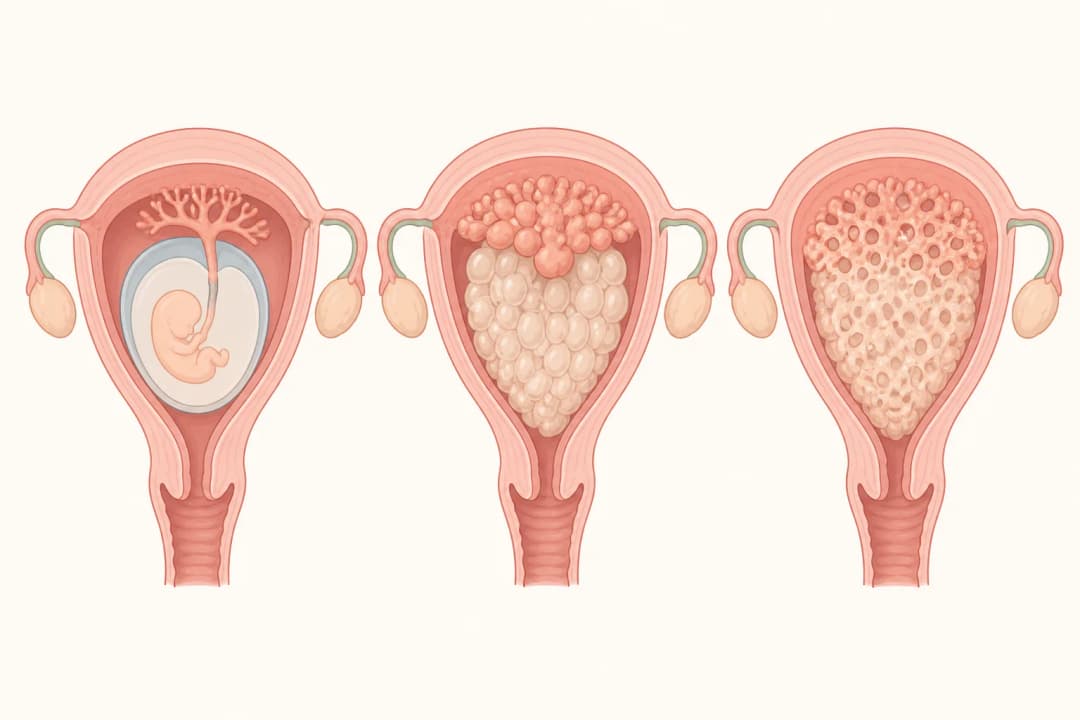
This is a chance biological event. It is not caused by exercise, sex, stress, travel, work, or anything the pregnant person did. A molar pregnancy belongs to a group of conditions called gestational trophoblastic disease.
Complete and partial molar pregnancies
In a complete mole, the fertilised egg has no working maternal chromosomes and the genetic material comes from the sperm. Abnormal placental tissue develops, but an embryo does not.
In a partial mole, an egg is fertilised with an extra set of paternal chromosomes. Some fetal tissue may begin to form, but the pregnancy cannot develop normally. Both types can produce high levels of the pregnancy hormone hCG and require specialist follow-up after removal.
What happens after diagnosis
Diagnosis may involve ultrasound, hCG blood tests, and examination of pregnancy tissue. Treatment usually removes the abnormal tissue from the uterus. Your team then measures hCG until it reaches the expected level and follows it for the recommended period.
Use the contraception method agreed with your clinical team and wait for their advice before trying for another pregnancy, because a new pregnancy also raises hCG and can make monitoring difficult to interpret. Attend every scheduled blood or urine test even when you feel physically well.
When to get medical help
Contact a pregnancy assessment service promptly for vaginal bleeding, severe or persistent nausea and vomiting, pelvic pressure, or pain during a suspected or confirmed pregnancy. Molar pregnancy often presents with vaginal bleeding, but bleeding also occurs for many other reasons and needs clinical assessment rather than assumptions.
Go to emergency care for heavy bleeding, fainting, severe abdominal pain, breathlessness, chest pain, or feeling acutely unwell. After treatment, tell the specialist team about renewed bleeding or symptoms between planned hCG checks.
Questions for your care team
Ask whether the findings show a complete or partial mole, how the tissue will be removed, where hCG tests will be done, and which contraception suits you during monitoring. Also ask whom to contact for urgent symptoms and when another pregnancy can be planned.
Questions people ask
Could I have prevented a molar pregnancy?
No known action during pregnancy prevents the chromosome error that causes a mole. Following the monitoring plan afterwards is the useful step within your control.
Can a molar pregnancy continue normally?
No. A complete mole has no developing embryo, while a partial mole may contain fetal tissue that cannot develop into a viable pregnancy. The abnormal tissue needs medical management.
Why is hCG monitored after treatment?
Falling hCG suggests the molar tissue has resolved. A level that stops falling or rises can indicate persistent trophoblastic tissue, which the specialist team can assess and treat.
Related
Related reading
Keep reading
Cancer care in the UAE
Hospitals & Medical Centers in Abu Dhabi
Most UAE cancer care is delivered inside hospital services rather than by standalone oncology clinics, so these are licensed hospitals & medical centers listed in Abu Dhabi. Confirm the specific cancer service exists before you travel, and know that asking for a second opinion is routine.
Ahalia Hospital Musaffah Building - Musaffah - Musaffah Industrial - Abu Dhabi - United Arab Emirates
Accepts: Daman, Thiqa, AXA, Cigna +26 more
Al Ruwais Industrial City - Abu Dhabi - United Arab Emirates
Accepts: Daman, Thiqa, AXA, Cigna +30 more
Abu Dhabi, Abu Dhabi
Accepts: Daman, Thiqa, AXA, Cigna +30 more
Second opinions are routine in cancer care and asking for one does not affect your treatment. How to arrange a second opinion in the UAE.
Ordered by verification status and how complete each clinic's public record is, then alphabetically. This is a directory listing, not a ranking — Zavis does not rate or recommend providers.
A factual listing drawn from the DHA, DOH and MOHAP licence registers. It is not a referral, an endorsement, or advice that any of these providers is right for you.
Medical disclaimer. This page is general health information, not medical advice, and it cannot diagnose you. Always consult a licensed healthcare provider about your own symptoms and treatment. In an emergency in the UAE, call 998 for an ambulance.