
What Causes an MCL Injury?
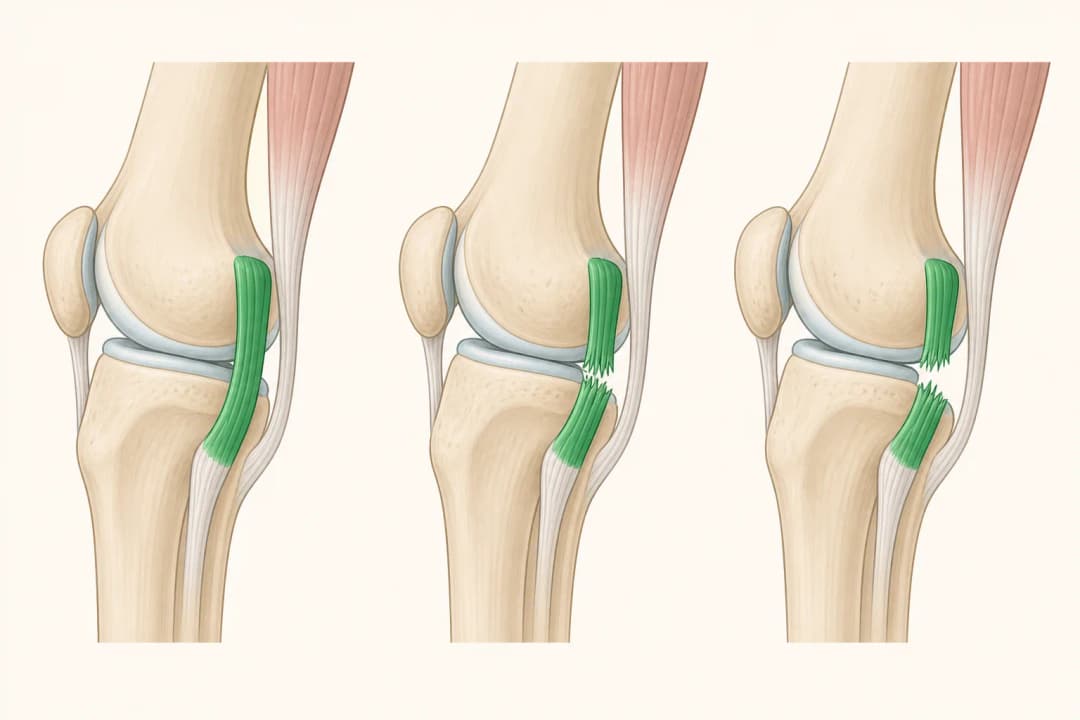
Short answer
An MCL injury usually occurs when force pushes the knee inward or the lower leg outward, stretching or tearing the ligament along the knee's inner side.
This answers one question. It is not a diagnosis and does not replace an assessment by a licensed doctor.
At a glance
- Location
- The MCL runs along the inner side of the knee.
- Typical mechanism
- An inward force at the knee can stretch or tear the ligament.
- Recovery focus
- Motion, strength, stability, and movement control guide rehabilitation.
How the inner-knee ligament is strained
The medial collateral ligament connects the thigh bone to the shin bone and resists the knee collapsing inward. A blow to the outside of the knee can overload it, as can an awkward landing, sudden change of direction, or twisting movement while the foot is planted. Contact sport is one setting, but slips and everyday falls can produce the same stress.
MCL injury can present with tenderness along the inner knee, swelling, pain when changing direction, and a sense that the knee may give way. A forceful event can injure other structures at the same time, so a pop, rapid swelling, locking, or marked instability should not be assumed to come from the MCL alone.
Protecting the knee after injury
Stop sport and avoid cutting or pivoting on the affected leg. Use support for walking if the knee buckles or weight-bearing is painful, and apply a wrapped cold pack for comfort without placing ice directly on skin. An assessment can check tenderness, movement, stability, and possible associated injuries. Rehabilitation commonly progresses from restoring motion and muscle control to strength, balance, running, and sport-specific direction changes.
When the knee needs prompt evaluation
Seek urgent care if the knee looks deformed, the foot is cold or numb, pain is severe, or you cannot safely bear weight after injury. Arrange prompt assessment for substantial swelling, repeated giving way, locking, or inability to fully straighten the knee. A hot swollen joint with fever also needs urgent medical review because infection is a separate concern.
Planning recovery and return to activity
Ask how stable the knee is, whether another ligament or the meniscus may be involved, and whether a brace would help during healing. Before returning to sport, clarify which strength, balance, running, and change-of-direction tasks should be comfortable and controlled.
Find care
General Clinics & Polyclinics in Abu Dhabi
That answer is general. If you want it applied to your own case, these are licensed general clinics & polyclinics listed in Abu Dhabi.
27 Ar Ruwwad St - Shakhbout City - MSH4 - Abu Dhabi - United Arab Emirates
Accepts: Daman, Thiqa, Cigna, MetLife +20 more
Al Ruwais, Al Dhafrah
Accepts: Daman, Thiqa, AXA, Cigna +16 more
Al Bahyah - Al Bahyah Old - Abu Dhabi - United Arab Emirates
Accepts: Daman, Thiqa, Cigna, Allianz Care +18 more
Abu Dhabi
Accepts: Daman, Thiqa, AXA, Cigna +27 more
Ordered by verification status and how complete each clinic's public record is, then alphabetically. This is a directory listing, not a ranking — Zavis does not rate or recommend providers.
A factual listing drawn from the DHA, DOH and MOHAP licence registers. It is not a referral, an endorsement, or advice that any of these providers is right for you.
Questions people ask
Can an MCL injury happen without contact?
Yes. An awkward landing or rapid direction change with the foot planted can place enough inward stress on the knee to injure the ligament.
Is a brace always needed for an MCL injury?
No. Bracing depends on knee stability, injury severity, comfort, activity, and whether other structures are involved. A clinician can fit and time a brace when appropriate.
How do I know when I can return to sport?
Return should be based on comfortable motion, strength, stability, confidence, and controlled sport-specific tasks rather than the calendar alone.
Related
Related reading
Keep reading
Medical disclaimer. This page is general health information, not medical advice, and it cannot diagnose you. Always consult a licensed healthcare provider about your own symptoms and treatment. In an emergency in the UAE, call 998 for an ambulance.