
Bullous Pemphigoid and Pemphigus Vulgaris
Short answer
Bullous pemphigoid and pemphigus vulgaris are different autoimmune blistering diseases with distinct skin findings and treatments.
This answers one question. It is not a diagnosis and does not replace an assessment by a licensed doctor.
At a glance
- Shared feature
- Autoimmune blistering and erosions
- Key difference
- The targeted skin structure and typical blister strength differ
What it means
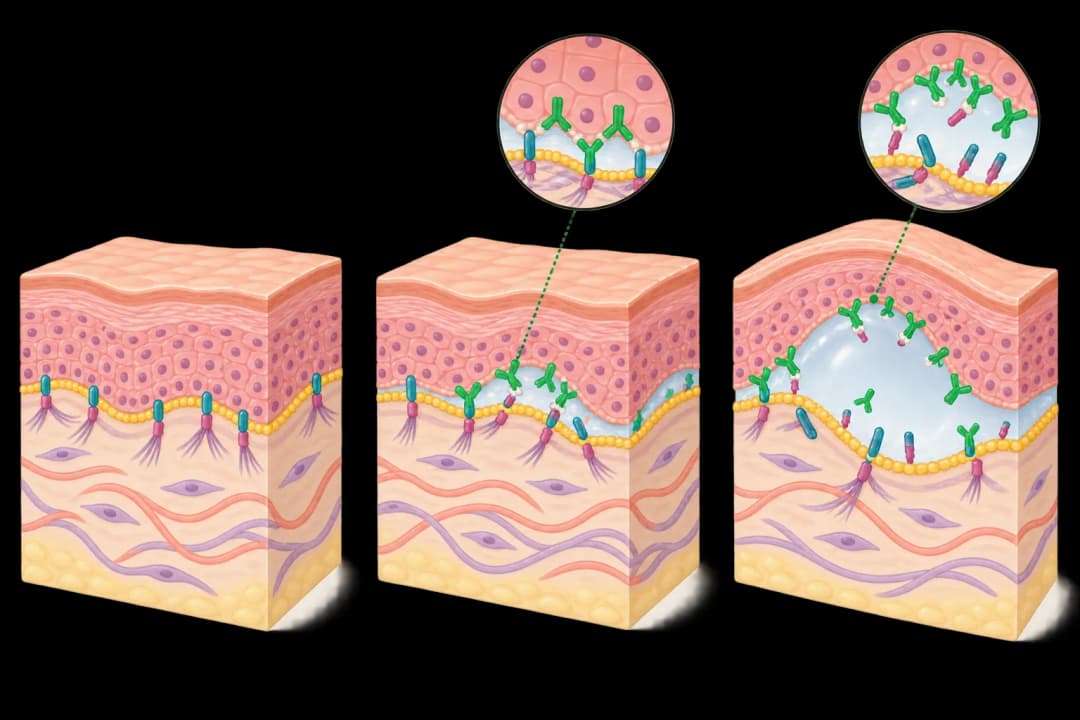
Bullous pemphigoid usually causes very itchy, tense blisters because the immune system attacks structures deeper at the skin junction. Pemphigus vulgaris more often causes fragile blisters and painful erosions, commonly in the mouth, because antibodies disrupt connections between surface skin cells. Both can resemble other causes of skin blisters. A dermatologist may use a biopsy from affected and nearby skin, together with laboratory testing, to identify the pattern of immune activity.
What to do next
Arrange prompt assessment for repeated blisters, skin peeling, or mouth sores. Until reviewed, avoid picking or bursting lesions, wash gently, and protect open skin with non-stick coverings. Treatment may include topical corticosteroids, oral corticosteroid treatment, or other medicines that reduce immune activity. Antibiotics are not a substitute for diagnosis; they may be used only when a clinician identifies a bacterial infection. Keep follow-up appointments because healing, nutrition, and medicine effects need review.
When to seek care
Seek urgent care for widespread erosions, fever, pus, rapidly worsening pain, trouble eating or drinking, or reduced urine. Eye involvement, severe mouth pain, swallowing difficulty, breathing symptoms, or facial swelling require immediate assessment. These problems can cause fluid loss or interfere with vision and nutrition.
Questions for your doctor
Ask whether the pattern fits bullous pemphigoid or pemphigus vulgaris, which tests are needed, how to protect mouth or eye surfaces, and how treatment will be monitored.
Find care
General Clinics & Polyclinics in Abu Dhabi
That answer is general. If you want it applied to your own case, these are licensed general clinics & polyclinics listed in Abu Dhabi.
27 Ar Ruwwad St - Shakhbout City - MSH4 - Abu Dhabi - United Arab Emirates
Accepts: Daman, Thiqa, Cigna, MetLife +20 more
Al Ruwais, Al Dhafrah
Accepts: Daman, Thiqa, AXA, Cigna +16 more
Al Bahyah - Al Bahyah Old - Abu Dhabi - United Arab Emirates
Accepts: Daman, Thiqa, Cigna, Allianz Care +18 more
Abu Dhabi
Accepts: Daman, Thiqa, AXA, Cigna +27 more
Ordered by verification status and how complete each clinic's public record is, then alphabetically. This is a directory listing, not a ranking — Zavis does not rate or recommend providers.
A factual listing drawn from the DHA, DOH and MOHAP licence registers. It is not a referral, an endorsement, or advice that any of these providers is right for you.
Questions people ask
Can these conditions be diagnosed from a photograph?
A photograph may help describe the rash, but biopsy and other testing are often needed for confirmation.
When are antibiotics used?
They may be prescribed for a confirmed secondary bacterial infection, not for the underlying autoimmune process.
Related
Related reading
Keep reading
Medical disclaimer. This page is general health information, not medical advice, and it cannot diagnose you. Always consult a licensed healthcare provider about your own symptoms and treatment. In an emergency in the UAE, call 998 for an ambulance.