
Black cradle cap: what the colour can mean
Short answer
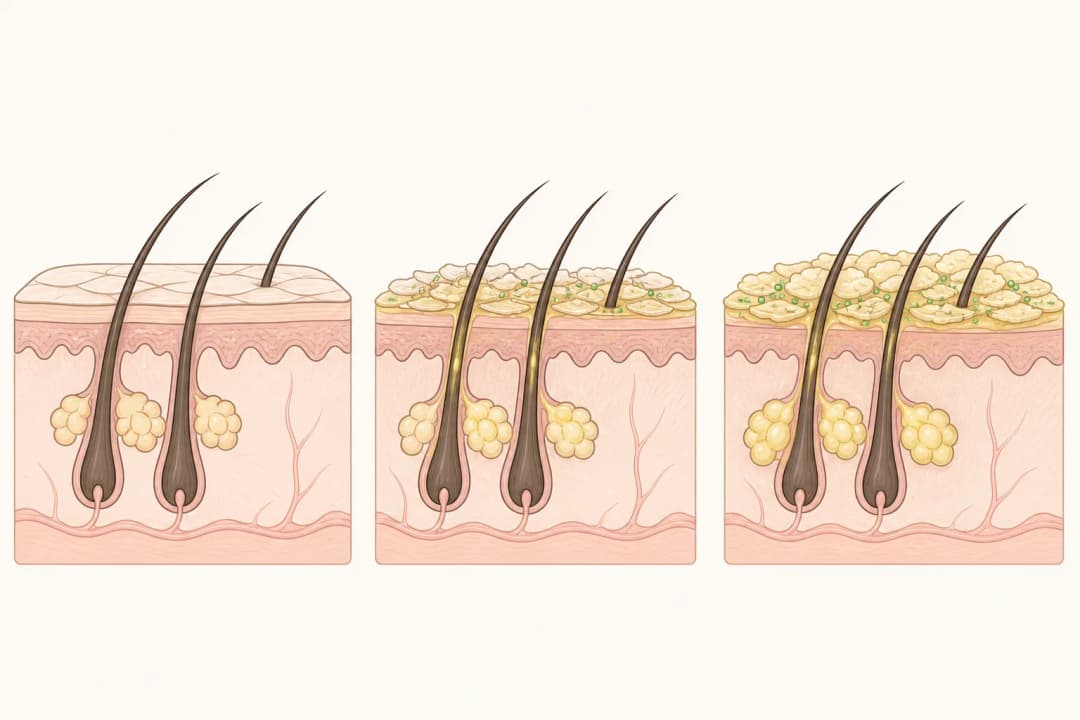
Cradle cap can look dark brown or nearly black when oily scales are thick, especially against a lighter scalp or within dense hair.
This answers one question. It is not a diagnosis and does not replace an assessment by a licensed doctor.
At a glance
- Typical texture
- Greasy, adherent scalp scales
- Safe approach
- Soften, wash and brush gently
- Do not
- Pick crusts or use adult scalp medicine without guidance
A clear explanation
It is usually recognised by adherent, greasy scales on an otherwise comfortable baby's scalp. A dark crust caused by bleeding, injury or infection can look similar, so the skin underneath matters more than the colour alone.
How to interpret dark scalp scales
Cradle cap, also called infantile seborrheic dermatitis, produces yellow, brown or dark greasy scale. The shade varies with scale thickness, natural skin tone, hair products and small amounts of trapped debris.
Marked redness, tenderness, broken skin, wetness or pus is not explained by simple colour variation. Ring-shaped hair loss, widespread rash or significant itch may point toward another scalp condition that needs examination.
Gentle care for a baby's scalp
Soften scales with a baby-safe emollient, then wash with a mild fragrance-free baby shampoo. Once loosened, lift flakes gently with a soft brush; stop if the scalp becomes sore or bleeds.
Do not pick firmly attached crusts or apply adult dandruff products, essential oils or antifungal medicine without pediatric guidance. Keep the product away from the baby's eyes and wash it out as directed.
Signs that deserve a clinical check
Contact a clinician promptly if the baby has fever, seems unwell, has rapidly spreading redness, swelling, pus, a foul smell, blisters, bleeding without picking or pain when the scalp is touched.
Arrange a non-urgent review if home care irritates the scalp, the crusting persists or spreads to the face and body, hair comes out in patches, or you are unsure whether the material is scale or a healing wound.
What to ask about treatment
You can ask whether the appearance fits cradle cap, which emollient and shampoo are suitable for your baby's age, how to protect broken skin, and whether inflammation or yeast-related changes warrant a prescribed topical treatment.
Find care
General Clinics & Polyclinics in Abu Dhabi
That answer is general. If you want it applied to your own case, these are licensed general clinics & polyclinics listed in Abu Dhabi.
27 Ar Ruwwad St - Shakhbout City - MSH4 - Abu Dhabi - United Arab Emirates
Accepts: Daman, Thiqa, Cigna, MetLife +20 more
Al Ruwais, Al Dhafrah
Accepts: Daman, Thiqa, AXA, Cigna +16 more
Al Bahyah - Al Bahyah Old - Abu Dhabi - United Arab Emirates
Accepts: Daman, Thiqa, Cigna, Allianz Care +18 more
Abu Dhabi
Accepts: Daman, Thiqa, AXA, Cigna +27 more
Ordered by verification status and how complete each clinic's public record is, then alphabetically. This is a directory listing, not a ranking — Zavis does not rate or recommend providers.
A factual listing drawn from the DHA, DOH and MOHAP licence registers. It is not a referral, an endorsement, or advice that any of these providers is right for you.
Questions people ask
Does black-looking cradle cap mean the scalp is infected?
Not by itself. Thick oily scale can appear very dark, while infection is more concerning when there is spreading redness, warmth, swelling, discharge, bad smell, fever or illness.
Will removing the scales hurt the baby's hair?
Loose flakes can be brushed away gently after softening. Pulling attached scale may break the skin or remove hairs temporarily, so leave resistant areas alone.
Can I use an antifungal cream on cradle cap?
Only use one if a clinician recommends a product and explains where and how to apply it. A baby's scalp and face can be easily irritated.
Related
Related reading
Keep reading
Medical disclaimer. This page is general health information, not medical advice, and it cannot diagnose you. Always consult a licensed healthcare provider about your own symptoms and treatment. In an emergency in the UAE, call 998 for an ambulance.