
What to know about big, sweaty feet
Short answer
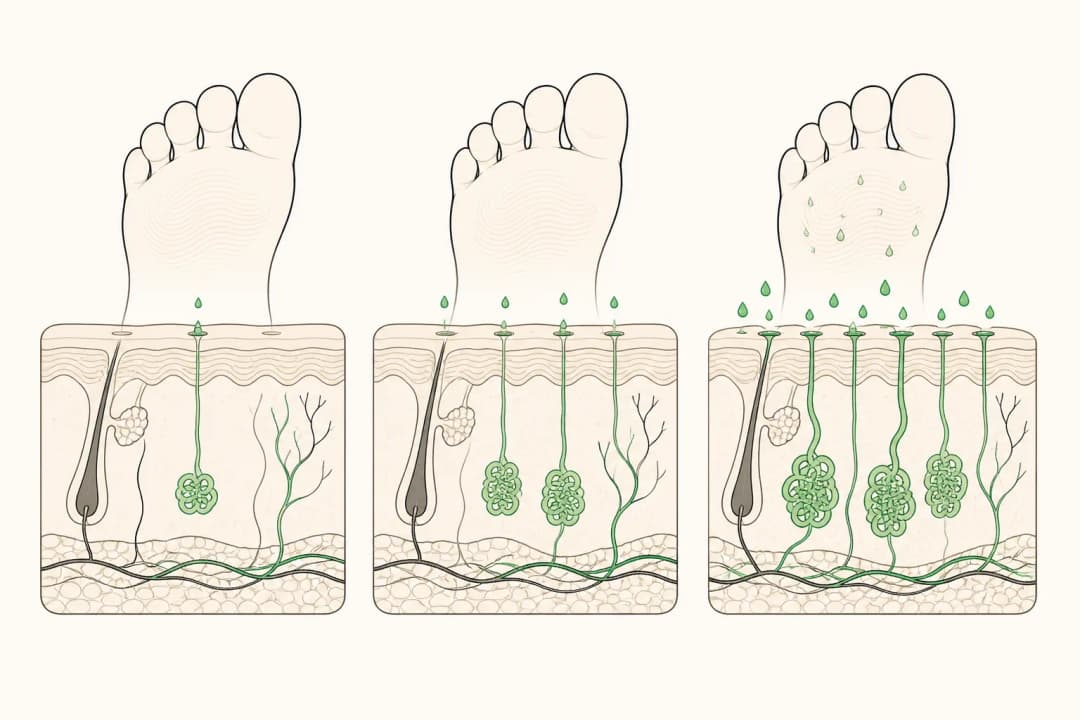
Large feet are not a medical problem by themselves, but persistent heavy sweating can irritate skin, increase odour and make footwear uncomfortable.
This answers one question. It is not a diagnosis and does not replace an assessment by a licensed doctor.
At a glance
- Main concern
- Persistent moisture, friction and skin breakdown
- Helpful first steps
- Dry carefully, change socks and rotate breathable shoes
- Clinical term
- Excessive sole sweating may be called plantar hyperhidrosis
The short answer
Sweating on the soles is sometimes called plantar hyperhidrosis when it is excessive for the situation. The key issue is not shoe size; it is whether moisture disrupts daily activities, damages the skin or continues despite simple care.
Why feet become very sweaty
Heat, exercise, closed footwear and stress can activate sweat glands. Some people sweat heavily from both soles without another illness, while a new change can also relate to medicines or a wider health issue.
Constant dampness softens the skin between the toes and creates friction. Peeling, itching, cracking or a persistent smell may point to irritation or Athlete's Foot rather than sweat alone. A clinician can separate these problems by examining the skin and reviewing when the sweating began.
Practical ways to stay drier
Wash and dry the feet carefully, especially between the toes. Change damp socks, rotate shoes so they can dry fully, and choose breathable footwear with enough room to prevent rubbing. Avoid sharing towels or footwear if there is scaling or itching.
A pharmacist or dermatologist can advise on an antiperspirant suitable for the soles. When routine measures are insufficient, options may include Prescription Antiperspirant or Iontophoresis. Treatment choice depends on skin sensitivity, other medical conditions and how much the sweating affects everyday life.
When an assessment is needed
Arrange a routine appointment if sweating starts suddenly, occurs during sleep, affects much of the body, repeatedly breaks the skin, or remains difficult to manage. Mention any new medicine and symptoms such as palpitations, tremor, fever or unexplained weight change.
Seek prompt care for spreading redness, warmth, swelling, pus, severe pain or fever, as these can accompany infection. People with diabetes, reduced sensation or poor circulation should have cracks, blisters and wounds assessed early rather than treating them aggressively at home.
Useful questions for your clinician
Ask whether the pattern fits primary plantar hyperhidrosis, whether any medicine or health condition could contribute, and which product strength is appropriate for the soles. You can also ask how to protect cracked skin and what signs would suggest a fungal or bacterial infection.
Find care
General Clinics & Polyclinics in Abu Dhabi
That answer is general. If you want it applied to your own case, these are licensed general clinics & polyclinics listed in Abu Dhabi.
27 Ar Ruwwad St - Shakhbout City - MSH4 - Abu Dhabi - United Arab Emirates
Accepts: Daman, Thiqa, Cigna, MetLife +20 more
Al Ruwais, Al Dhafrah
Accepts: Daman, Thiqa, AXA, Cigna +16 more
Al Bahyah - Al Bahyah Old - Abu Dhabi - United Arab Emirates
Accepts: Daman, Thiqa, Cigna, Allianz Care +18 more
Abu Dhabi
Accepts: Daman, Thiqa, AXA, Cigna +27 more
Ordered by verification status and how complete each clinic's public record is, then alphabetically. This is a directory listing, not a ranking — Zavis does not rate or recommend providers.
A factual listing drawn from the DHA, DOH and MOHAP licence registers. It is not a referral, an endorsement, or advice that any of these providers is right for you.
Questions people ask
Does having large feet cause excessive sweating?
Foot size alone does not cause hyperhidrosis. Heat, activity, footwear and overactive sweat signalling are more relevant to how wet the soles become.
Can foot powder treat the underlying sweating?
Powder can absorb moisture and reduce rubbing, but it does not switch off sweat production. Persistent symptoms may need an antiperspirant or clinician-guided treatment.
Why do sweaty feet smell?
Sweat itself has little smell. Odour develops when moisture remains on the skin and microbes break down material within that damp environment.
Related
Related reading
Keep reading
Medical disclaimer. This page is general health information, not medical advice, and it cannot diagnose you. Always consult a licensed healthcare provider about your own symptoms and treatment. In an emergency in the UAE, call 998 for an ambulance.