
What should you know about Bepanthen Plus for nappy rash?
Short answer
Do not assume Bepanthen Plus is suitable for routine nappy rash; check the local label and ask a pharmacist or clinician first.
This answers one question. It is not a diagnosis and does not replace an assessment by a licensed doctor.
At a glance
- Key distinction
- Plus is not the same as a nappy-care ointment
- Before use
- Check local directions and infant suitability
- Routine care
- Prioritise gentle cleansing, dryness and a simple barrier
Is Bepanthen Plus appropriate for nappy rash?
Bepanthen Plus and products specifically labelled for nappy care are not interchangeable. The Plus formulation may contain an antiseptic and can have different age limits, application sites and precautions depending on the market.
Why the exact formulation matters
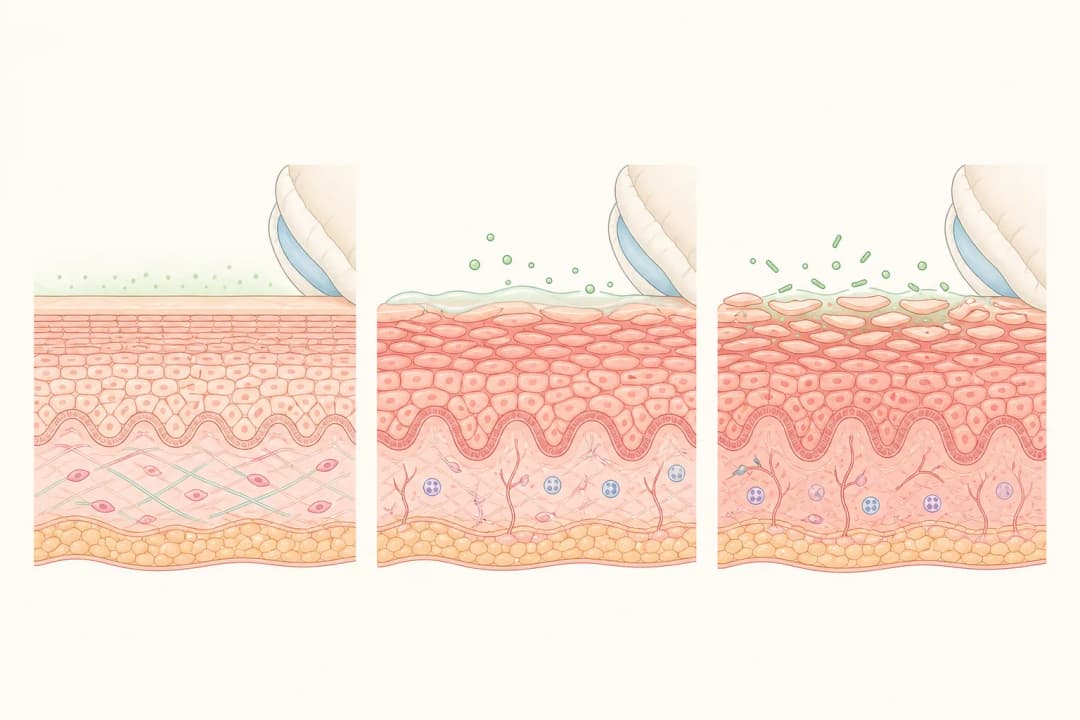
Most uncomplicated nappy rash is driven by moisture, friction and contact with urine or stool. Gentle cleaning, dry time and a simple barrier product address those factors without adding an antiseptic that may be unnecessary.
A rash in the folds with sharply red skin and nearby small spots may be consistent with yeast involvement. An antiseptic cream is not a substitute for an antifungal chosen for that diagnosis.
Choose the safer next step
Until the product has been checked, use straightforward nappy care: change soiling promptly, cleanse gently, pat dry and allow air exposure when feasible. Use a bland barrier ointment that is clearly labelled for babies and the nappy area.
If a pharmacist or clinician advises Bepanthen Plus, follow the exact amount, area and duration on the label or their instructions. Keep it away from the eyes and mouth, wash your hands after applying it, and discontinue it if irritation increases.
When the rash needs clinical review
Arrange assessment for rash that reaches the folds, persists despite careful barrier care, repeatedly returns, or develops blisters, open sores, pus or crusting. Get prompt medical help when redness spreads quickly, the baby is feverish, feeds poorly, seems unusually drowsy or has fewer wet nappies.
Questions before using a medicated cream
Show the actual tube or ingredient list and ask whether it is licensed for your baby's age and nappy area. Also ask whether the rash looks irritant, fungal or bacterial, and what barrier or targeted treatment is appropriate.
Find care
General Clinics & Polyclinics in Abu Dhabi
That answer is general. If you want it applied to your own case, these are licensed general clinics & polyclinics listed in Abu Dhabi.
27 Ar Ruwwad St - Shakhbout City - MSH4 - Abu Dhabi - United Arab Emirates
Accepts: Daman, Thiqa, Cigna, MetLife +20 more
Al Ruwais, Al Dhafrah
Accepts: Daman, Thiqa, AXA, Cigna +16 more
Al Bahyah - Al Bahyah Old - Abu Dhabi - United Arab Emirates
Accepts: Daman, Thiqa, Cigna, Allianz Care +18 more
Abu Dhabi
Accepts: Daman, Thiqa, AXA, Cigna +27 more
Ordered by verification status and how complete each clinic's public record is, then alphabetically. This is a directory listing, not a ranking — Zavis does not rate or recommend providers.
A factual listing drawn from the DHA, DOH and MOHAP licence registers. It is not a referral, an endorsement, or advice that any of these providers is right for you.
Questions people ask
Is Bepanthen Plus the same as Bepanthen nappy ointment?
No. Formulations and intended uses differ, so rely on the full product name and local label rather than the brand name alone.
Does an antiseptic help every nappy rash?
No. Many rashes are irritant, while some involve yeast or another condition; treatment depends on the cause and appearance.
What should I do if Bepanthen Plus stings or worsens redness?
Stop applying it, gently clean the area and contact a pharmacist or clinician for advice, especially if swelling or blistering develops.
Related
Related reading
Keep reading
Medical disclaimer. This page is general health information, not medical advice, and it cannot diagnose you. Always consult a licensed healthcare provider about your own symptoms and treatment. In an emergency in the UAE, call 998 for an ambulance.