
Bearing 6805 Ceramic: Is It an Orthopedic Implant?
Short answer
The label bearing 6805 ceramic does not by itself identify an orthopedic implant or establish that a component is suitable for joint replacement.
This answers one question. It is not a diagnosis and does not replace an assessment by a licensed doctor.
At a glance
- Key distinction
- A product-style code alone does not confirm a medical implant.
- Compatibility
- Joint replacement components are chosen as part of an implant system.
- Useful record
- The implant card carries the identifiers relevant to your surgery.
What ceramic bearing means in orthopedics
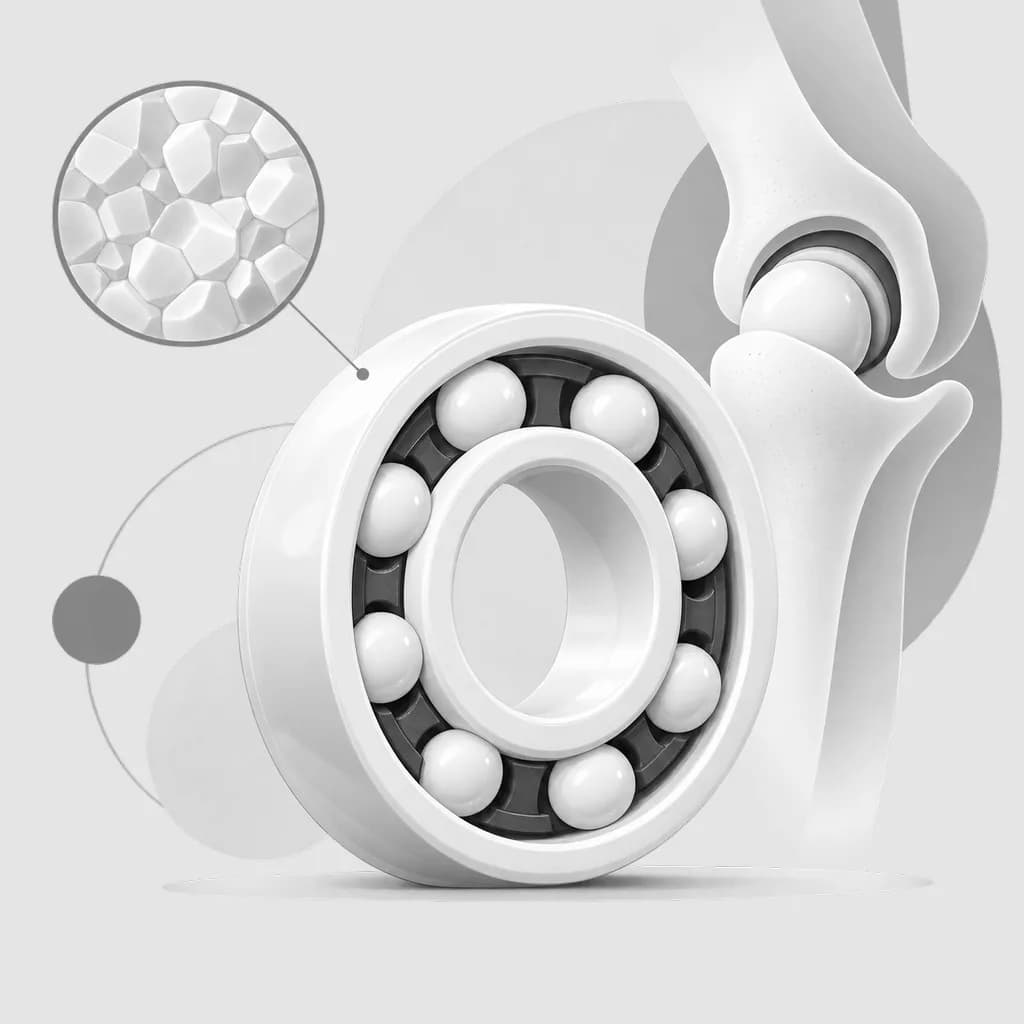
In joint replacement, a bearing is the pair of implant surfaces that move against each other. Ceramic may form one or both of those surfaces, depending on the implant system. A catalogue-style number can also describe a non-medical mechanical part, so the wording must be checked against the manufacturer's implant documentation. Shape, connection, material pairing, and compatibility with the rest of the implanted system matter; a shared word or number is not enough.
How to verify a bearing description
If this term appears in a surgical estimate, implant card, or clinic message, ask the orthopedic team for the full manufacturer name, component name, material pairing, and intended joint. Keep the implant card with your health records after surgery. Do not purchase or substitute a bearing based on a shortened label: implant components are selected as a compatible system and supplied through regulated clinical channels. If the term came from an industrial catalogue, it should not be interpreted as a treatment recommendation.
When symptoms after joint replacement need care
Contact the surgical team promptly for new or increasing joint pain, swelling, wound drainage, redness, fever, a new noise accompanied by pain, or a sudden change in walking. Seek urgent care if the operated limb becomes cold or numb, the joint appears out of position, you cannot bear weight after a sudden event, or you develop chest pain or breathing difficulty. The printed bearing label cannot determine the cause of these symptoms.
Questions for your orthopedic surgeon
Ask which surfaces make up the bearing pair, why that pairing fits your situation, and whether any activity or imaging precautions apply. Request the exact implant identifiers for your personal records and clarify whom to contact if symptoms change after discharge.
Find care
General Clinics & Polyclinics in Abu Dhabi
That answer is general. If you want it applied to your own case, these are licensed general clinics & polyclinics listed in Abu Dhabi.
27 Ar Ruwwad St - Shakhbout City - MSH4 - Abu Dhabi - United Arab Emirates
Accepts: Daman, Thiqa, Cigna, MetLife +20 more
Al Ruwais, Al Dhafrah
Accepts: Daman, Thiqa, AXA, Cigna +16 more
Al Bahyah - Al Bahyah Old - Abu Dhabi - United Arab Emirates
Accepts: Daman, Thiqa, Cigna, Allianz Care +18 more
Abu Dhabi
Accepts: Daman, Thiqa, AXA, Cigna +27 more
Ordered by verification status and how complete each clinic's public record is, then alphabetically. This is a directory listing, not a ranking — Zavis does not rate or recommend providers.
A factual listing drawn from the DHA, DOH and MOHAP licence registers. It is not a referral, an endorsement, or advice that any of these providers is right for you.
Questions people ask
Is every ceramic bearing used in a hip replacement?
No. Ceramic bearings exist in medical and non-medical contexts, and an orthopedic ceramic component must be identified within its specific implant system.
Can I identify my hip implant from the number 6805 alone?
Not reliably. Use the implant card, operation record, or information supplied by the surgical team to confirm the manufacturer and exact components.
Related
Related reading
Keep reading
Medical disclaimer. This page is general health information, not medical advice, and it cannot diagnose you. Always consult a licensed healthcare provider about your own symptoms and treatment. In an emergency in the UAE, call 998 for an ambulance.