
Bad nappy rash in a newborn
Short answer
A bad nappy rash in a newborn warrants gentle barrier care and a low threshold for medical assessment.
This answers one question. It is not a diagnosis and does not replace an assessment by a licensed doctor.
At a glance
- Skin care
- Clean softly, dry by patting, and protect with a plain barrier ointment.
- Avoid
- Fragrance, talc, essential oils, harsh cleansers, and unadvised medicated creams.
- Prompt review
- Broken skin, spreading redness, discharge, or illness signs need assessment.
What to know first
Newborn skin is delicate, and irritation can resemble yeast, bacterial infection, or another rash. Prompt review matters when the skin is broken, the baby seems unwell, or simple care is not helping.
Reading the rash pattern
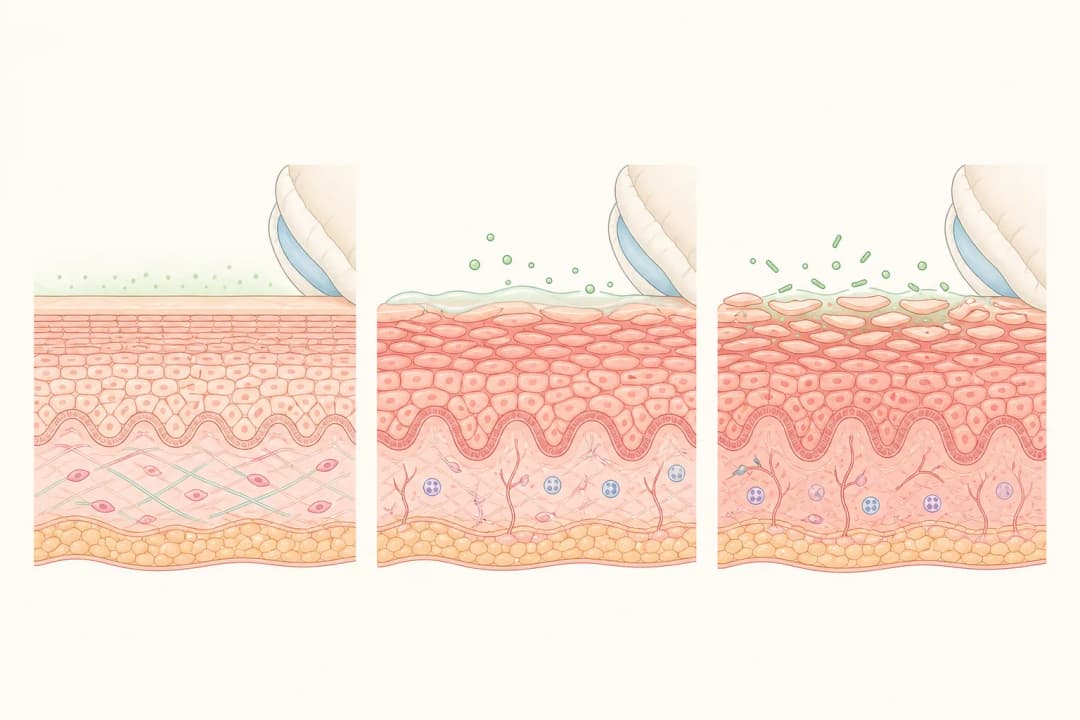
Nappy dermatitis develops when enclosed skin remains damp and is exposed to urine, stool, and friction. Irritant redness often sits on the buttocks and other raised areas in contact with the nappy, with relative sparing of the deepest creases.
A glossy or vivid red eruption that reaches into folds, sometimes with small spots beyond the main edge, can occur with yeast. Blisters, honey-coloured crust, pus, rapidly spreading redness, or raw punched-out areas are not features to manage by guesswork.
Gentle care for newborn skin
Check the nappy frequently and replace it as soon as it is wet or soiled. Rinse with lukewarm water, use a very soft cloth if needed, and pat dry. Apply a generous layer of plain, fragrance-free barrier ointment without rubbing tender skin.
Keep nappies comfortably loose and give the skin brief exposure to air in a warm, safe room. Avoid scented wipes, soap on the inflamed area, talc, essential oils, antiseptic solutions, and homemade mixtures. Medicines intended for older children or adults may be too strong or unsuitable for covered newborn skin.
Signs that should not wait
Contact a healthcare professional promptly for extensive inflammation, skin breakdown, bleeding, blisters, discharge, crusts, swelling, or spreading warmth. Assessment is also appropriate if changes are present from birth, occur outside the nappy area, or fail to improve with careful cleansing and barrier protection.
Urgent medical evaluation is needed when a newborn has fever, poor feeding, unusual drowsiness, breathing difficulty, markedly fewer wet nappies, or is difficult to settle because of pain. Do not apply another cream while delaying care for these signs.
Details to discuss with the clinician
Show the clinician how the rash has changed and list nappies, wipes, cleansers, barriers, and medicines already tried. Ask whether infection is suspected, whether a swab or prescription is needed, and how long to use each recommended product on this very young skin.
Find care
General Clinics & Polyclinics in Abu Dhabi
That answer is general. If you want it applied to your own case, these are licensed general clinics & polyclinics listed in Abu Dhabi.
27 Ar Ruwwad St - Shakhbout City - MSH4 - Abu Dhabi - United Arab Emirates
Accepts: Daman, Thiqa, Cigna, MetLife +20 more
Al Ruwais, Al Dhafrah
Accepts: Daman, Thiqa, AXA, Cigna +16 more
Al Bahyah - Al Bahyah Old - Abu Dhabi - United Arab Emirates
Accepts: Daman, Thiqa, Cigna, Allianz Care +18 more
Abu Dhabi
Accepts: Daman, Thiqa, AXA, Cigna +27 more
Ordered by verification status and how complete each clinic's public record is, then alphabetically. This is a directory listing, not a ranking — Zavis does not rate or recommend providers.
A factual listing drawn from the DHA, DOH and MOHAP licence registers. It is not a referral, an endorsement, or advice that any of these providers is right for you.
Questions people ask
Can I use baby wipes on a sore newborn rash?
Lukewarm water and a soft cloth are often less irritating. If wipes are needed, choose fragrance-free and alcohol-free products and stop if they sting or worsen redness.
Could antibiotics be linked to the rash?
Antibiotic exposure can alter yeast balance and stool patterns. Tell the clinician about medicines taken by the baby and, when relevant, by a breastfeeding parent.
Related
Related reading
Keep reading
Medical disclaimer. This page is general health information, not medical advice, and it cannot diagnose you. Always consult a licensed healthcare provider about your own symptoms and treatment. In an emergency in the UAE, call 998 for an ambulance.