
What should you know about bad nappy rash from diarrhea?
Short answer
Diarrhoea can rapidly worsen nappy rash, so prompt changes, water-based cleaning and a thick barrier layer are especially helpful.
This answers one question. It is not a diagnosis and does not replace an assessment by a licensed doctor.
At a glance
- Main irritants
- Loose stool, moisture and friction from frequent cleaning.
- At each stool
- Change, rinse, pat dry and restore the barrier.
- Monitor
- Drinking, alertness and wet nappies alongside the rash.
How frequent loose stool affects skin
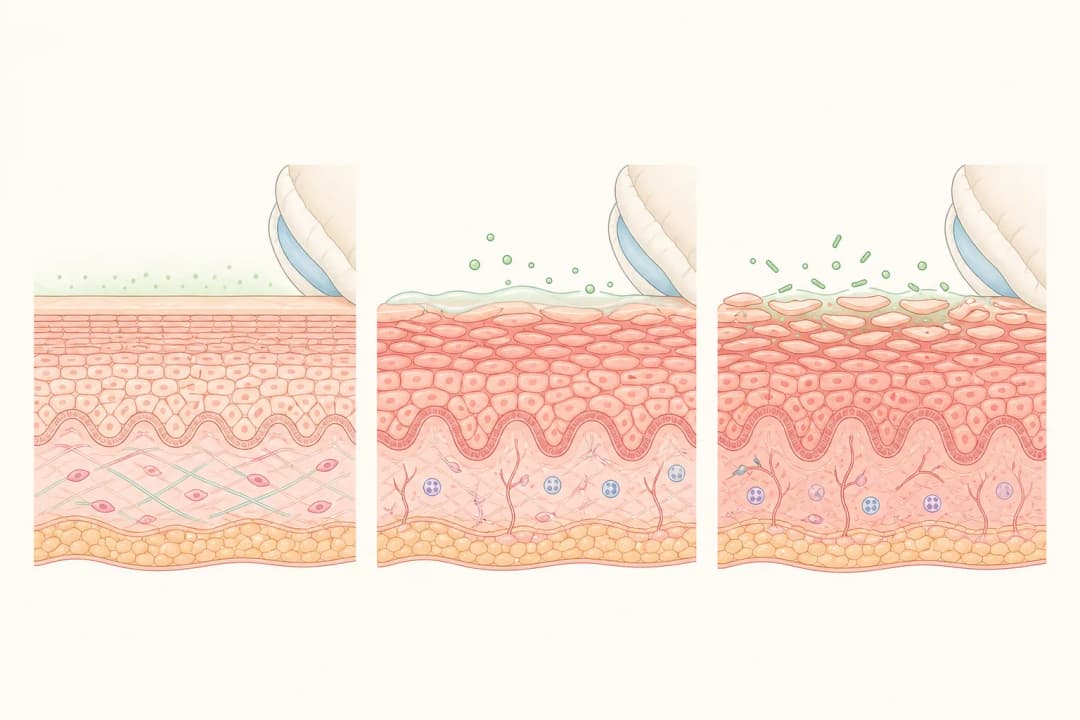
Loose stool spreads widely under a nappy and contains substances that irritate skin. Frequent bowel movements also lead to repeated wiping, adding friction before the barrier has time to recover. Redness may therefore appear around the anus and buttocks, then extend across areas in direct contact with the nappy.
A persistent moist environment can also allow yeast to overgrow. Redness within the creases and separate small red spots around the main rash can fit that pattern, although a clinician should assess uncertain or severe changes.
Protection at every change
Change the nappy as soon as possible after each stool. Use lukewarm water from a squeeze bottle or a very soft wet cloth to lift residue with minimal rubbing, then pat dry. Cover all exposed red skin with a thick fragrance-free barrier ointment. At the next change, remove stool and loose ointment gently, leaving clean barrier in place where possible.
Offer the child's usual milk or fluids according to age and existing medical advice. Avoid anti-diarrhoeal medicines unless a clinician specifically recommends them for that child. Wash hands carefully after changes to reduce spread of infections that may be causing diarrhoea.
When to get medical help
Seek medical advice when diarrhoea is persistent, the rash is severe or broken, or the child is not improving with careful skin protection. Urgent assessment is needed for unusual drowsiness, markedly fewer wet nappies, a dry mouth, poor drinking, repeated vomiting, blood in the stool, fever with an unwell appearance, spreading redness, blisters or pus. These signs may reflect dehydration, significant infection or a complication of damaged skin.
What to ask about ongoing symptoms
Ask whether the child shows dehydration, whether feeding or fluids should change, and whether the rash looks purely irritant or has signs of yeast or bacteria. Confirm which barrier is suitable, whether topical antifungal treatment is needed, and which stool or skin changes should trigger reassessment.
Find care
General Clinics & Polyclinics in Abu Dhabi
That answer is general. If you want it applied to your own case, these are licensed general clinics & polyclinics listed in Abu Dhabi.
27 Ar Ruwwad St - Shakhbout City - MSH4 - Abu Dhabi - United Arab Emirates
Accepts: Daman, Thiqa, Cigna, MetLife +20 more
Al Ruwais, Al Dhafrah
Accepts: Daman, Thiqa, AXA, Cigna +16 more
Al Bahyah - Al Bahyah Old - Abu Dhabi - United Arab Emirates
Accepts: Daman, Thiqa, Cigna, Allianz Care +18 more
Abu Dhabi
Accepts: Daman, Thiqa, AXA, Cigna +27 more
Ordered by verification status and how complete each clinic's public record is, then alphabetically. This is a directory listing, not a ranking — Zavis does not rate or recommend providers.
A factual listing drawn from the DHA, DOH and MOHAP licence registers. It is not a referral, an endorsement, or advice that any of these providers is right for you.
Questions people ask
Can baby wipes make diarrhoea-related rash sting?
Yes. Ingredients and wiping friction may sting damaged skin. Lukewarm water with soft material is often gentler while the area is inflamed.
Does diarrhoea-related nappy rash need antifungal cream?
Not automatically. Irritant rash and yeast need different management, so seek advice if the folds are involved, small surrounding spots appear, or barrier care is not helping.
Related
Related reading
Keep reading
Medical disclaimer. This page is general health information, not medical advice, and it cannot diagnose you. Always consult a licensed healthcare provider about your own symptoms and treatment. In an emergency in the UAE, call 998 for an ambulance.