
What should you know about bad nappy rash cure?
Short answer
Bad nappy rash usually improves when moisture and friction are reduced, the skin is protected, and any infection is treated appropriately.
This answers one question. It is not a diagnosis and does not replace an assessment by a licensed doctor.
At a glance
- Core approach
- Less moisture and friction, plus consistent barrier protection.
- Product choice
- Fragrance-free, simple formulations are less likely to irritate.
- Medicine
- Match treatment to an identified or clinically suspected cause.
Why there is no single cure
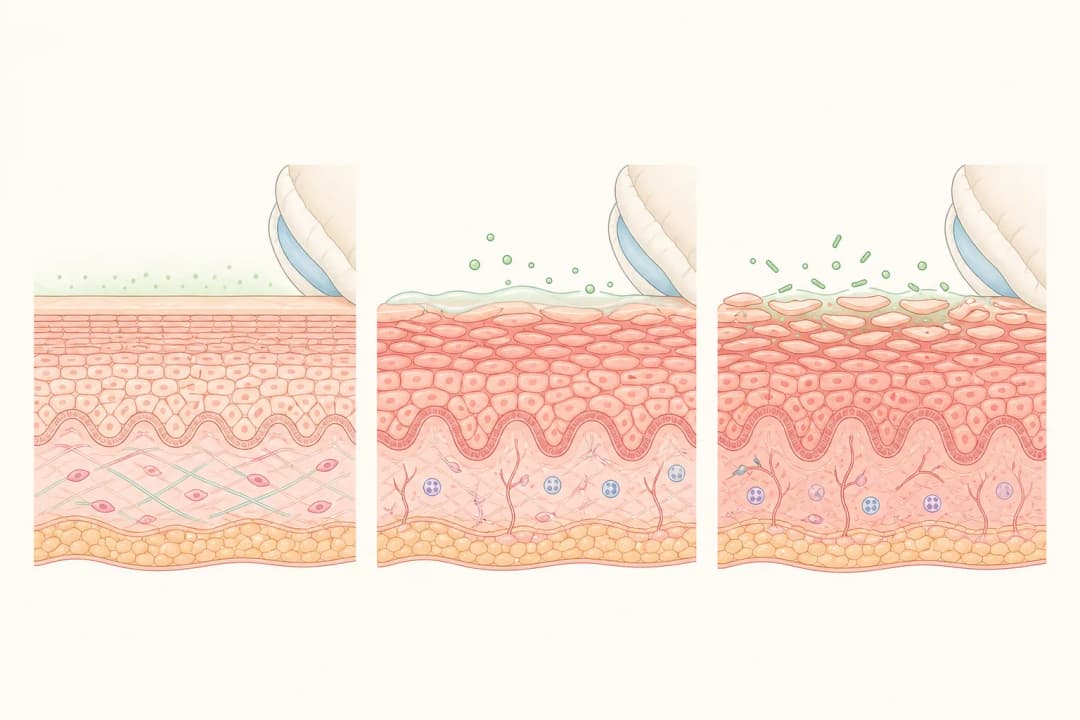
Most nappy-area irritation comes from contact with urine or stool plus rubbing against vulnerable skin. Some rashes are complicated by yeast or bacteria, and eczema or another skin condition can affect the same area. Treatment therefore starts with restoring the barrier and changes only when the rash pattern or examination points to a particular cause.
Yeast often affects the creases and may produce small surrounding red spots. Bacterial infection can cause weeping, crusting, pus or quickly extending redness. These patterns need professional advice rather than repeated trials of mixed creams.
A skin-protecting routine
Check the nappy often and change it soon after wetting or soiling. Clean with lukewarm water and soft material, avoiding rubbing, then pat dry and leave the area uncovered briefly when practical. Spread a generous layer of fragrance-free barrier ointment at each change. Use an absorbent nappy that fits without tight chafing.
Do not apply talcum powder, strong antiseptics, fragranced products or leftover prescription creams. If yeast is diagnosed, an age-appropriate topical antifungal may be recommended. Emollient therapy can support dry or barrier-damaged skin when selected for the baby's needs.
Signs that need an examination
Contact a clinician if a severe rash is not starting to improve, keeps returning, spreads beyond the nappy area or causes marked distress. Arrange urgent care for fever, poor feeding, unusual drowsiness, blisters, open sores, pus, spreading warmth or redness, or extensive peeling. Pain during urination or stooling also deserves assessment because broken skin or another problem may be present.
Questions that clarify treatment
Ask what is driving the rash, whether a prescribed medicine is needed, exactly where each product should be applied, and which product should form the outer barrier. Mention recent antibiotics, diarrhoea, new wipes, soaps or nappy brands because these details can change the care plan.
Find care
General Clinics & Polyclinics in Abu Dhabi
That answer is general. If you want it applied to your own case, these are licensed general clinics & polyclinics listed in Abu Dhabi.
27 Ar Ruwwad St - Shakhbout City - MSH4 - Abu Dhabi - United Arab Emirates
Accepts: Daman, Thiqa, Cigna, MetLife +20 more
Al Ruwais, Al Dhafrah
Accepts: Daman, Thiqa, AXA, Cigna +16 more
Al Bahyah - Al Bahyah Old - Abu Dhabi - United Arab Emirates
Accepts: Daman, Thiqa, Cigna, Allianz Care +18 more
Abu Dhabi
Accepts: Daman, Thiqa, AXA, Cigna +27 more
Ordered by verification status and how complete each clinic's public record is, then alphabetically. This is a directory listing, not a ranking — Zavis does not rate or recommend providers.
A factual listing drawn from the DHA, DOH and MOHAP licence registers. It is not a referral, an endorsement, or advice that any of these providers is right for you.
Questions people ask
Is nappy-free time enough to cure a severe rash?
Air exposure can reduce moisture and friction, but severe rash also needs gentle cleansing and barrier protection, with medical treatment when infection or another condition is suspected.
Should steroid cream be used for bad nappy rash?
A clinician may sometimes advise a specific mild steroid for a defined period. Do not use an adult product or a leftover combination cream on a baby without guidance.
Related
Related reading
Keep reading
Medical disclaimer. This page is general health information, not medical advice, and it cannot diagnose you. Always consult a licensed healthcare provider about your own symptoms and treatment. In an emergency in the UAE, call 998 for an ambulance.