
What to Know About a Bad Diaper Rash
Short answer
A severe diaper rash needs frequent gentle care and medical review when skin is broken, spreading, or not improving.
This answers one question. It is not a diagnosis and does not replace an assessment by a licensed doctor.
At a glance
- Barrier care
- Gentle cleaning, thorough drying, and a thick protective ointment
- Avoid
- Scrubbing, fragrance, talcum powder, and unadvised medicated creams
- Infection clues
- Spreading redness, pus, crust, blisters, or fever
The short answer
Moisture, friction, urine, and stool can weaken the skin barrier. A yeast or bacterial infection may complicate the irritation, and its treatment differs from routine barrier care.
What the appearance may suggest
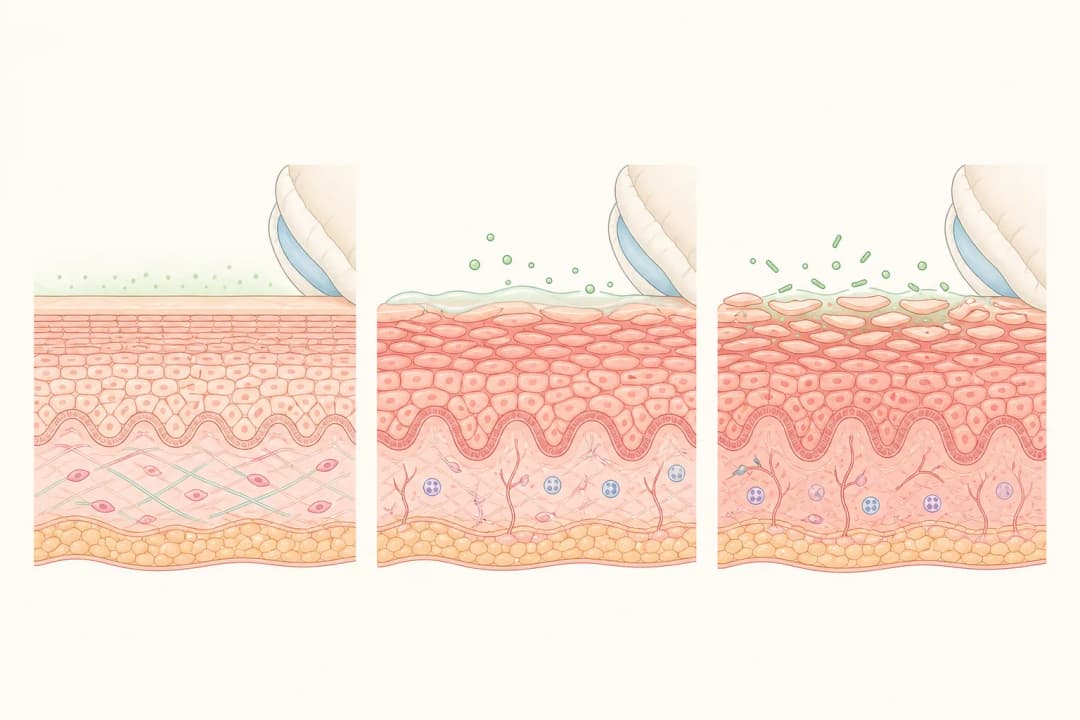
Simple irritant rash often affects skin that has the most contact with the diaper while sparing deeper creases. A bright red rash involving the folds, with small spots beyond the main edge, can occur with yeast. Blisters, pus, honey-coloured crust, open sores, or rapidly expanding redness raise concern for more significant inflammation or infection.
The appearance alone may not settle the cause, especially after several products have been applied.
How to protect sore skin
Change wet or soiled diapers promptly. Clean with lukewarm water and a soft cloth or fragrance-free wipes, pat rather than rub, allow air-drying when practical, and apply a thick barrier ointment. Avoid talcum powder, fragranced products, harsh soap, and tight diapers.
Emollient therapy can support the damaged barrier. Do not start an antifungal, antibiotic, steroid, or combination cream on a baby without confirming the correct product and location with a clinician or pharmacist; topical antifungal treatment helps yeast-related rash but not every red diaper rash.
When your baby needs care
Contact a clinician promptly if the rash is severe, worsening, blistered, crusted, bleeding, producing pus, or failing to improve with careful barrier protection. Seek urgent assessment when a baby has fever, seems unusually sleepy or unwell, feeds poorly, has fewer wet diapers, or has redness spreading beyond the diaper area.
Useful questions at the appointment
Ask whether the pattern looks irritant, fungal, bacterial, or related to another skin condition; which barrier product to use; how each prescribed cream should be applied; and what change should trigger reassessment.
Find care
General Clinics & Polyclinics in Abu Dhabi
That answer is general. If you want it applied to your own case, these are licensed general clinics & polyclinics listed in Abu Dhabi.
27 Ar Ruwwad St - Shakhbout City - MSH4 - Abu Dhabi - United Arab Emirates
Accepts: Daman, Thiqa, Cigna, MetLife +20 more
Al Ruwais, Al Dhafrah
Accepts: Daman, Thiqa, AXA, Cigna +16 more
Al Bahyah - Al Bahyah Old - Abu Dhabi - United Arab Emirates
Accepts: Daman, Thiqa, Cigna, Allianz Care +18 more
Abu Dhabi
Accepts: Daman, Thiqa, AXA, Cigna +27 more
Ordered by verification status and how complete each clinic's public record is, then alphabetically. This is a directory listing, not a ranking — Zavis does not rate or recommend providers.
A factual listing drawn from the DHA, DOH and MOHAP licence registers. It is not a referral, an endorsement, or advice that any of these providers is right for you.
Questions people ask
Should all bad diaper rashes be treated with antifungal cream?
No. Antifungals target yeast, while irritation or bacterial infection needs a different approach. A clinician or pharmacist can help identify the appropriate treatment.
Should the barrier cream be removed at every change?
Aggressive removal can further irritate skin. Gently clean away stool and obvious soiling, then restore the protective layer without scrubbing.
Related
Related reading
Keep reading
Medical disclaimer. This page is general health information, not medical advice, and it cannot diagnose you. Always consult a licensed healthcare provider about your own symptoms and treatment. In an emergency in the UAE, call 998 for an ambulance.