
Treatment for bacterial nappy rash
Short answer
Treatment for bacterial nappy rash combines careful barrier care with an antibiotic selected after a clinician assesses the rash.
This answers one question. It is not a diagnosis and does not replace an assessment by a licensed doctor.
At a glance
- Treatment basis
- Clinical severity, spread and likely cause
- Barrier care
- Prompt changes, gentle washing, air drying and plain ointment
- Medicine safety
- Use only the product and schedule prescribed for the baby
The short answer
A small, localised infection may be treated differently from redness that is spreading or accompanied by fever. The clinician also checks for yeast and irritant dermatitis because each needs a different approach.
How treatment is chosen
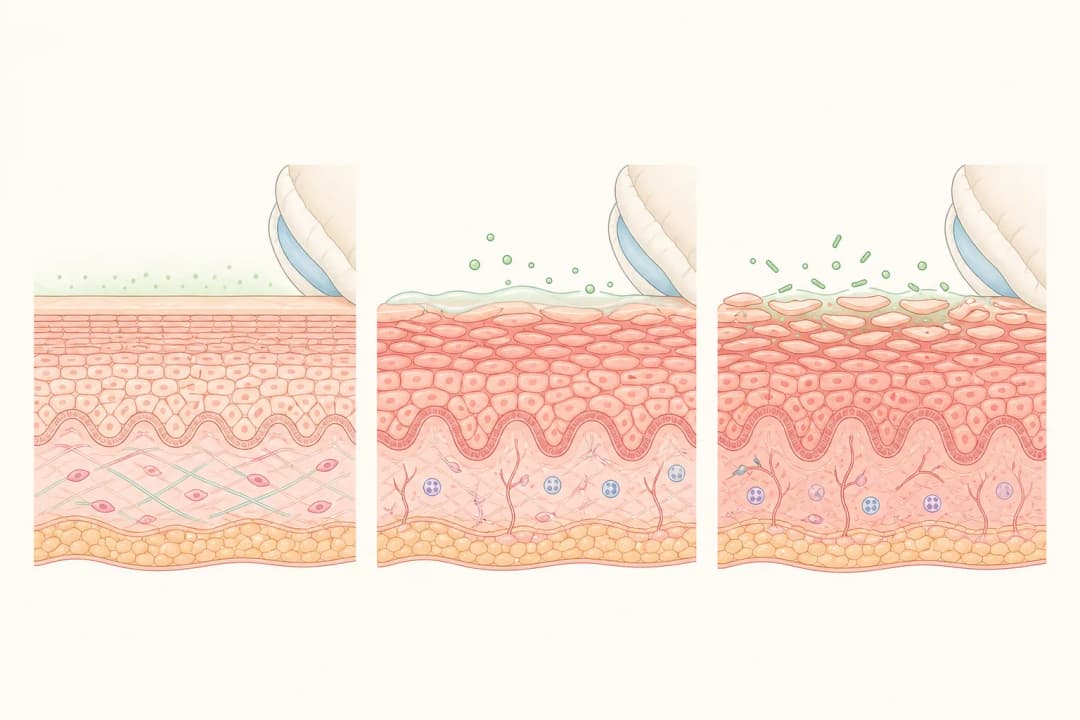
Raw skin exposed to stool, urine and friction is easier for bacteria to enter. Yellow crust, oozing, pus-filled spots, blisters, tenderness or redness moving outside the nappy area may suggest bacterial involvement.
The visible pattern does not always identify the germ. A clinician may swab discharge when the rash is severe, recurrent or not improving. The result can help refine antibiotic choice, while suspected yeast is treated with an antifungal rather than an antibiotic.
Supporting the skin during treatment
Replace nappies soon after wetting or soiling and wash hands before and after every change. Use lukewarm water, avoid rubbing, and leave the area open to air briefly. A plain barrier ointment can shield intact or mildly irritated skin from further contact.
Give prescribed medicine in the amount, location and schedule shown on its label. Do not stop early because the skin looks calmer, and do not add a steroid, antifungal or antiseptic unless advised. Clean the changing surface and keep towels separate while there are open or weeping areas.
When to get help
Seek urgent assessment if your baby has fever, is hard to wake, feeds poorly, has fewer wet nappies, seems in significant pain, or develops rapidly expanding redness, swelling, blisters or darkened skin. Do not wait for a scheduled follow-up if the baby appears generally unwell.
Contact the treating clinician when prescribed therapy causes swelling, hives, breathing difficulty, vomiting or a marked new rash; breathing difficulty is an emergency. Also request review if infection continues to spread or fails to improve as expected.
Treatment questions to ask
Confirm whether the medicine goes on every red area or only infected spots, how it fits around nappy changes, and whether barrier ointment can be layered with it. Ask how improvement should look and when the baby should be examined again.
Find care
General Clinics & Polyclinics in Abu Dhabi
That answer is general. If you want it applied to your own case, these are licensed general clinics & polyclinics listed in Abu Dhabi.
27 Ar Ruwwad St - Shakhbout City - MSH4 - Abu Dhabi - United Arab Emirates
Accepts: Daman, Thiqa, Cigna, MetLife +20 more
Al Ruwais, Al Dhafrah
Accepts: Daman, Thiqa, AXA, Cigna +16 more
Al Bahyah - Al Bahyah Old - Abu Dhabi - United Arab Emirates
Accepts: Daman, Thiqa, Cigna, Allianz Care +18 more
Abu Dhabi
Accepts: Daman, Thiqa, AXA, Cigna +27 more
Ordered by verification status and how complete each clinic's public record is, then alphabetically. This is a directory listing, not a ranking — Zavis does not rate or recommend providers.
A factual listing drawn from the DHA, DOH and MOHAP licence registers. It is not a referral, an endorsement, or advice that any of these providers is right for you.
Questions people ask
Does every infected nappy rash need an oral antibiotic?
No. Treatment depends on the extent, depth and effect on the baby. A clinician may choose topical treatment for some localised infections and oral medicine for others.
Can barrier cream be used with an antibiotic?
Often it can, but placement and layering depend on the prescribed product. Ask the pharmacist or clinician which goes on first and where each should be applied.
What if an antifungal cream has not helped?
The rash may be irritant, bacterial, mixed or another skin condition. Stop adding treatments and arrange reassessment so therapy can be matched to the cause.
Related
Related reading
Keep reading
Medical disclaimer. This page is general health information, not medical advice, and it cannot diagnose you. Always consult a licensed healthcare provider about your own symptoms and treatment. In an emergency in the UAE, call 998 for an ambulance.