
Bacterial infection in nappy rash
Short answer
Bacterial infection can complicate damaged skin under a nappy and needs clinical assessment for the correct targeted treatment.
This answers one question. It is not a diagnosis and does not replace an assessment by a licensed doctor.
At a glance
- Possible infection clues
- Spreading redness, tenderness, pus, weeping, blisters or crust
- Gentle care
- Frequent changes, water cleansing, patting dry and barrier protection
- Avoid
- Scrubbing and unadvised medicated creams
The short answer
Clues include rapidly worsening redness, tenderness, weeping, pus, crusts, blisters or sores. These features are different from uncomplicated irritation and should not be treated with leftover medicine.
How infection develops
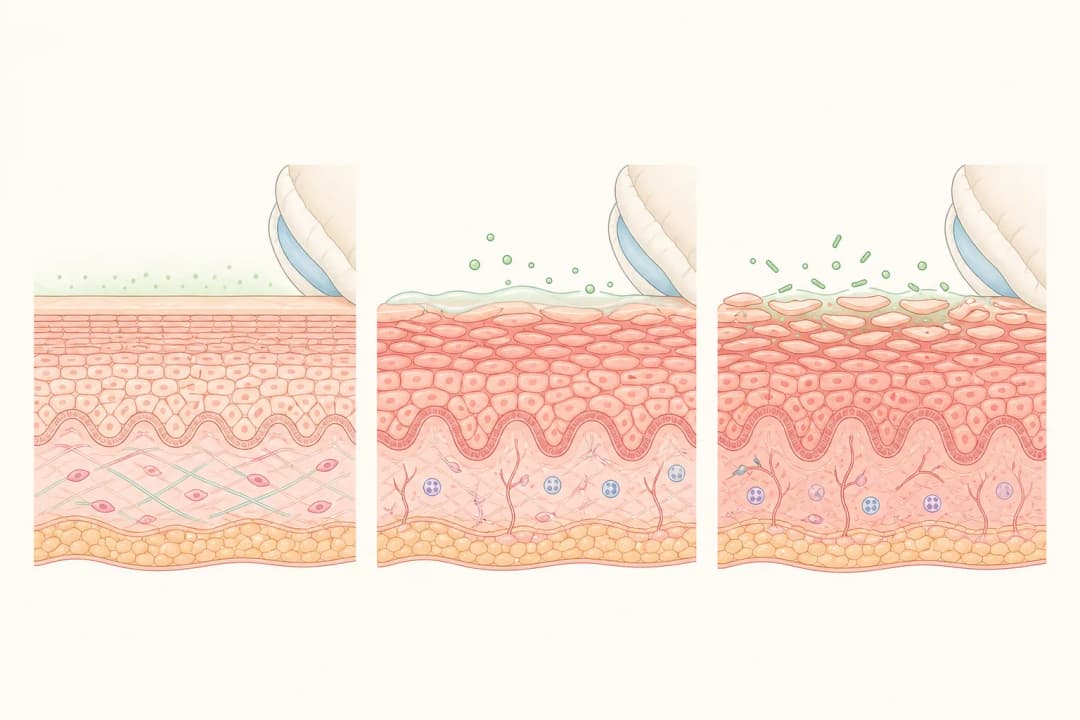
Urine, stool, moisture and rubbing weaken the skin barrier. Bacteria can then enter cracked or raw areas. Infection may remain local or spread beyond the part covered by the nappy.
Yeast can also affect warm skin folds and requires different medicine. Because bacterial, yeast and irritant rashes can overlap, a clinician examines the distribution, edges, folds, spots and any discharge before choosing treatment.
Care while arranging assessment
Change wet or soiled nappies promptly. Clean with lukewarm water and soft cotton or a fragrance-free wipe, then pat dry. Allow nappy-free time when practical and apply a simple barrier ointment to protect unbroken skin.
Do not scrub, pop blisters or apply fragranced products. Avoid antibiotic, antifungal or steroid creams unless a clinician has advised the specific product and area. Treatment for confirmed bacterial infection may be topical or oral, depending on severity and spread.
Signs that need medical attention
Seek urgent medical advice if the baby has fever, unusual sleepiness, poor feeding, fewer wet nappies, rapidly spreading redness, significant swelling, severe pain, blisters or darkening skin. A very young infant who seems unwell needs prompt assessment.
Arrange a routine appointment when the rash is not settling with careful nappy care, keeps returning, develops yellow crust or pus, or extends outside the nappy area. Bring the products already used so the clinician can check for irritation or masking of infection.
Useful questions at the visit
Ask whether the rash looks bacterial, fungal, irritant or mixed; whether a swab is needed; and exactly where each prescribed cream belongs. Confirm how to clean the area and what change should prompt an earlier follow-up.
Find care
General Clinics & Polyclinics in Abu Dhabi
That answer is general. If you want it applied to your own case, these are licensed general clinics & polyclinics listed in Abu Dhabi.
27 Ar Ruwwad St - Shakhbout City - MSH4 - Abu Dhabi - United Arab Emirates
Accepts: Daman, Thiqa, Cigna, MetLife +20 more
Al Ruwais, Al Dhafrah
Accepts: Daman, Thiqa, AXA, Cigna +16 more
Al Bahyah - Al Bahyah Old - Abu Dhabi - United Arab Emirates
Accepts: Daman, Thiqa, Cigna, Allianz Care +18 more
Abu Dhabi
Accepts: Daman, Thiqa, AXA, Cigna +27 more
Ordered by verification status and how complete each clinic's public record is, then alphabetically. This is a directory listing, not a ranking — Zavis does not rate or recommend providers.
A factual listing drawn from the DHA, DOH and MOHAP licence registers. It is not a referral, an endorsement, or advice that any of these providers is right for you.
Questions people ask
Can bacterial nappy rash be mistaken for thrush?
Yes. Yeast often involves warm folds and may cause small surrounding spots, while bacterial infection can produce crust, pus or sharply inflamed areas. Mixed rashes occur, so examination matters.
Should I stop using nappies until the rash clears?
Nappies are still needed, but frequent changes and short periods without one can reduce moisture and friction. Use a comfortable fit rather than fastening tightly.
Can I use a family member's antibiotic cream?
No. The product may be unsuitable for a baby, the cause may not be bacterial, and unnecessary antibiotics can make later treatment harder.
Related
Related reading
Keep reading
Medical disclaimer. This page is general health information, not medical advice, and it cannot diagnose you. Always consult a licensed healthcare provider about your own symptoms and treatment. In an emergency in the UAE, call 998 for an ambulance.