
Bacterial diaper rash: recognition and safe care
Short answer
Bacterial diaper rash occurs when bacteria infect vulnerable skin in the diaper area, causing inflammation that may spread beyond ordinary irritation.
This answers one question. It is not a diagnosis and does not replace an assessment by a licensed doctor.
At a glance
- Main trigger
- Bacteria entering moist, irritated or broken skin
- Helpful routine
- Prompt changes, gentle cleansing, drying and barrier protection
- Reason for assessment
- Bacterial, fungal and irritant rashes need different management
The short answer
Tender redness, weeping, crusts, blisters, pus-filled spots or sharply worsening skin can raise concern for infection. Several rashes look similar in this area, including irritant and fungal rashes, so a clinician may need to examine the pattern before choosing treatment.
How infection develops
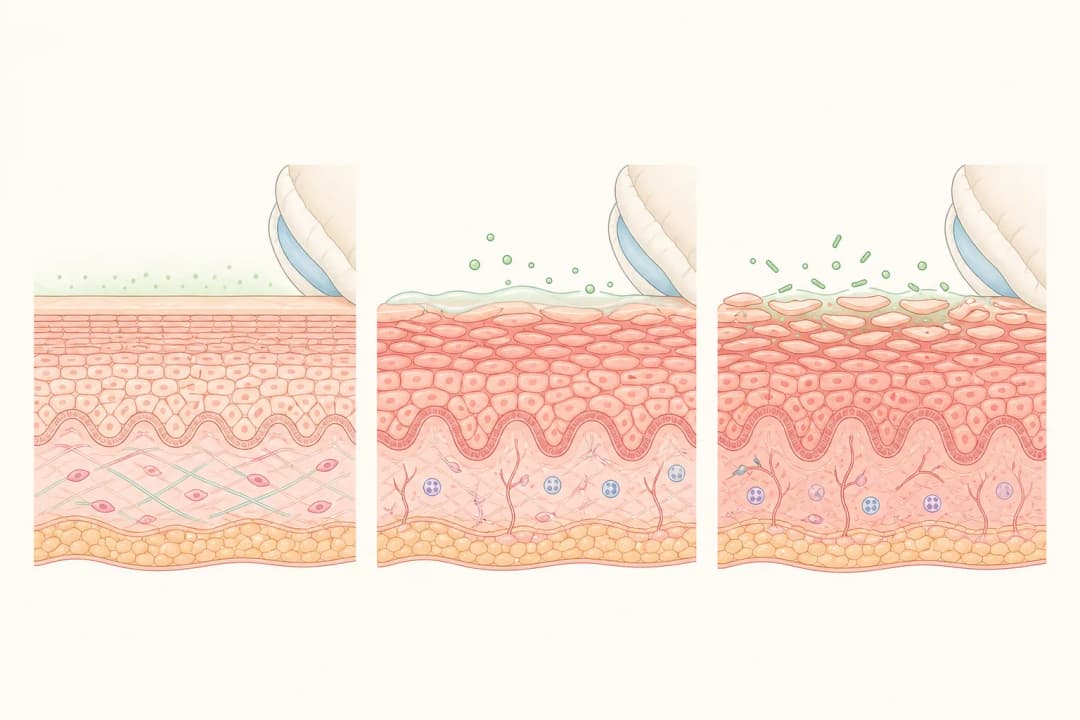
Moisture, stool, urine, friction and frequent wiping can weaken the skin barrier beneath a diaper. Bacteria can then enter through raw or cracked areas. Infection may begin within an irritated rash or appear as distinct sores and spots.
The distribution provides useful clues: a clinician looks at the folds, edges, nearby skin and any crusting or drainage. They may also consider recent antibiotics, diarrhoea, skin conditions elsewhere and whether anyone close to the baby has a skin infection. A swab is sometimes taken from an open or draining area.
Care while arranging advice
Change wet or soiled diapers promptly, rinse gently with lukewarm water and pat rather than rub. Allow diaper-free time when practical, use an absorbent diaper without fastening it tightly and apply a simple fragrance-free barrier ointment to protect unbroken skin.
Avoid talcum powder, harsh wipes, fragranced products and leftover prescription creams. Antifungal treatment does not treat bacteria, and some combination creams may be unsuitable for delicate skin. Give prescribed medicine for the full directed course, even if the rash begins to look calmer.
When your baby needs medical care
Contact a clinician promptly if the rash has pus, blisters, yellow crusts, open sores, marked tenderness, spreading redness or no improvement with careful diaper care. Assessment is also appropriate when the rash repeatedly returns or the baby seems unusually unsettled during cleaning.
Seek urgent care if the baby has fever, is difficult to wake, feeds poorly, has fewer wet diapers, develops rapidly expanding redness or looks generally unwell. A very young infant with fever needs prompt medical assessment rather than home treatment alone.
What to discuss with the clinician
Ask whether the pattern suggests irritation, bacteria, yeast or more than one cause; which barrier products are suitable; how prescribed medicine should be applied; and which signs mean the baby should be seen again. Describe stool changes, new products and medicines already tried.
Find care
General Clinics & Polyclinics in Abu Dhabi
That answer is general. If you want it applied to your own case, these are licensed general clinics & polyclinics listed in Abu Dhabi.
27 Ar Ruwwad St - Shakhbout City - MSH4 - Abu Dhabi - United Arab Emirates
Accepts: Daman, Thiqa, Cigna, MetLife +20 more
Al Ruwais, Al Dhafrah
Accepts: Daman, Thiqa, AXA, Cigna +16 more
Al Bahyah - Al Bahyah Old - Abu Dhabi - United Arab Emirates
Accepts: Daman, Thiqa, Cigna, Allianz Care +18 more
Abu Dhabi
Accepts: Daman, Thiqa, AXA, Cigna +27 more
Ordered by verification status and how complete each clinic's public record is, then alphabetically. This is a directory listing, not a ranking — Zavis does not rate or recommend providers.
A factual listing drawn from the DHA, DOH and MOHAP licence registers. It is not a referral, an endorsement, or advice that any of these providers is right for you.
Questions people ask
How is bacterial diaper rash different from ordinary diaper rash?
Simple irritant rash is linked to moisture and friction, while bacterial infection may add spreading tenderness, pus, blisters, weeping or crusting. Because appearances overlap, concerning or worsening changes should be examined.
Should I stop using diapers until the rash clears?
That is usually impractical. Frequent changes, a comfortable fit and short periods with the skin uncovered can reduce moisture and friction while treatment takes effect.
Can a barrier cream treat the infection?
Barrier cream shields irritated skin from moisture but does not kill bacteria. A clinician can decide whether antimicrobial medicine is needed.
Related
Related reading
Keep reading
Medical disclaimer. This page is general health information, not medical advice, and it cannot diagnose you. Always consult a licensed healthcare provider about your own symptoms and treatment. In an emergency in the UAE, call 998 for an ambulance.