
What should you know about asymptomatic kidney stones?
Short answer
Asymptomatic kidney stones are mineral deposits found in a kidney before they cause pain, blockage, infection, or noticeable urinary changes.
This answers one question. It is not a diagnosis and does not replace an assessment by a licensed doctor.
At a glance
- How found
- Often discovered incidentally on imaging performed for another concern.
- Decision factors
- Stone location, size, kidney drainage, medical history, and infection risk shape follow-up.
- Main warning
- Fever with side pain or urinary blockage needs urgent assessment.
The short answer
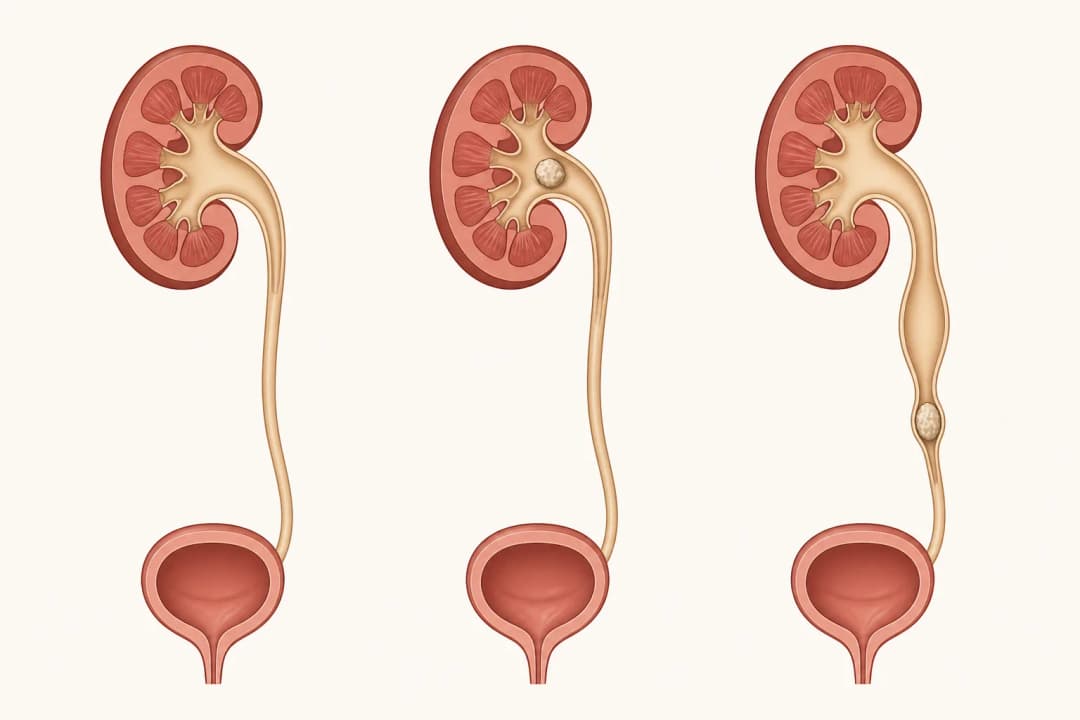
They may appear unexpectedly on an ultrasound or another scan performed for an unrelated reason. Some remain quiet, while others move, grow, or interfere with urine flow, so the next step depends on the scan and your health context.
What the scan finding tells you
A report may describe where a stone sits, its size, whether there are several stones, and whether the kidney’s drainage system looks widened. Location and signs of obstruction help a clinician judge whether observation or specialist assessment is more suitable.
Having no symptoms means the stone is not currently producing a noticeable stone episode. It does not show what the stone is made of, and it does not rule out later movement into the ureter, the narrow tube carrying urine to the bladder.
Practical next steps
Review the scan report with a GP or the clinician who ordered it. Ask whether the kidney is draining normally, whether follow-up imaging is appropriate, and whether your medical history suggests urine or blood testing. Previous stones, urinary infections, kidney problems, and medicines can affect the plan.
Drink regularly enough that your urine is usually pale unless a clinician has restricted your fluid intake for another condition. Avoid forcing excessive fluid. General prevention advice may include moderating salt and keeping a balanced diet, while tailored advice depends on stone composition or test results.
Warning signs from a previously quiet stone
Arrange prompt assessment for new pain in the side or back, abdominal pain, painful urination, visible blood in the urine, or difficulty passing urine. These changes can occur if a stone moves or disrupts urine flow.
Seek urgent care for fever or chills with side pain, inability to pass urine, persistent vomiting, faintness, or severe pain that is not settling. Infection behind a blockage and impaired drainage require timely evaluation.
Points to clarify at follow-up
Useful questions include where the stone is located, whether the scan shows obstruction, and what would make referral advisable. Confirm whether another image is planned, how you will receive the result, and whether your diet or medicines should change before more information is available.
Find care
General Clinics & Polyclinics in Abu Dhabi
That answer is general. If you want it applied to your own case, these are licensed general clinics & polyclinics listed in Abu Dhabi.
27 Ar Ruwwad St - Shakhbout City - MSH4 - Abu Dhabi - United Arab Emirates
Accepts: Daman, Thiqa, Cigna, MetLife +20 more
Al Ruwais, Al Dhafrah
Accepts: Daman, Thiqa, AXA, Cigna +16 more
Al Bahyah - Al Bahyah Old - Abu Dhabi - United Arab Emirates
Accepts: Daman, Thiqa, Cigna, Allianz Care +18 more
Abu Dhabi
Accepts: Daman, Thiqa, AXA, Cigna +27 more
Ordered by verification status and how complete each clinic's public record is, then alphabetically. This is a directory listing, not a ranking — Zavis does not rate or recommend providers.
A factual listing drawn from the DHA, DOH and MOHAP licence registers. It is not a referral, an endorsement, or advice that any of these providers is right for you.
Questions people ask
Does a kidney stone need removal if it causes no symptoms?
Not always. Observation may be suitable for some stones, while location, growth, impaired drainage, infection concerns, occupation, travel access, or kidney health can support active treatment.
Can an asymptomatic stone start hurting later?
Yes. Pain may begin if the stone moves into the ureter or obstructs urine flow. New flank pain, urinary symptoms, fever, or vomiting warrants medical assessment.
Will drinking water dissolve the stone?
Ordinary hydration does not reliably dissolve most kidney stones. Appropriate fluid intake can support urine flow, while stone-specific prevention or treatment depends on assessment.
Related
Related reading
Keep reading
Medical disclaimer. This page is general health information, not medical advice, and it cannot diagnose you. Always consult a licensed healthcare provider about your own symptoms and treatment. In an emergency in the UAE, call 998 for an ambulance.