
What Is Cradle Cap?
Short answer
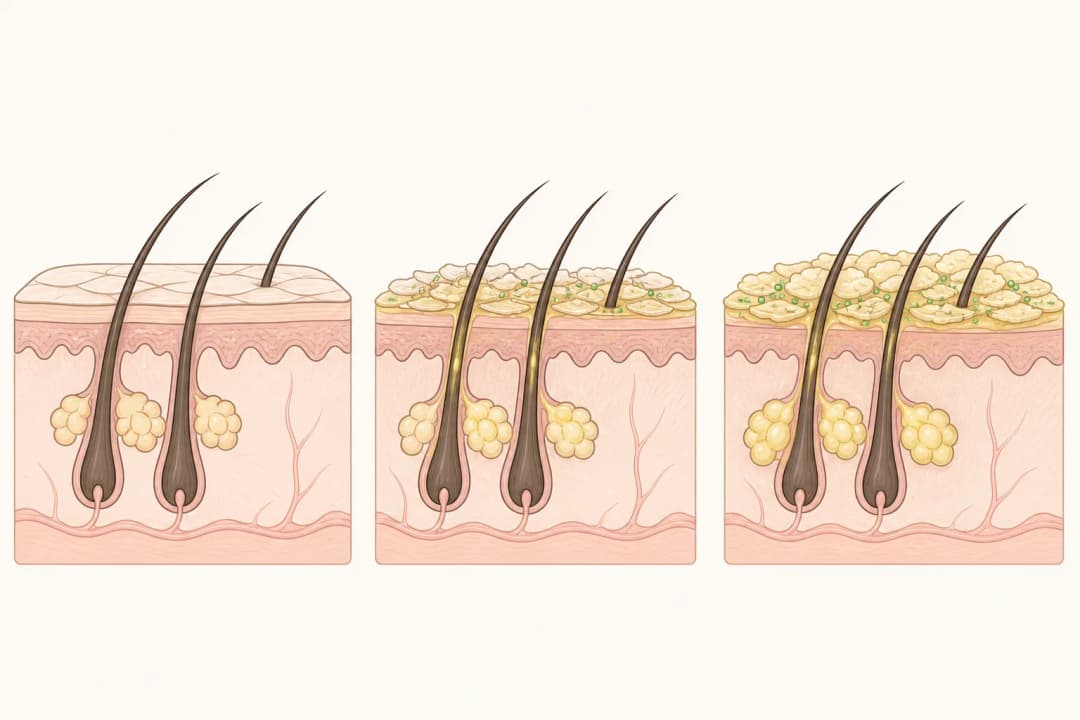
Cradle cap is infantile seborrheic dermatitis, which produces greasy or dry, adherent scales on a baby's scalp and is usually mild.
This answers one question. It is not a diagnosis and does not replace an assessment by a licensed doctor.
At a glance
- Medical name
- Infantile seborrheic dermatitis
- Typical look
- Adherent white or yellow scalp scale
- Spread
- It cannot pass from one person to another
The short answer
The scales may look white or yellow and sit over slightly red skin. Similar changes can occur around the eyebrows, behind the ears, or in body folds. Cradle cap is not caused by poor hygiene and is not contagious.
What parents may notice
Cradle cap often looks more dramatic than it feels. The scale can form a patch or cover much of the scalp, while the baby remains comfortable. Marked itch, broken skin, persistent weeping, or widespread inflammation is less typical and may point to eczema, infection, or another rash.
Hair can become caught in loosened scale and may come away temporarily during care. Avoid scratching, forceful combing, or pulling attached flakes, because this can damage the delicate scalp.
Gentle scalp care
Wash the scalp gently with a mild baby shampoo and use a soft brush to lift only scales that release easily. An emollient may help soften stubborn scale, but use a baby-safe product and wash it out as directed rather than leaving heavy oil on the scalp.
If home care does not settle the condition, a clinician may recommend a short course of a suitable treatment, such as an antifungal preparation, after checking the diagnosis. Products intended for adults can contain ingredients or strengths that are unsuitable for an infant.
When your baby should be checked
Arrange a medical review when the rash is spreading, very red, swollen, cracked, bleeding, weeping, unpleasant-smelling, or apparently itchy or painful. Seek prompt care if the baby has a fever, seems unusually sleepy, feeds poorly, or develops rapidly worsening skin changes.
A clinician should also assess persistent scale that does not improve with gentle care, especially when the face, nappy area, or multiple body folds are involved.
What to ask at the appointment
Ask whether the rash is cradle cap or another form of dermatitis, which products are safe for your baby's age and skin, how often to wash the scalp, and what signs would suggest infection. Mention any family history of eczema and any product used before the rash changed.
Find care
General Clinics & Polyclinics in Abu Dhabi
That answer is general. If you want it applied to your own case, these are licensed general clinics & polyclinics listed in Abu Dhabi.
27 Ar Ruwwad St - Shakhbout City - MSH4 - Abu Dhabi - United Arab Emirates
Accepts: Daman, Thiqa, Cigna, MetLife +20 more
Al Ruwais, Al Dhafrah
Accepts: Daman, Thiqa, AXA, Cigna +16 more
Al Bahyah - Al Bahyah Old - Abu Dhabi - United Arab Emirates
Accepts: Daman, Thiqa, Cigna, Allianz Care +18 more
Abu Dhabi
Accepts: Daman, Thiqa, AXA, Cigna +27 more
Ordered by verification status and how complete each clinic's public record is, then alphabetically. This is a directory listing, not a ranking — Zavis does not rate or recommend providers.
A factual listing drawn from the DHA, DOH and MOHAP licence registers. It is not a referral, an endorsement, or advice that any of these providers is right for you.
Questions people ask
Should I pick off cradle cap scales?
No. Soften the scale and lift only what releases easily with a soft brush; picking can break the skin and introduce infection.
Does cradle cap make hair fall out?
Some hair may come away with loosened scale, but this is generally temporary. Forceful removal is more likely to pull hair or injure the scalp.
Can I use dandruff shampoo on my baby?
Do not use an adult medicated shampoo unless a clinician specifically recommends it for your baby, because ingredients and strengths vary.
Related
Related reading
Keep reading
Medical disclaimer. This page is general health information, not medical advice, and it cannot diagnose you. Always consult a licensed healthcare provider about your own symptoms and treatment. In an emergency in the UAE, call 998 for an ambulance.