
What to expect from the Anti-D injection needle
Short answer
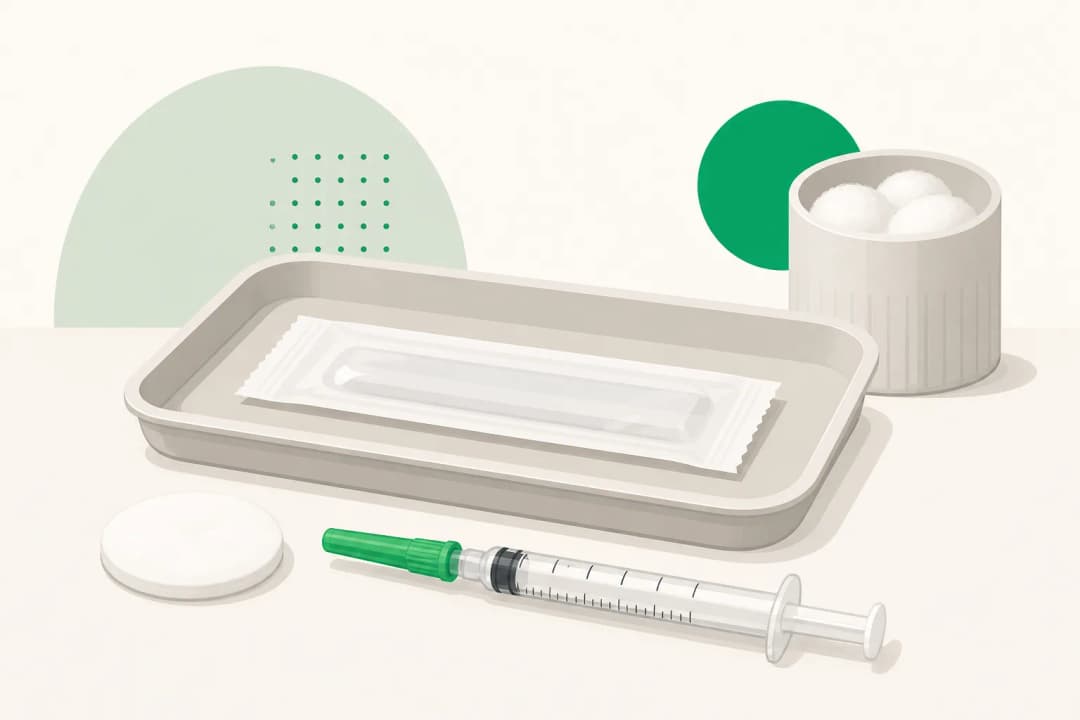
Anti-D is given by a trained clinician with a sterile needle, usually into a muscle or sometimes into a vein depending on the product.
This answers one question. It is not a diagnosis and does not replace an assessment by a licensed doctor.
At a glance
- Given by
- A trained healthcare professional
- Possible routes
- Into a muscle or, for suitable products, into a vein
The short answer
You may notice a brief sharp feeling as the needle enters and some pressure while the medicine is delivered. The clinician should confirm the prescribed product, route, and injection site before giving it.
Where the injection goes
An intramuscular injection places the medicine into muscle, commonly in the upper arm or another suitable site selected by the clinician. Some Anti-D preparations can be delivered through intravenous access instead. The route is product-specific, so one formulation should not be assumed to work like another.
Needle length and site selection are clinical decisions based on the route, body build, and local guidance. Anti-D should not be self-injected unless a specialist service has explicitly supplied and taught an approved method.
Before and after the injection
Tell the clinician if you have fainted during injections, take medicines that affect bleeding, bruise easily, or have had a reaction to immunoglobulin. Sitting or lying down can help if needles make you light-headed. Relax the selected muscle and keep still while the dose is given.
Afterwards, follow the team's observation advice. Mild tenderness can be managed by avoiding pressure or vigorous rubbing at the site. Keep the area clean, and note whether redness, swelling, or pain is settling rather than expanding.
When the injection site needs attention
Get immediate help for trouble breathing, swelling of the lips, tongue, or throat, widespread hives, collapse, or severe weakness after the injection. Contact the treating service for redness that keeps spreading, increasing warmth or swelling, drainage, fever, severe pain, persistent numbness, or weakness in the injected limb.
Questions for your clinician
You can ask which route your Anti-D product requires, where the injection will be placed, how long you will be observed, and what to do if the site becomes more painful. Mention a strong needle fear early so the team can position you safely and talk you through the procedure.
Find care
General Clinics & Polyclinics in Abu Dhabi
That answer is general. If you want it applied to your own case, these are licensed general clinics & polyclinics listed in Abu Dhabi.
27 Ar Ruwwad St - Shakhbout City - MSH4 - Abu Dhabi - United Arab Emirates
Accepts: Daman, Thiqa, Cigna, MetLife +20 more
Al Ruwais, Al Dhafrah
Accepts: Daman, Thiqa, AXA, Cigna +16 more
Al Bahyah - Al Bahyah Old - Abu Dhabi - United Arab Emirates
Accepts: Daman, Thiqa, Cigna, Allianz Care +18 more
Abu Dhabi
Accepts: Daman, Thiqa, AXA, Cigna +27 more
Ordered by verification status and how complete each clinic's public record is, then alphabetically. This is a directory listing, not a ranking — Zavis does not rate or recommend providers.
A factual listing drawn from the DHA, DOH and MOHAP licence registers. It is not a referral, an endorsement, or advice that any of these providers is right for you.
Questions people ask
Can I choose where the Anti-D needle is given?
Tell the clinician your preference, but the suitable site depends on the prescribed route, the product instructions, and clinical assessment.
Is soreness after the needle expected?
Brief tenderness, redness, or swelling can occur at an intramuscular injection site. Worsening or spreading symptoms should be reported.
Can Anti-D be taken without a needle?
Anti-D immunoglobulin is administered by injection or infusion; it is not an oral medicine.
Related
Related reading
Keep reading
Medical disclaimer. This page is general health information, not medical advice, and it cannot diagnose you. Always consult a licensed healthcare provider about your own symptoms and treatment. In an emergency in the UAE, call 998 for an ambulance.