
Treatment when amoebic cysts are found
Short answer
Amoebic cyst treatment depends on identifying the species and deciding whether infection is limited to the bowel or invading tissue.
This answers one question. It is not a diagnosis and does not replace an assessment by a licensed doctor.
At a glance
- Key distinction
- Not every amoeba seen in stool causes disease.
- Prescription plan
- The medicine chosen depends on species, symptoms, and the site of infection.
- Preventing spread
- Careful handwashing and food hygiene limit faecal contamination.
The short answer
A cyst report alone does not show which medicine is appropriate. A clinician may request a more specific stool test because disease-causing Entamoeba histolytica can resemble non-disease-causing amoebae. Do not use leftover antibiotics; some medicines treat invasive disease but do not reliably remove organisms from the bowel.
What a cyst finding can mean
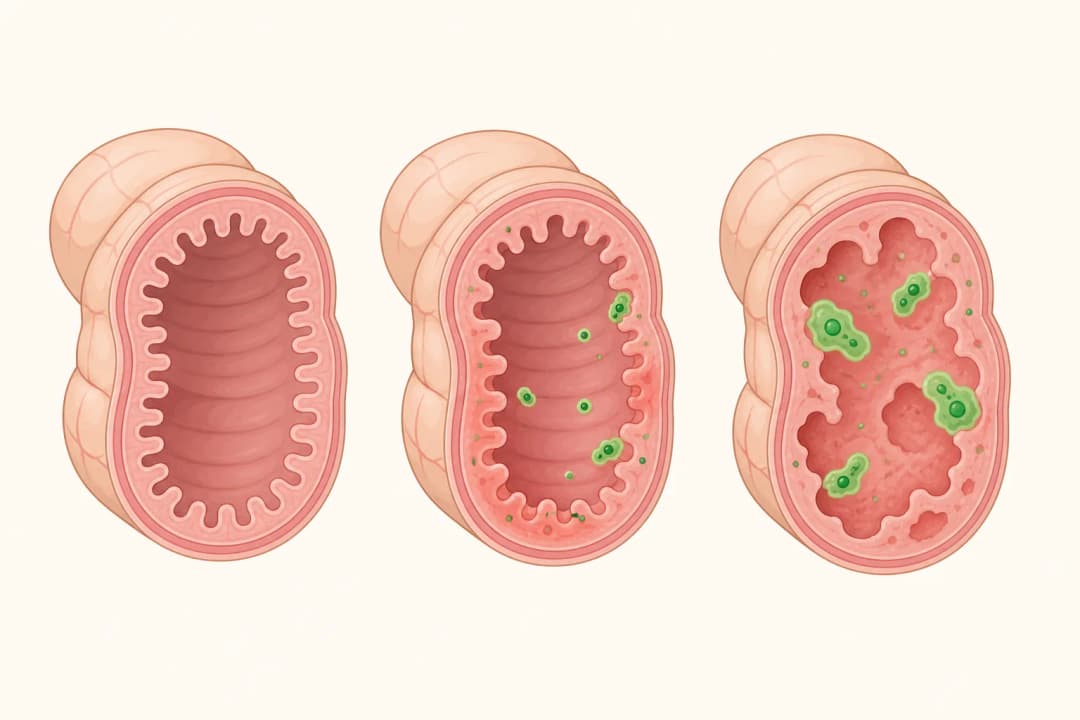
Cysts are a hardy form of the organism passed in stool. Finding them may reflect intestinal colonisation. Active intestinal disease can present with diarrhoea, cramps, or blood and mucus in stool. The laboratory method and exact species identification matter because amoebae that do not cause illness generally do not need the same management.
When E. histolytica is confirmed, treatment is selected according to whether the person has no symptoms, bowel inflammation, or infection outside the intestine. Symptomatic invasive disease commonly needs a tissue-active medicine and then a bowel-clearing medicine; the latter helps remove cyst-producing organisms still in the intestine.
Practical next steps
Arrange a clinical review and bring the full laboratory report, a list of symptoms, recent travel details, and current medicines. Submit any repeat stool samples exactly as instructed. Take the prescribed course on schedule even if bowel symptoms improve early, unless your prescriber advises a change.
Replace fluid losses with water and oral rehydration solution, especially after loose stools. Handwashing with soap and safe food handling reduce spread through microscopic stool contamination. Household contacts should seek individual advice if they develop symptoms rather than sharing treatment.
Warning signs that need prompt care
Obtain urgent assessment for bloody stools, intense or increasing abdominal pain, a swollen tender abdomen, persistent fever, repeated vomiting, fainting, confusion, inability to drink, or markedly reduced urination. These features may signal severe bowel inflammation, dehydration, or infection beyond the intestine.
Pain high on the right side of the abdomen with fever also needs prompt evaluation because invasive amoebiasis can affect the liver. Tell the clinician about recent travel and any positive stool result so suitable testing is not delayed.
Useful points to clarify
Ask whether the report identifies E. histolytica specifically, whether another sample or molecular test would clarify the result, and whether your symptoms suggest invasive disease. Confirm the purpose of each prescribed medicine, possible interactions, what to do after a missed dose, and whether follow-up testing is appropriate after treatment.
Find care
General Clinics & Polyclinics in Abu Dhabi
That answer is general. If you want it applied to your own case, these are licensed general clinics & polyclinics listed in Abu Dhabi.
27 Ar Ruwwad St - Shakhbout City - MSH4 - Abu Dhabi - United Arab Emirates
Accepts: Daman, Thiqa, Cigna, MetLife +20 more
Al Ruwais, Al Dhafrah
Accepts: Daman, Thiqa, AXA, Cigna +16 more
Al Bahyah - Al Bahyah Old - Abu Dhabi - United Arab Emirates
Accepts: Daman, Thiqa, Cigna, Allianz Care +18 more
Abu Dhabi
Accepts: Daman, Thiqa, AXA, Cigna +27 more
Ordered by verification status and how complete each clinic's public record is, then alphabetically. This is a directory listing, not a ranking — Zavis does not rate or recommend providers.
A factual listing drawn from the DHA, DOH and MOHAP licence registers. It is not a referral, an endorsement, or advice that any of these providers is right for you.
Questions people ask
Do amoebic cysts always cause symptoms?
No. A person can pass cysts without noticeable illness, and some look-alike amoebae are harmless. Specific identification helps determine whether treatment is needed.
Why might treatment include more than one medicine?
Medicines that act in body tissues and medicines that remain mainly inside the bowel have different jobs. Confirmed invasive infection may require both in sequence.
Should everyone in my household take the same treatment?
No. Household members need their own clinical assessment if testing or symptoms suggest infection. Sharing prescription medicine may leave infection inadequately treated or cause avoidable side effects.
Related
Related reading
Keep reading
Medical disclaimer. This page is general health information, not medical advice, and it cannot diagnose you. Always consult a licensed healthcare provider about your own symptoms and treatment. In an emergency in the UAE, call 998 for an ambulance.