
What should you know about amoebiasis and giardiasis symptoms?
Short answer
Amoebiasis and giardiasis both cause bowel symptoms, but their patterns overlap enough that stool testing may be needed.
This answers one question. It is not a diagnosis and does not replace an assessment by a licensed doctor.
At a glance
- Shared feature
- Both infections can cause diarrhoea, cramps, nausea and dehydration.
- Amoebiasis clue
- Mucus or blood can occur when the large bowel is inflamed.
- Giardiasis clue
- Greasy, foul-smelling stool, bloating and gas can occur with poor absorption.
Direct answer
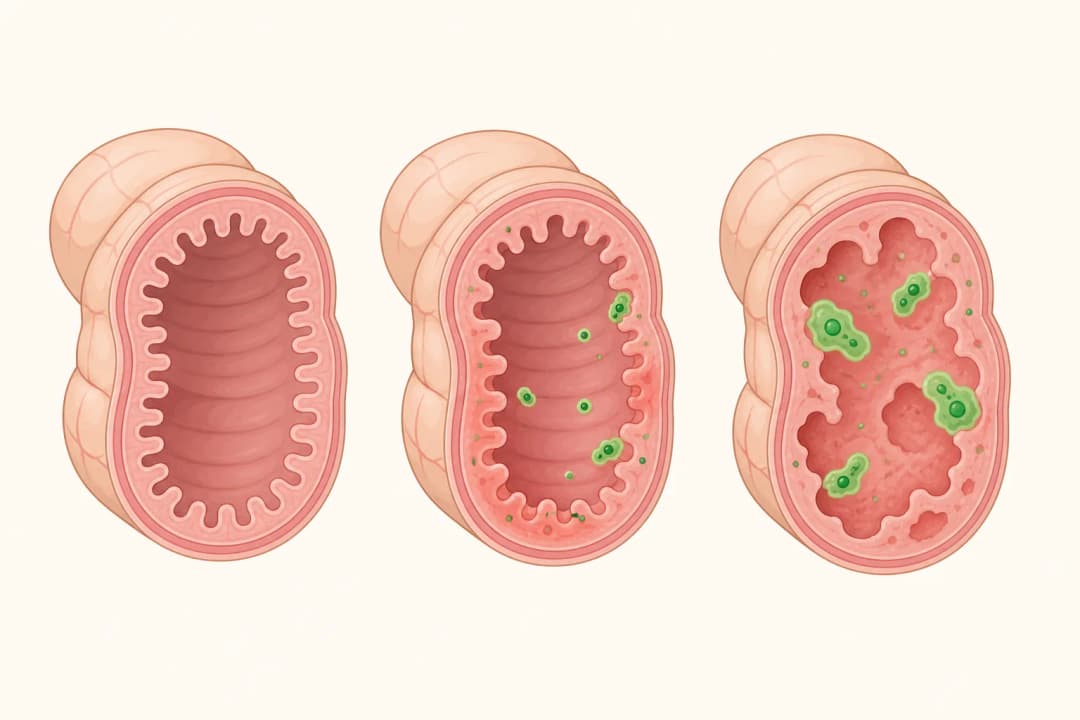
Amoebiasis may present with abdominal cramps, diarrhoea, mucus or blood in the stool and an urgent need to pass stool. Giardiasis often presents with watery or greasy, foul-smelling stools, bloating, gas, nausea and upper abdominal discomfort.
How the patterns can differ
Giardiasis can interfere with nutrient absorption, so weight loss and tiredness may accompany persistent loose stools. Amoebiasis can inflame the large bowel; invasive disease can produce bloody diarrhoea and more pronounced lower abdominal pain.
Either infection can be mild, fluctuate, or occur without a textbook pattern. Symptoms cannot reliably identify the organism, and diarrhoea after travel or unsafe water exposure can also have bacterial, viral or non-infectious causes.
What to do if you have symptoms
Replace fluids and salts, wash hands thoroughly with soap and use safe drinking water. Record when symptoms began, stool appearance, recent travel, untreated water exposure, sick contacts and medicines; these details help the clinician choose tests.
Arrange medical assessment when symptoms persist, return, or follow a relevant exposure. Stool samples may be required, sometimes on separate occasions, because parasite detection can vary. Do not use leftover antibiotics or antiparasitic drugs: treatment differs by organism, and amoebiasis may require medicines with distinct purposes.
Signs that need prompt care
Get prompt medical help for blood in the stool, intense or worsening abdominal pain, fever, repeated vomiting, or increasing weakness. Seek urgent care if you cannot keep fluids down, pass very little urine, faint, become confused, or develop fever with pain beneath the right ribs.
What to ask at the visit
You can ask which stool tests distinguish these parasites, whether samples should be collected before treatment, what result would change the medicine chosen, how to prevent spread at home, and when persistent symptoms need further investigation.
Find care
General Clinics & Polyclinics in Abu Dhabi
That answer is general. If you want it applied to your own case, these are licensed general clinics & polyclinics listed in Abu Dhabi.
27 Ar Ruwwad St - Shakhbout City - MSH4 - Abu Dhabi - United Arab Emirates
Accepts: Daman, Thiqa, Cigna, MetLife +20 more
Al Ruwais, Al Dhafrah
Accepts: Daman, Thiqa, AXA, Cigna +16 more
Al Bahyah - Al Bahyah Old - Abu Dhabi - United Arab Emirates
Accepts: Daman, Thiqa, Cigna, Allianz Care +18 more
Abu Dhabi
Accepts: Daman, Thiqa, AXA, Cigna +27 more
Ordered by verification status and how complete each clinic's public record is, then alphabetically. This is a directory listing, not a ranking — Zavis does not rate or recommend providers.
A factual listing drawn from the DHA, DOH and MOHAP licence registers. It is not a referral, an endorsement, or advice that any of these providers is right for you.
Questions people ask
Can stool appearance confirm which parasite I have?
No. Certain patterns may guide suspicion, but laboratory testing and clinical assessment are needed because the symptoms overlap.
Can either infection continue after the diarrhoea improves?
Symptoms can fluctuate, and an infection may not be cleared simply because stools briefly improve. Persistent or returning symptoms warrant assessment.
Are amoebiasis and giardiasis treated with the same medicine?
Not necessarily. The organism and site of infection affect medicine choice, so treatment should follow an appropriate diagnosis rather than symptom matching.
Related
Related reading
Keep reading
Medical disclaimer. This page is general health information, not medical advice, and it cannot diagnose you. Always consult a licensed healthcare provider about your own symptoms and treatment. In an emergency in the UAE, call 998 for an ambulance.