
Alcohol-Induced Rhabdomyolysis: What You Should Know
Short answer
Alcohol-induced rhabdomyolysis is serious muscle breakdown that can damage the kidneys and requires prompt medical assessment.
This answers one question. It is not a diagnosis and does not replace an assessment by a licensed doctor.
At a glance
- Main concern
- Muscle contents released into the blood can injure the kidneys and disrupt electrolytes.
- Possible warning signs
- Severe muscle pain, swelling or weakness, dark urine, or reduced urine output.
- Assessment
- Blood and urine testing can check muscle damage, kidney function and electrolyte balance.
What happens in the body
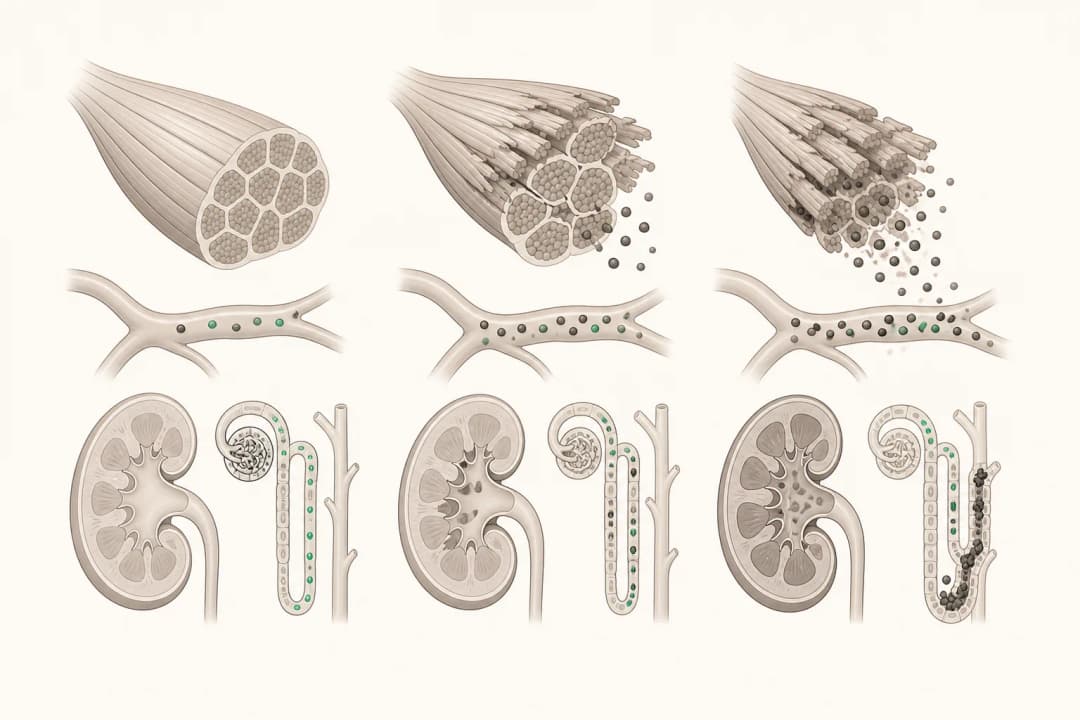
Damaged skeletal muscle releases myoglobin, creatine kinase and electrolytes into the bloodstream. Myoglobin can strain and injure the kidneys, while electrolyte changes may disturb the heart rhythm. Alcohol may contribute through direct toxic effects on muscle, dehydration, seizures, electrolyte disturbance, or prolonged unconsciousness in one position that compresses muscle. Muscle pain, swelling or weakness and red-brown or tea-coloured urine can occur, but their absence does not rule the condition out.
What to do if you suspect it
Stop exercise and seek medical assessment promptly rather than trying to manage suspected rhabdomyolysis with water alone. Tell the clinician how much alcohol was used, when it was consumed, whether there was vomiting, a seizure, a fall, intense exercise, or a long period of immobility, and which medicines or other substances were taken. Blood and urine tests can check muscle injury, kidney function and electrolytes. Treatment may include monitored intravenous fluids and correction of the underlying trigger or complications. If you drink heavily or regularly, tell the team because suddenly stopping alcohol can cause dangerous withdrawal and may require supervised care.
When to seek urgent care
Go to an emergency department now for dark red-brown urine, markedly reduced urine, severe or worsening muscle pain, swelling or weakness, especially after heavy alcohol use or being unconscious for a prolonged period. Call emergency services for collapse, severe confusion, a seizure, breathing difficulty, chest symptoms, or inability to wake the person. Do not let an intoxicated or confused person drive. Ordinary post-exercise soreness is usually milder, but symptoms that are intense, worsening, or accompanied by urine changes need urgent assessment.
Questions to discuss with your doctor
Ask whether your kidney function and electrolytes are affected, what may have triggered the muscle injury, and how follow-up blood tests will guide a safe return to activity. Discuss every medicine, supplement and recreational substance you use because combinations may raise risk. If alcohol use is difficult to control, ask for a medically safe withdrawal plan and support that fits your needs.
Find care
General Clinics & Polyclinics in Abu Dhabi
That answer is general. If you want it applied to your own case, these are licensed general clinics & polyclinics listed in Abu Dhabi.
27 Ar Ruwwad St - Shakhbout City - MSH4 - Abu Dhabi - United Arab Emirates
Accepts: Daman, Thiqa, Cigna, MetLife +20 more
Al Ruwais, Al Dhafrah
Accepts: Daman, Thiqa, AXA, Cigna +16 more
Al Bahyah - Al Bahyah Old - Abu Dhabi - United Arab Emirates
Accepts: Daman, Thiqa, Cigna, Allianz Care +18 more
Abu Dhabi
Accepts: Daman, Thiqa, AXA, Cigna +27 more
Ordered by verification status and how complete each clinic's public record is, then alphabetically. This is a directory listing, not a ranking — Zavis does not rate or recommend providers.
A factual listing drawn from the DHA, DOH and MOHAP licence registers. It is not a referral, an endorsement, or advice that any of these providers is right for you.
Questions people ask
Can alcohol cause rhabdomyolysis without exercise?
Yes. Alcohol may damage muscle directly or contribute through dehydration, electrolyte disturbance, seizures, and prolonged immobility that compresses muscle.
Does normal-looking urine rule out rhabdomyolysis?
No. Urine may not become dark, so clinicians use the history, examination, blood tests and urine tests rather than colour alone.
Can I treat suspected rhabdomyolysis by drinking water?
No. Fluids by mouth cannot replace medical assessment because kidney injury and electrolyte changes may need monitoring and intravenous treatment.
Related
Related reading
Keep reading
Medical disclaimer. This page is general health information, not medical advice, and it cannot diagnose you. Always consult a licensed healthcare provider about your own symptoms and treatment. In an emergency in the UAE, call 998 for an ambulance.