
What should you know about age for cradle cap?
Short answer
Cradle cap mainly affects young babies, often beginning in early infancy and becoming less common after the first year.
This answers one question. It is not a diagnosis and does not replace an assessment by a licensed doctor.
At a glance
- Typical stage
- Early infancy
- Usual comfort
- Often not itchy or painful
- Avoid
- Picking firmly attached scales
Age at a glance
Older children and adults can develop scaly areas from seborrheic dermatitis or another skin problem, but a new scalp rash beyond infancy should not automatically be labelled cradle cap.
What the age pattern means
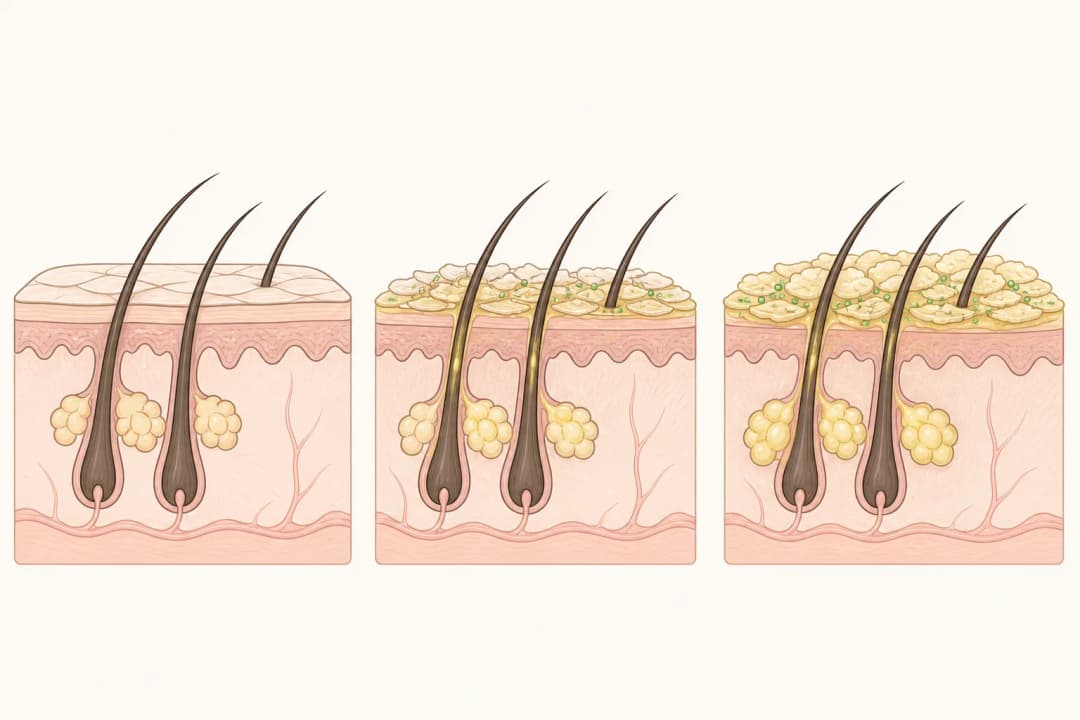
In a baby, cradle cap appears as greasy or dry-looking scales, commonly over the scalp. The skin beneath may look mildly pink, while the baby is generally comfortable. It is not caused by poor hygiene and it is not something a parent has done wrong.
Age helps frame the possibilities but does not establish a diagnosis. Marked itch, pain, broken skin, hair loss or a rash spreading well beyond the scalp may point to eczema, infection or another condition that deserves assessment.
Gentle care at home
Wash the scalp with a mild baby shampoo and loosen softened scales gently with a soft brush. An emollient may help soften firmly attached scale; keep it away from the eyes and wash it out as directed. Do not pick, scratch or force scales away because this can injure the skin.
If gentle care is not enough, a clinician can decide whether a medicated product is suitable for the baby's age and skin. Adult dandruff shampoos, essential oils and topical medicines should not be improvised for an infant.
Signs needing medical care
Arrange medical advice if the area becomes very red, swollen, warm, painful, wet, crusted or foul-smelling, or if the baby develops fever, feeds poorly or seems unwell. These features can signal inflamed or infected skin.
A review is also sensible when scaling is extensive, repeatedly returns, causes obvious discomfort, or has not improved with gentle care. Seek prompt help for a rapidly worsening rash in a very young baby.
Questions for your clinician
You might ask whether the appearance fits cradle cap, whether an emollient is appropriate, what shampoo to use, and which changes would suggest infection or eczema. If treatment is prescribed, confirm where to apply it, how often to use it and when to stop.
Find care
General Clinics & Polyclinics in Abu Dhabi
That answer is general. If you want it applied to your own case, these are licensed general clinics & polyclinics listed in Abu Dhabi.
27 Ar Ruwwad St - Shakhbout City - MSH4 - Abu Dhabi - United Arab Emirates
Accepts: Daman, Thiqa, Cigna, MetLife +20 more
Al Ruwais, Al Dhafrah
Accepts: Daman, Thiqa, AXA, Cigna +16 more
Al Bahyah - Al Bahyah Old - Abu Dhabi - United Arab Emirates
Accepts: Daman, Thiqa, Cigna, Allianz Care +18 more
Abu Dhabi
Accepts: Daman, Thiqa, AXA, Cigna +27 more
Ordered by verification status and how complete each clinic's public record is, then alphabetically. This is a directory listing, not a ranking — Zavis does not rate or recommend providers.
A factual listing drawn from the DHA, DOH and MOHAP licence registers. It is not a referral, an endorsement, or advice that any of these providers is right for you.
Questions people ask
Can a newborn have cradle cap?
Yes. It can appear in the early weeks of life. Gentle scalp care is appropriate when the baby is otherwise well and the skin is not raw or infected.
Is a flaky scalp in an older child still cradle cap?
Not necessarily. Dandruff, eczema, fungal infection and other scalp conditions can look scaly, so persistent or uncomfortable scaling in an older child should be assessed.
Does cradle cap affect hair growth?
Cradle cap itself does not usually damage hair follicles. Some hairs may come away while scales loosen, but forceful picking can irritate the scalp.
Related
Related reading
Keep reading
Medical disclaimer. This page is general health information, not medical advice, and it cannot diagnose you. Always consult a licensed healthcare provider about your own symptoms and treatment. In an emergency in the UAE, call 998 for an ambulance.