
Advanced small cell lung cancer: what to know
Short answer
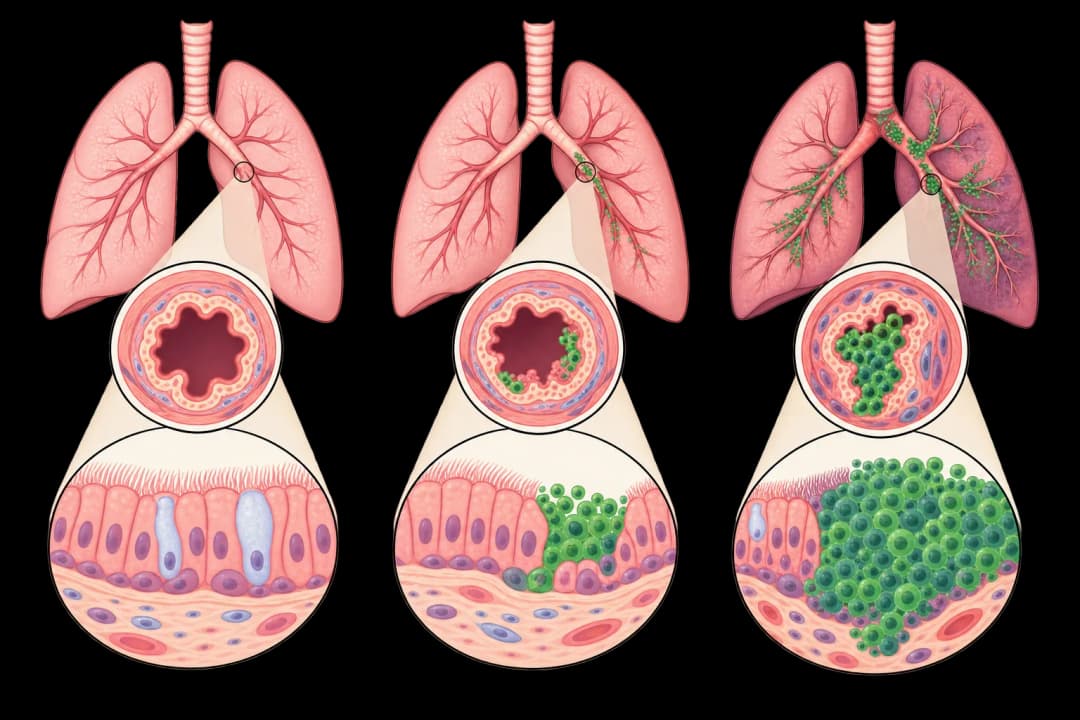
Advanced small cell lung cancer has spread beyond a limited chest area, but treatment can still control disease, relieve symptoms and support daily life.
This answers one question. It is not a diagnosis and does not replace an assessment by a licensed doctor.
At a glance
- Also called
- Extensive-stage small cell lung cancer
- Planning inputs
- Spread pattern, symptoms, general health and care goals
- Care focus
- Cancer control, symptom relief and quality of life
What advanced disease means
Small cell lung cancer tends to grow and spread quickly. Advanced disease is often called extensive-stage disease and may involve the opposite lung, fluid around a lung or organs outside the chest. The care team uses scans, symptoms, examination findings and sometimes tissue results to map where the cancer is active.
Treatment goals depend on the sites involved, overall health and personal priorities. Drug treatment reaches cancer cells throughout the body. Radiotherapy may target a particular area that is causing symptoms or needs additional control. Supportive care can be given alongside cancer treatment to help with breathlessness, cough, pain, fatigue, appetite and emotional strain.
What to do next
Ask the oncology team to explain the stage, treatment aim and expected effect on symptoms. Chemotherapy is commonly central to initial treatment, and immunotherapy may be combined with it for some people. Radiotherapy decisions depend on where disease is present, prior treatment and current symptoms. Whole-brain radiotherapy is a separate discussion when cancer has reached the brain or when the team is considering prevention of brain involvement.
Before each visit, record breathing changes, pain, headaches, balance problems, appetite and how much activity feels manageable. Bring an up-to-date medicine list and report treatment effects early; nausea, constipation, infection risk and low blood counts can often be managed more effectively when recognized promptly. Smoking support, nutrition guidance and symptom-control services can also be part of care.
When to seek urgent care
Contact the treatment team urgently for a fever during anticancer treatment, rapidly worsening breathlessness, new confusion, a new seizure, weakness on one side, coughing up more than a small streak of blood, or pain that is suddenly severe. Call emergency services for severe difficulty breathing, collapse, unresponsiveness or a seizure that does not stop. Follow the oncology unit’s specific fever instructions because treatment can reduce the body’s ability to fight infection.
Questions for your oncology team
Useful questions include: Where has the cancer spread? Is the main aim to shrink cancer, ease a particular symptom or both? Which treatment is recommended first, and how will you judge whether it is helping? Ask whom to contact after hours, which side effects require a same-day call, and whether early supportive or palliative care would help with symptoms and planning.
Questions people ask
Can advanced small cell lung cancer still be treated?
Yes. Systemic treatment can reach disease in different parts of the body, while radiotherapy and supportive care may address selected sites and symptoms. The suitable plan depends on health, previous treatment and personal goals.
How will the team know whether treatment is helping?
The team compares symptoms, examination findings and follow-up imaging. Blood tests also help show whether the body is tolerating treatment, although they do not replace scans for assessing the cancer.
Related
Related reading
Keep reading
Cancer care in the UAE
Hospitals & Medical Centers in Abu Dhabi
Most UAE cancer care is delivered inside hospital services rather than by standalone oncology clinics, so these are licensed hospitals & medical centers listed in Abu Dhabi. Confirm the specific cancer service exists before you travel, and know that asking for a second opinion is routine.
Ahalia Hospital Musaffah Building - Musaffah - Musaffah Industrial - Abu Dhabi - United Arab Emirates
Accepts: Daman, Thiqa, AXA, Cigna +26 more
Al Ruwais Industrial City - Abu Dhabi - United Arab Emirates
Accepts: Daman, Thiqa, AXA, Cigna +30 more
Abu Dhabi, Abu Dhabi
Accepts: Daman, Thiqa, AXA, Cigna +30 more
Second opinions are routine in cancer care and asking for one does not affect your treatment. How to arrange a second opinion in the UAE.
Ordered by verification status and how complete each clinic's public record is, then alphabetically. This is a directory listing, not a ranking — Zavis does not rate or recommend providers.
A factual listing drawn from the DHA, DOH and MOHAP licence registers. It is not a referral, an endorsement, or advice that any of these providers is right for you.
Medical disclaimer. This page is general health information, not medical advice, and it cannot diagnose you. Always consult a licensed healthcare provider about your own symptoms and treatment. In an emergency in the UAE, call 998 for an ambulance.