
Treating cradle cap-like scaling in adults
Short answer
Cradle cap-like scaling in adults is usually managed as seborrheic dermatitis with gentle scalp care and targeted treatment.
This answers one question. It is not a diagnosis and does not replace an assessment by a licensed doctor.
At a glance
- Adult name
- Usually seborrheic dermatitis
- Common areas
- Scalp, eyebrows, ears and sides of the nose
- Avoid
- Picking, forceful scraping and harsh fragranced products
The short answer
An anti-dandruff or antifungal shampoo may reduce scale and irritation, while an emollient can soften firmly attached flakes before gentle washing. Inflamed or persistent areas may need a clinician-selected scalp medicine. Scraping or picking can injure the skin and worsen soreness.
Why adults get this type of scale
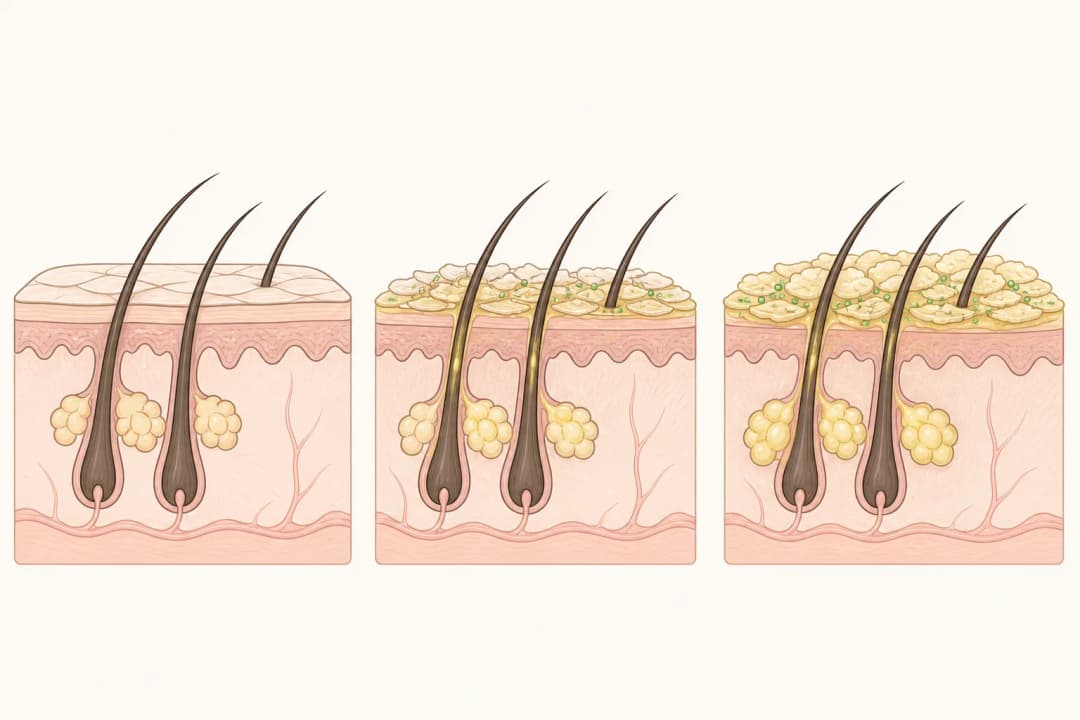
Cradle cap is the familiar name for infantile seborrheic dermatitis. In an adult, greasy or powdery scale around the scalp, eyebrows, ears or sides of the nose is generally described as seborrheic dermatitis rather than cradle cap. It reflects inflammation in oil-rich skin and an altered response to yeast that normally lives on the skin.
The condition can settle and flare again. Psoriasis, eczema, contact reactions to hair products and fungal scalp infection can resemble it, but their management differs. Broken hairs, distinct bald patches, thick sharply edged plaques or widespread rash make a clinical diagnosis particularly useful.
A practical scalp-care plan
Wash the scalp regularly with a gentle shampoo. If scale persists, a pharmacist or clinician can help choose a medicated anti-dandruff or topical antifungal product and explain how long it should stay on before rinsing. Follow its label because scalp and facial formulations are not always interchangeable.
For adherent scale, soften it with a suitable emollient, then loosen it lightly with fingertips or a soft comb before washing. Stop any new oil, dye, fragrance or styling product that seems to trigger burning or redness. A clinician may prescribe a short course of an anti-inflammatory scalp preparation when inflammation is prominent.
When professional assessment is needed
Book an appointment if careful home treatment does not control the scaling, the diagnosis is uncertain, or the rash extends beyond typical oily areas. Seek earlier care for painful swelling, pus, weeping, crusting, fever, rapidly spreading redness or sudden hair loss, as these features may point to infection or another scalp disorder.
Anyone with reduced immunity or extensive skin disease should obtain tailored advice before repeatedly treating a widespread eruption. Eye irritation or scale at the eyelid margins also deserves assessment because ordinary scalp products should not be put in the eyes.
Useful questions at your visit
Ask whether the pattern fits seborrheic dermatitis or another condition, which product suits the affected body site, and how to maintain control after a flare settles. Mention hair treatments, skin products and medicines already tried, including anything that caused stinging or made the scale worse.
Find care
General Clinics & Polyclinics in Abu Dhabi
That answer is general. If you want it applied to your own case, these are licensed general clinics & polyclinics listed in Abu Dhabi.
27 Ar Ruwwad St - Shakhbout City - MSH4 - Abu Dhabi - United Arab Emirates
Accepts: Daman, Thiqa, Cigna, MetLife +20 more
Al Ruwais, Al Dhafrah
Accepts: Daman, Thiqa, AXA, Cigna +16 more
Al Bahyah - Al Bahyah Old - Abu Dhabi - United Arab Emirates
Accepts: Daman, Thiqa, Cigna, Allianz Care +18 more
Abu Dhabi
Accepts: Daman, Thiqa, AXA, Cigna +27 more
Ordered by verification status and how complete each clinic's public record is, then alphabetically. This is a directory listing, not a ranking — Zavis does not rate or recommend providers.
A factual listing drawn from the DHA, DOH and MOHAP licence registers. It is not a referral, an endorsement, or advice that any of these providers is right for you.
Questions people ask
Can adults really have cradle cap?
Adults can develop a similar-looking scaly eruption, but clinicians generally call it seborrheic dermatitis. An examination helps if the pattern is unusual or accompanied by hair loss.
Should I apply oil and leave it on overnight?
A brief emollient application can soften stubborn scale, but prolonged use of oily products may not suit every scalp. Follow product directions and wash it out gently rather than scraping.
Why does the scale return?
Seborrheic dermatitis often behaves as a recurring condition. Intermittent maintenance with a product recommended for your scalp may help limit flares, while a changing pattern warrants reassessment.
Related
Related reading
Keep reading
Medical disclaimer. This page is general health information, not medical advice, and it cannot diagnose you. Always consult a licensed healthcare provider about your own symptoms and treatment. In an emergency in the UAE, call 998 for an ambulance.