
Adrenal cancer in dogs
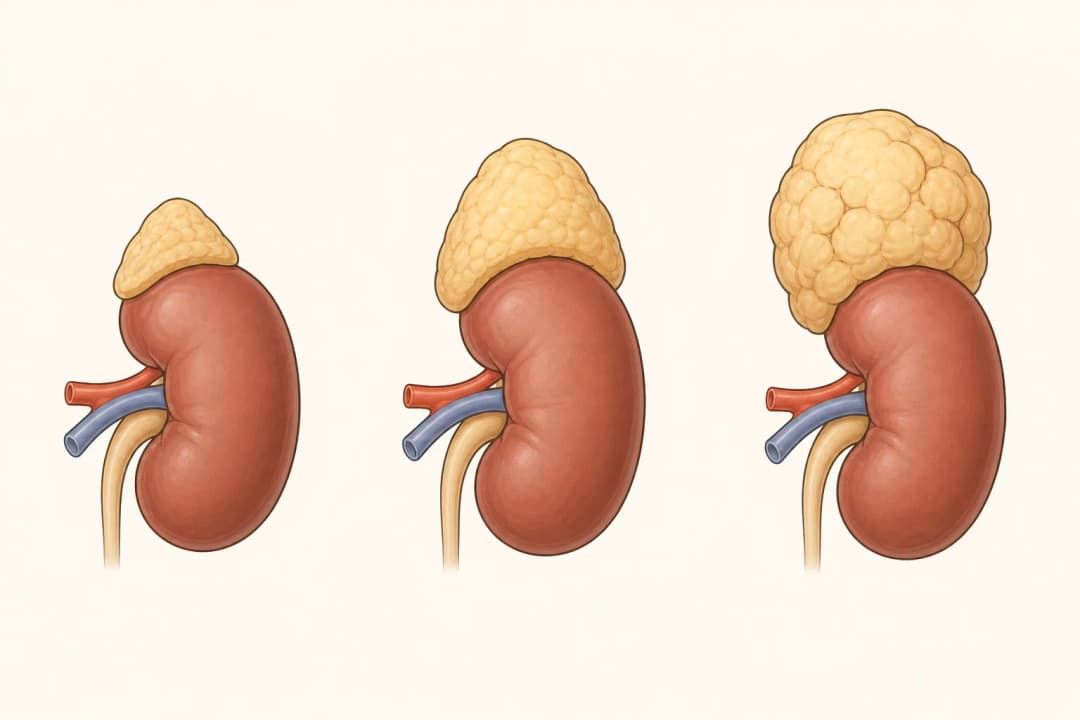
Short answer
Adrenal cancer in dogs is a tumour of an adrenal gland that may produce excess hormones, invade nearby vessels or spread to other organs.
This answers one question. It is not a diagnosis and does not replace an assessment by a licensed doctor.
At a glance
- Location
- The adrenal glands are positioned near the kidneys and major blood vessels.
- Possible effects
- A mass may alter hormone production, press on nearby structures or spread.
- Care team
- Complex cases may need a veterinary surgeon, internal-medicine specialist or oncologist.
The short answer
Not every adrenal mass is malignant or hormonally active. A veterinarian needs to interpret imaging, hormone tests, blood and urine findings, symptoms and the dog's general health together. Management may involve surgery, medicines that control hormone production, cancer medicine or comfort-focused care.
How an adrenal tumour can affect a dog
The adrenal glands sit near the kidneys and make hormones involved in stress responses, blood pressure, salt balance and other body functions. A tumour in the gland's outer layer can produce cortisol or other steroid hormones; a tumour arising from the inner region can release adrenaline-like hormones. Some masses produce no excess hormone.
Possible signs include increased drinking and urination, panting, a swollen-looking abdomen, muscle weakness, hair or skin changes, reduced appetite, vomiting, weight change or episodes of collapse. These signs have many possible causes, so their presence alone cannot identify an adrenal tumour.
Veterinary assessment and treatment planning
Bring a list of all medicines and supplements, a timeline of changes in drinking, urination and appetite, and any previous test results. The veterinary team may use abdominal imaging to examine the mass, nearby blood vessels and other organs, while laboratory testing can assess organ function and hormone activity.
Surgery may be considered when the mass can be removed and the dog is fit enough, but adrenal operations can be complex because major vessels are close by. Ask whether referral to a veterinary surgeon or oncologist is appropriate, what stabilisation is needed first, and how pain, hormones and blood pressure will be managed. Never change hormone-related medicine suddenly without veterinary instructions.
When your dog needs urgent help
Contact a veterinarian promptly for repeated vomiting, refusal of food or water, profound weakness, a painful or enlarging abdomen, marked restlessness, or a sudden change in drinking and urination. A dog already taking hormone-control medicine also needs assessment if weakness, diarrhoea, vomiting or poor appetite develops.
Go to an emergency veterinary service for collapse, breathing difficulty, pale gums, seizures, inability to stand, severe abdominal pain or uncontrolled bleeding. Call ahead if possible and take the dog's medication containers and recent veterinary information.
Questions for the veterinarian
Ask whether the mass appears hormonally active, whether it involves nearby vessels, what signs suggest spread, and which tests would change the plan. Discuss the goals and burdens of surgery or medical treatment, the expected recovery needs, how monitoring will work and which changes in behaviour or appetite should trigger an urgent call.
Questions people ask
Does an adrenal mass on a scan always mean cancer?
No. Adrenal masses can have different causes and behaviours. Imaging characteristics, hormone testing, clinical signs and sometimes tissue assessment help the veterinarian judge what the mass represents.
Can an adrenal tumour be treated without surgery?
Sometimes. Medicines may control excess hormone production or support comfort, and cancer-directed medicine may be considered in selected cases. The suitable approach depends on tumour behaviour and the dog's health.
Related
Related reading
Keep reading
Cancer care in the UAE
Hospitals & Medical Centers in Abu Dhabi
Most UAE cancer care is delivered inside hospital services rather than by standalone oncology clinics, so these are licensed hospitals & medical centers listed in Abu Dhabi. Confirm the specific cancer service exists before you travel, and know that asking for a second opinion is routine.
Ahalia Hospital Musaffah Building - Musaffah - Musaffah Industrial - Abu Dhabi - United Arab Emirates
Accepts: Daman, Thiqa, AXA, Cigna +26 more
Al Ruwais Industrial City - Abu Dhabi - United Arab Emirates
Accepts: Daman, Thiqa, AXA, Cigna +30 more
Abu Dhabi, Abu Dhabi
Accepts: Daman, Thiqa, AXA, Cigna +30 more
Second opinions are routine in cancer care and asking for one does not affect your treatment. How to arrange a second opinion in the UAE.
Ordered by verification status and how complete each clinic's public record is, then alphabetically. This is a directory listing, not a ranking — Zavis does not rate or recommend providers.
A factual listing drawn from the DHA, DOH and MOHAP licence registers. It is not a referral, an endorsement, or advice that any of these providers is right for you.
Medical disclaimer. This page is general health information, not medical advice, and it cannot diagnose you. Always consult a licensed healthcare provider about your own symptoms and treatment. In an emergency in the UAE, call 998 for an ambulance.