
Acute rhabdomyolysis symptoms and warning signs
Short answer
Acute rhabdomyolysis may cause severe muscle pain, weakness, swelling or dark urine and requires urgent medical assessment.
This answers one question. It is not a diagnosis and does not replace an assessment by a licensed doctor.
At a glance
- Key symptoms
- Severe muscle pain, weakness, swelling or dark urine
- Main concern
- Kidney injury and disturbances in body salts
- Next step
- Stop exertion and obtain urgent medical assessment
The short answer
Symptoms may follow intense exertion, heat exposure, prolonged immobility, a crush injury, seizures, illness, or certain medicines and substances. Some people do not develop every classic feature, so normal-looking urine does not exclude the condition.
What the symptoms can mean
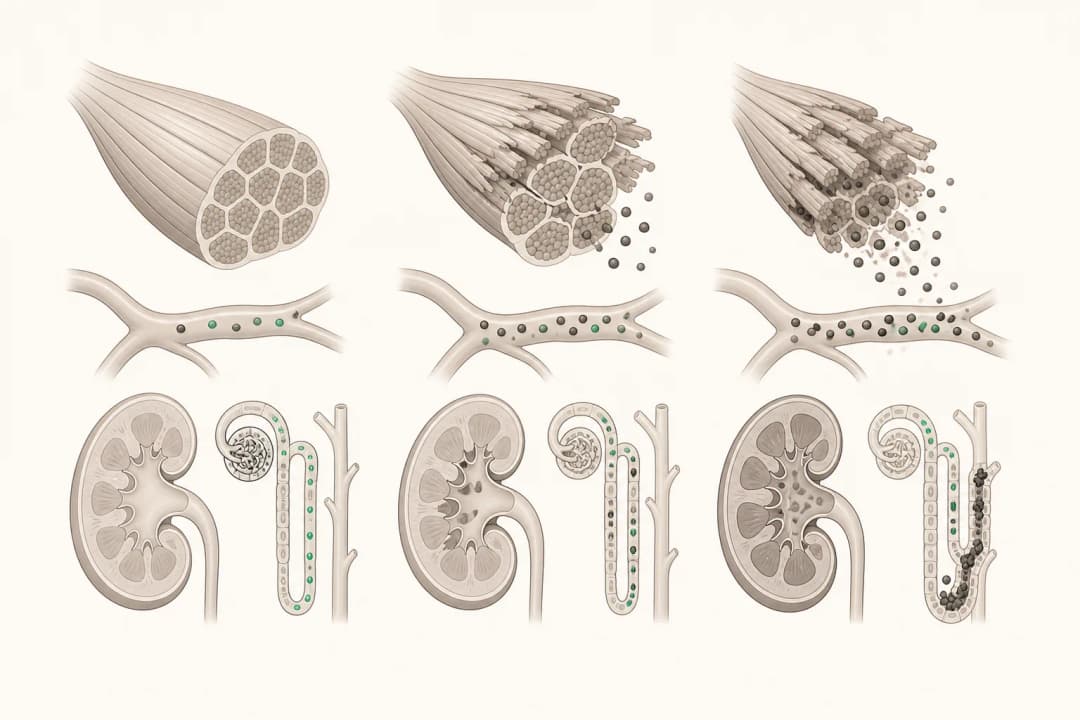
Rhabdomyolysis is rapid damage to muscle cells. Their contents enter the bloodstream and can disturb body salts or injure the kidneys. Pain may feel out of proportion to ordinary post-exercise soreness, and affected muscles can be tender, weak or visibly swollen.
Urine may become tea-coloured, brown or red because of muscle pigment, and urine output may fall. Nausea, vomiting, marked tiredness, confusion or an irregular heartbeat can accompany more serious fluid or salt disturbances. Blood and urine tests are needed because symptoms alone cannot confirm the diagnosis.
What to do now
Stop exercise or other exertion, move out of heat, and seek urgent medical assessment. Tell the clinician about recent activity, injuries, time spent unable to move, infections, supplements, alcohol or drug use, and every prescribed or non-prescribed medicine.
Do not try to manage suspected rhabdomyolysis simply by drinking very large amounts of water. Treatment and fluid choice depend on kidney function, urine output and body salts, which require clinical testing and monitoring.
Emergency warning signs
Go to an emergency department for dark urine with severe muscle symptoms, reduced or absent urination, rapidly increasing muscle swelling, profound weakness, fainting, confusion, breathing difficulty, chest fluttering or seizures. Call emergency services if the person collapses, is difficult to wake or cannot travel safely.
After heavy exertion, worsening pain or weakness that is more intense than expected also warrants prompt assessment, even without urine discoloration. Early evaluation matters because kidney and electrolyte complications may develop before they are obvious.
What to ask at assessment
Ask which blood and urine findings are being monitored, whether any medicine or supplement should be paused, and what activity is safe after recovery. Before returning to strenuous training, clarify how symptoms and laboratory results will guide a gradual return.
Find care
General Clinics & Polyclinics in Abu Dhabi
That answer is general. If you want it applied to your own case, these are licensed general clinics & polyclinics listed in Abu Dhabi.
27 Ar Ruwwad St - Shakhbout City - MSH4 - Abu Dhabi - United Arab Emirates
Accepts: Daman, Thiqa, Cigna, MetLife +20 more
Al Ruwais, Al Dhafrah
Accepts: Daman, Thiqa, AXA, Cigna +16 more
Al Bahyah - Al Bahyah Old - Abu Dhabi - United Arab Emirates
Accepts: Daman, Thiqa, Cigna, Allianz Care +18 more
Abu Dhabi
Accepts: Daman, Thiqa, AXA, Cigna +27 more
Ordered by verification status and how complete each clinic's public record is, then alphabetically. This is a directory listing, not a ranking — Zavis does not rate or recommend providers.
A factual listing drawn from the DHA, DOH and MOHAP licence registers. It is not a referral, an endorsement, or advice that any of these providers is right for you.
Questions people ask
Can rhabdomyolysis occur without dark urine?
Yes. Urine colour can remain normal, so severe or unusual muscle pain, swelling or weakness after a trigger still needs assessment.
How is rhabdomyolysis confirmed?
Clinicians use the history, examination, blood tests of muscle injury and kidney function, and urine testing. They may also check body salts and heart rhythm.
Is ordinary muscle soreness after exercise the same condition?
No. Typical soreness improves with recovery and does not itself indicate rapid muscle breakdown. Severe, worsening or unusual symptoms, weakness, swelling, dark urine or reduced urination require prompt care.
Related
Related reading
Keep reading
Medical disclaimer. This page is general health information, not medical advice, and it cannot diagnose you. Always consult a licensed healthcare provider about your own symptoms and treatment. In an emergency in the UAE, call 998 for an ambulance.