
Acute Exertional Rhabdomyolysis: What You Should Know
Short answer
Acute exertional rhabdomyolysis is rapid muscle breakdown after strenuous activity and requires prompt medical assessment because it can affect the kidneys.
This answers one question. It is not a diagnosis and does not replace an assessment by a licensed doctor.
At a glance
- Main concern
- Muscle-cell contents can strain the kidneys and disrupt blood minerals.
- Concerning signs
- Severe muscle pain, swelling, weakness, or dark urine after exertion.
- First action
- Stop exercise and obtain prompt medical assessment.
What happens in the muscles
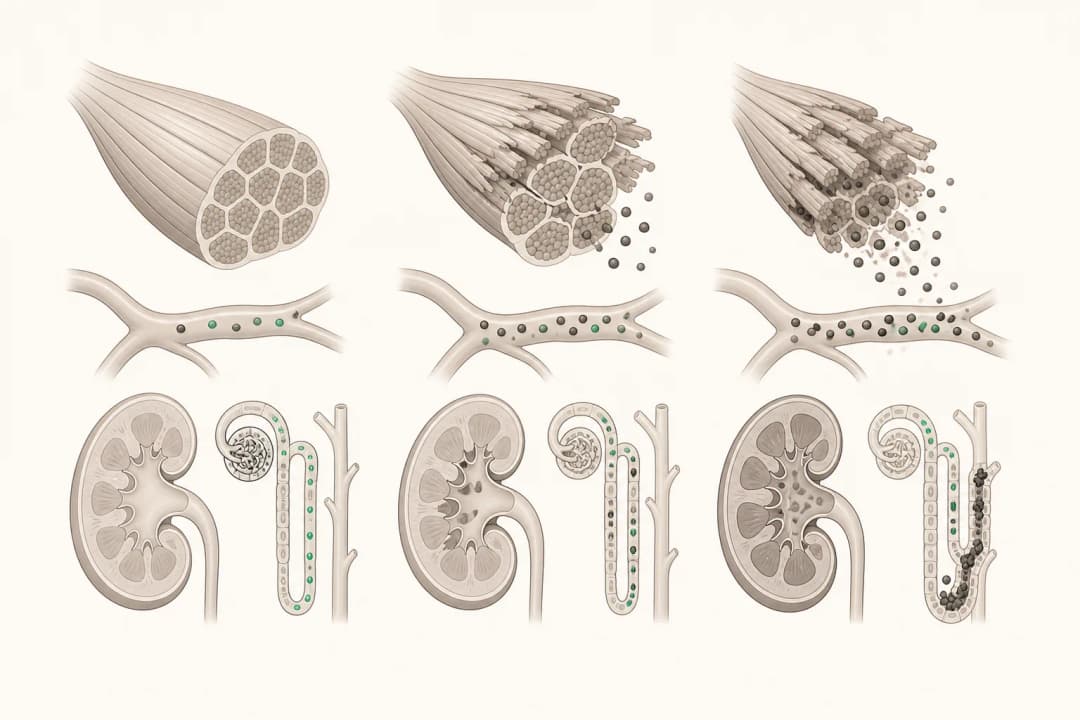
Damaged muscle cells release their contents into the bloodstream. The kidneys then have to filter this material, which can disturb fluid and mineral balance and may cause kidney injury. Episodes can follow unusually intense training, repeated exercise in heat, or a sudden workload increase, especially when dehydration, illness, medicines, supplements, or an underlying muscle problem adds strain.
Severe pain, swelling, weakness, or urine that looks dark brown or tea-coloured is more concerning than ordinary delayed soreness. Symptoms may involve the muscles worked hardest, but normal-looking urine does not rule the condition out. A clinician may use blood and urine tests to assess muscle breakdown, kidney function, and mineral balance.
What to do if you suspect it
Stop exercising and avoid trying to stretch, massage, or train through severe symptoms. Seek medical advice promptly rather than managing the episode as routine post-workout soreness. Until assessed, rest in a cool place and drink normally if you are awake, not vomiting, and have not been told to restrict fluids; drinking large amounts at once is not a substitute for care.
Tell the clinician what activity you performed, when symptoms began, and whether heat exposure, reduced fluid intake, recent infection, medicines, recreational drugs, or workout supplements were involved. Treatment depends on examination and test results and may include monitored fluids and repeated checks of kidney function and blood minerals.
When care is urgent
Go to an emergency department now for dark or markedly reduced urine, rapidly increasing muscle swelling, severe weakness, confusion, fainting, breathing difficulty, persistent vomiting, or inability to keep fluids down after exertion. Emergency assessment is also appropriate when a swollen limb becomes very tense or pain is extreme, because dangerous pressure can build within the muscle compartments.
Arrange prompt assessment for muscle pain that is unusually intense, worsening instead of easing, or accompanied by weakness or swelling. Do not wait for every classic feature to appear before seeking care.
Questions for your clinician
Ask which test results need rechecking, whether any medicine or supplement could have contributed, and what symptoms should bring you back urgently. Before returning to exercise, clarify when gentle activity can restart, how workload should increase, and whether recurrent episodes warrant assessment for an underlying muscle or metabolic condition.
Find care
General Clinics & Polyclinics in Abu Dhabi
That answer is general. If you want it applied to your own case, these are licensed general clinics & polyclinics listed in Abu Dhabi.
27 Ar Ruwwad St - Shakhbout City - MSH4 - Abu Dhabi - United Arab Emirates
Accepts: Daman, Thiqa, Cigna, MetLife +20 more
Al Ruwais, Al Dhafrah
Accepts: Daman, Thiqa, AXA, Cigna +16 more
Al Bahyah - Al Bahyah Old - Abu Dhabi - United Arab Emirates
Accepts: Daman, Thiqa, Cigna, Allianz Care +18 more
Abu Dhabi
Accepts: Daman, Thiqa, AXA, Cigna +27 more
Ordered by verification status and how complete each clinic's public record is, then alphabetically. This is a directory listing, not a ranking — Zavis does not rate or recommend providers.
A factual listing drawn from the DHA, DOH and MOHAP licence registers. It is not a referral, an endorsement, or advice that any of these providers is right for you.
Questions people ask
How is exertional rhabdomyolysis different from normal muscle soreness?
Expected post-exercise soreness is generally manageable and gradually settles. Rhabdomyolysis can cause disproportionate pain, marked swelling or weakness, and sometimes dark or reduced urine; suspected cases need clinical testing rather than self-diagnosis.
Can urine look normal with rhabdomyolysis?
Yes. Dark urine may occur, but its absence does not exclude muscle breakdown. Severe or worsening muscle symptoms after strenuous exercise still warrant prompt assessment.
When can I exercise again after an episode?
Return depends on symptom recovery, examination, and follow-up test results. A clinician can advise a gradual plan and investigate further if the episode was severe, unexplained, or recurrent.
Keep reading
Medical disclaimer. This page is general health information, not medical advice, and it cannot diagnose you. Always consult a licensed healthcare provider about your own symptoms and treatment. In an emergency in the UAE, call 998 for an ambulance.