
ACOG guidance on fetal growth restriction
Short answer
ACOG guidance describes fetal growth restriction as a concern that requires ultrasound assessment, ongoing surveillance, and birth planning based on fetal wellbeing.
This answers one question. It is not a diagnosis and does not replace an assessment by a licensed doctor.
At a glance
- Current term
- Fetal growth restriction is often used instead of IUGR
- Key distinction
- A small fetus is not automatically growth-restricted
- Care focus
- Growth pattern, blood flow, fluid, and fetal wellbeing
What the guidance means
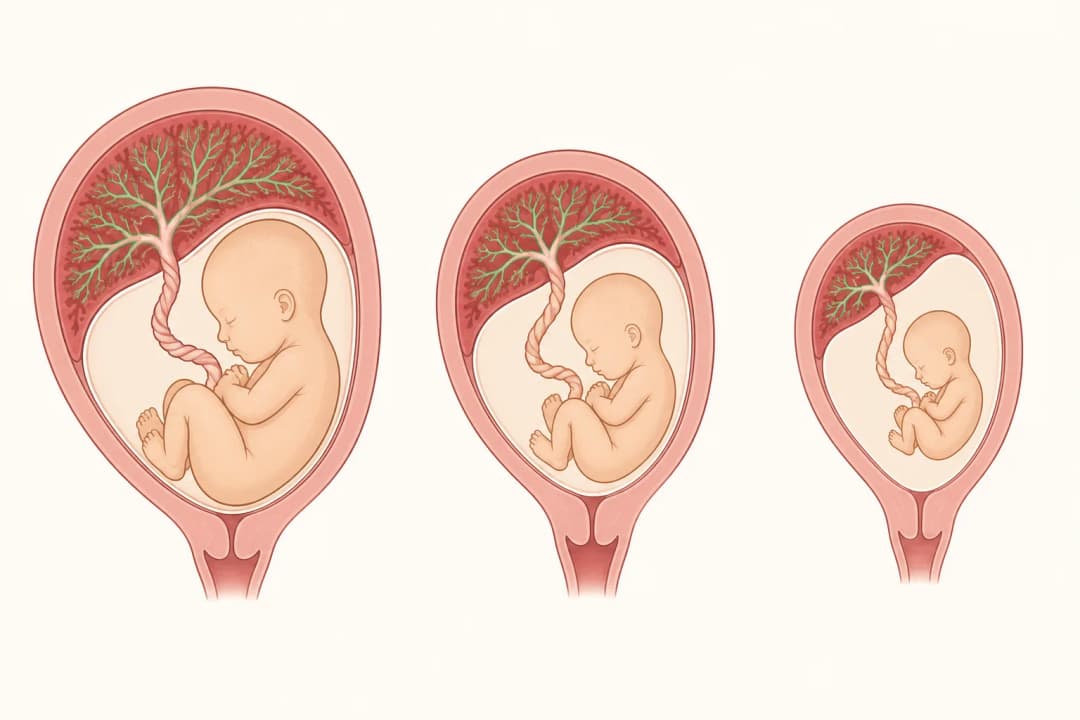
IUGR, or intrauterine growth restriction, is now often called fetal growth restriction. It means a fetus may not be reaching its growth potential. It is different from being constitutionally small: some small fetuses are healthy, while growth restriction can reflect placental, fetal, or maternal factors.
How clinicians evaluate growth
A growth scan estimates fetal size from several ultrasound measurements and compares change over time. Clinicians may assess amniotic fluid and use Doppler ultrasound to examine blood flow, particularly through vessels serving the placenta and fetus. No single estimated weight tells the whole story; the pattern, blood flow, fluid, and clinical context are considered together.
Possible contributors include placental dysfunction, maternal hypertension, infection, fetal or genetic conditions, and smoking or substance exposure. Sometimes no clear cause is identified. The care plan is based on current findings rather than assigning blame.
Follow-up and birth planning
Keep appointments for repeat growth scans, Doppler studies, fetal heart monitoring, and maternal checks. Follow your maternity unit's instructions for noticing fetal movement, and report a reduction or clear change promptly. Balanced nutrition and prescribed supplements support general pregnancy health, but eating extra cannot by itself correct placental dysfunction.
Timing of birth balances the benefit of more time in the uterus against signs that the placenta may no longer support the fetus adequately. Stable findings may allow continued surveillance; concerning blood flow, fetal testing, growth pattern, or maternal illness may lead the team to advise earlier birth, sometimes through induction of labour and sometimes by caesarean birth.
Changes that need urgent assessment
Contact maternity care immediately if fetal movement is reduced or distinctly different from your baby's usual pattern. Do not wait for the next scan or try to provoke movement for a prolonged period before calling. Vaginal bleeding, leaking fluid, regular painful contractions, or severe abdominal pain also require prompt advice.
Urgent review is also needed for severe headache, visual disturbance, sudden swelling, pain high beneath the ribs, breathing difficulty, or feeling acutely unwell. These maternal warning signs can occur with hypertensive pregnancy complications that may also affect placental function.
Questions for your care team
Ask whether the fetus is small but following a steady pattern or showing evidence of growth restriction, and which finding is driving the diagnosis. Clarify how often surveillance is planned, what changes would alter the timing or mode of birth, where delivery should occur, and whether newborn support is expected after birth.
Find care
General Clinics & Polyclinics in Abu Dhabi
That answer is general. If you want it applied to your own case, these are licensed general clinics & polyclinics listed in Abu Dhabi.
27 Ar Ruwwad St - Shakhbout City - MSH4 - Abu Dhabi - United Arab Emirates
Accepts: Daman, Thiqa, Cigna, MetLife +20 more
Al Ruwais, Al Dhafrah
Accepts: Daman, Thiqa, AXA, Cigna +16 more
Al Bahyah - Al Bahyah Old - Abu Dhabi - United Arab Emirates
Accepts: Daman, Thiqa, Cigna, Allianz Care +18 more
Abu Dhabi
Accepts: Daman, Thiqa, AXA, Cigna +27 more
Ordered by verification status and how complete each clinic's public record is, then alphabetically. This is a directory listing, not a ranking — Zavis does not rate or recommend providers.
A factual listing drawn from the DHA, DOH and MOHAP licence registers. It is not a referral, an endorsement, or advice that any of these providers is right for you.
Questions people ask
Does a small measurement always mean the baby is unwell?
No. Some fetuses are naturally small and healthy. Clinicians use growth over time, Doppler blood flow, amniotic fluid, fetal testing, and the pregnancy history to assess concern.
Can bed rest make a growth-restricted baby grow?
Bed rest is not a direct treatment for placental dysfunction and can carry drawbacks. Follow the activity advice given for your individual pregnancy rather than prescribing rest for yourself.
Will fetal growth restriction always require early birth?
Not always. Birth timing depends on gestational age, surveillance results, blood flow, growth, and maternal health. Your team revisits the balance as findings change.
Related
Related reading
Keep reading
Medical disclaimer. This page is general health information, not medical advice, and it cannot diagnose you. Always consult a licensed healthcare provider about your own symptoms and treatment. In an emergency in the UAE, call 998 for an ambulance.