
Acid nappy rash: causes, care and warning signs
Short answer
Acid nappy rash usually describes irritant dermatitis from prolonged contact with urine and stool, not a chemical acid burn.
This answers one question. It is not a diagnosis and does not replace an assessment by a licensed doctor.
At a glance
- Common trigger
- Moisture, stool enzymes and friction can damage the covered skin barrier.
- Helpful protection
- A thick fragrance-free barrier ointment reduces contact with urine and stool.
- Avoid
- Household acids, skincare exfoliants and perfumed products should not be applied.
What is acid nappy rash?
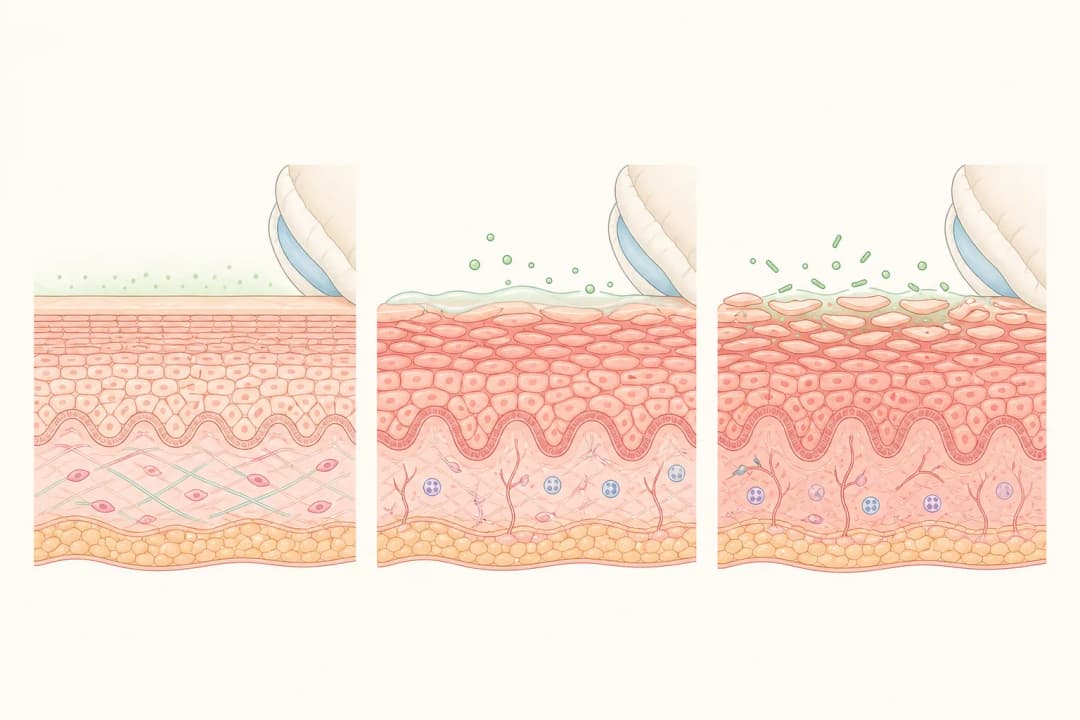
Moisture, friction and digestive enzymes weaken the skin barrier. Frequent or loose stools can intensify irritation, leaving red, tender skin on the areas that touch the nappy.
Recognising the pattern
Irritant rash tends to affect the buttocks, genitals and lower abdomen while deeper skin folds may be less involved. A bright red rash extending into the folds with small separate spots can fit yeast overgrowth, which may follow irritation or antibiotic use.
Other conditions can resemble nappy rash, including eczema, bacterial infection and reactions to wipes or fragranced products. The appearance, distribution and baby's general wellbeing help a clinician distinguish them.
Protect and soothe the skin
Change wet or soiled nappies promptly. Clean with lukewarm water and soft cotton or a fragrance-free wipe, then pat rather than rub. Allow brief nappy-free time and apply a thick barrier ointment to clean, dry skin at each change.
Avoid talcum powder, antiseptics, perfumed products and exfoliating acids on the area. Do not use an adult steroid, antibiotic or antifungal cream unless a healthcare professional confirms it is suitable for the baby's age and the rash pattern.
When your baby needs medical care
Seek prompt advice if the baby has fever, seems unusually sleepy, feeds poorly, has fewer wet nappies, or the rash is rapidly spreading. Blisters, open sores, pus, crusting, bleeding or marked swelling also need assessment.
Contact a clinician if careful barrier care is not settling the rash, it repeatedly returns, or you suspect thrush. A very young infant who appears unwell should be assessed urgently rather than treated only at home.
Prepare for the appointment
Tell the clinician when the rash began, whether stools have changed, which nappies and wipes are used, and every cream already applied. Ask whether the pattern is irritant, yeast-related or another diagnosis, and how each prescribed product should be used.
Find care
General Clinics & Polyclinics in Abu Dhabi
That answer is general. If you want it applied to your own case, these are licensed general clinics & polyclinics listed in Abu Dhabi.
27 Ar Ruwwad St - Shakhbout City - MSH4 - Abu Dhabi - United Arab Emirates
Accepts: Daman, Thiqa, Cigna, MetLife +20 more
Al Ruwais, Al Dhafrah
Accepts: Daman, Thiqa, AXA, Cigna +16 more
Al Bahyah - Al Bahyah Old - Abu Dhabi - United Arab Emirates
Accepts: Daman, Thiqa, Cigna, Allianz Care +18 more
Abu Dhabi
Accepts: Daman, Thiqa, AXA, Cigna +27 more
Ordered by verification status and how complete each clinic's public record is, then alphabetically. This is a directory listing, not a ranking — Zavis does not rate or recommend providers.
A factual listing drawn from the DHA, DOH and MOHAP licence registers. It is not a referral, an endorsement, or advice that any of these providers is right for you.
Questions people ask
Does teething cause acid nappy rash?
Teething itself does not place acid on the skin. If stools become looser or more frequent around the same time, extra moisture and stool contact can aggravate irritation.
Should all barrier cream be removed at each change?
Scrubbing away every trace can cause more friction. Gently remove soiling, leave clean adherent ointment in place when practical, and add a fresh protective layer.
When might an antifungal be needed?
A clinician may recommend one when the distribution and appearance suggest yeast, especially when folds are involved. Barrier cream alone does not treat yeast overgrowth.
Related
Related reading
Keep reading
Medical disclaimer. This page is general health information, not medical advice, and it cannot diagnose you. Always consult a licensed healthcare provider about your own symptoms and treatment. In an emergency in the UAE, call 998 for an ambulance.