
What should you know about 3 month old sweaty feet?
Short answer
Sweaty feet in a three-month-old can occur when a baby is warm or bundled, but persistent sweating with illness, poor feeding or breathing changes needs medical assessment.
This answers one question. It is not a diagnosis and does not replace an assessment by a licensed doctor.
At a glance
- First check
- Look for excess layers and assess warmth at the chest or upper back
- Skin care
- Change damp socks and dry gently between the toes
- Avoid
- Adult antiperspirants and medicated foot products without clinical advice
What damp feet may reflect
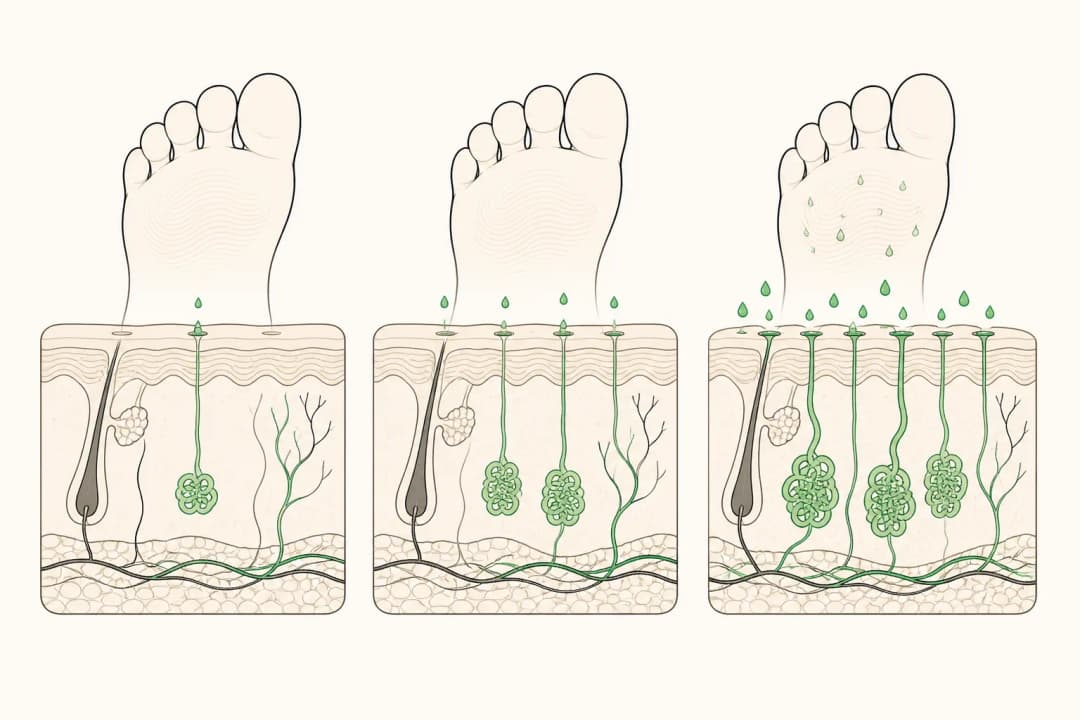
Socks, footed sleepwear, blankets, a warm room or close contact can trap heat and moisture around a baby's feet. Damp soles by themselves do not identify a disease. Check the baby's chest or upper back for overall warmth rather than judging temperature from hands and feet, which can feel different from the body's core.
Notice the setting and pattern: whether sweating stops after a clothing change, appears during feeds, affects the head or body, or comes with tiredness. Moisture can soften skin between the toes and contribute to irritation. Athlete's foot can cause scale and cracking, but it is not the only explanation for peeling skin and should not be assumed in a young infant without examination.
Comfort and skin care at home
Move the baby to a comfortably cool environment and remove an unnecessary layer, then observe whether the chest and feet become less damp. Use breathable, correctly fitting socks only when needed, change wet fabric and dry carefully between the toes. Avoid direct fan blasts, ice, cold baths and powders that could be inhaled.
Do not apply adult antiperspirants, medicated foot products, essential oils or antifungal creams unless a clinician recommends a specific product for the baby. Record when sweating occurs and any associated feeding or breathing change. If you are unsure whether the baby is feverish, use an age-appropriate thermometer and follow your paediatric clinician's guidance for interpreting the result.
When your baby needs care
Seek urgent medical advice for fever in a baby of this age, breathing that is fast or laboured, blue or grey lips, unusual sleepiness, marked irritability, poor feeding, repeated vomiting or fewer wet nappies. Sweating during feeds together with breathlessness, tiring, poor growth or colour change also needs prompt assessment. Arrange a routine review for persistent unexplained sweating, strong odour, recurrent rash, blisters, cracks or skin that looks infected.
Details to discuss with the paediatric clinician
Describe when the feet become wet, what the baby is wearing, room conditions and whether it happens during sleep or feeds. Ask how to measure temperature, what skin products are suitable, and whether the baby's breathing, weight gain, hydration and skin need checking. Bring a photo if a rash comes and goes.
Find care
General Clinics & Polyclinics in Abu Dhabi
That answer is general. If you want it applied to your own case, these are licensed general clinics & polyclinics listed in Abu Dhabi.
27 Ar Ruwwad St - Shakhbout City - MSH4 - Abu Dhabi - United Arab Emirates
Accepts: Daman, Thiqa, Cigna, MetLife +20 more
Al Ruwais, Al Dhafrah
Accepts: Daman, Thiqa, AXA, Cigna +16 more
Al Bahyah - Al Bahyah Old - Abu Dhabi - United Arab Emirates
Accepts: Daman, Thiqa, Cigna, Allianz Care +18 more
Abu Dhabi
Accepts: Daman, Thiqa, AXA, Cigna +27 more
Ordered by verification status and how complete each clinic's public record is, then alphabetically. This is a directory listing, not a ranking — Zavis does not rate or recommend providers.
A factual listing drawn from the DHA, DOH and MOHAP licence registers. It is not a referral, an endorsement, or advice that any of these providers is right for you.
Questions people ask
Are sweaty feet alone an emergency in a three-month-old?
Damp feet alone are not necessarily an emergency. Urgency comes from associated signs such as fever, breathing difficulty, colour change, poor feeding, unusual drowsiness or reduced wet nappies.
Should I put antiperspirant on my baby's feet?
Do not use an adult antiperspirant on a young baby's skin. Reduce excess layers, keep the feet dry and ask a paediatric clinician before applying a medicated product.
Can sweaty feet cause a rash between the toes?
Trapped moisture can soften and irritate skin. Persistent redness, cracking, weeping, blisters, odour or spreading scale should be examined so the cause and suitable treatment can be identified.
Related
Related reading
Keep reading
Medical disclaimer. This page is general health information, not medical advice, and it cannot diagnose you. Always consult a licensed healthcare provider about your own symptoms and treatment. In an emergency in the UAE, call 998 for an ambulance.